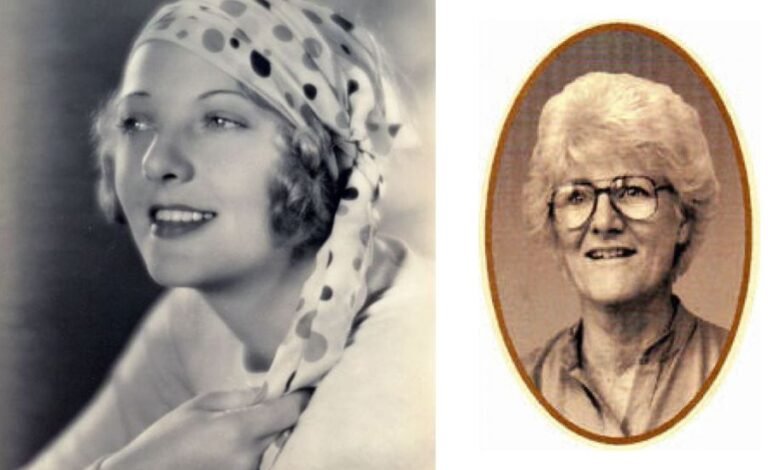
Dorothy Miles — often known as “Dot” Miles — was born Dorothy Squire on 19 August 1931 in Holywell, Flintshire, Wales. She was the youngest of the surviving children in her family, and initially grew up hearing, speaking English, and immersed in the environment of her Welsh hometown. In 1939, aged about eight, she contracted cerebrospinal meningitis — which left her deaf.
Deafness changed the trajectory of her life. She subsequently attended specialised schools for the deaf: the Royal School for the Deaf (Old Trafford) and Mary Hare School in Newbury. Her early schooling emphasised the oralist approach (speech and lip‐reading rather than sign language), which reflected prevailing attitudes of the time.
This period was formative: having been a hearing child who lost hearing later, she maintained a strong English language base, yet gradually began to engage deeply with sign language and Deaf culture — which would ultimately shape her life’s work.
Education in the United States and Early Career
In 1957, Dorothy secured a scholarship (supported in part by the British Deaf Association) to attend Gallaudet University (then Gallaudet College) in Washington, D.C., USA. At Gallaudet, she studied English and psychology, edited student magazines, won accolades for poetry and performance, and in 1961 graduated with a BA with distinction.
During her time in the U.S., she held roles teaching and counselling deaf adults, and soon became involved in theatrical work. In 1967, she joined the newly established National Theatre of the Deaf (NTD) in the U.S., first working as wardrobe mistress and assistant, then as actor and translator. It was during this period that Dorothy began to experiment seriously with sign‐language poetry; she blended English, American Sign Language (ASL), and eventually British Sign Language (BSL). Her work in this period laid the groundwork for what would become a new expressive art form: poetry conceived for, and in, sign languages.
In 1974 she earned a master’s degree from Connecticut College; her thesis addressed theatre activities in the Deaf community in the United States.
Return to Britain and Pioneering Work in BSL Poetry
In 1977 Dorothy Miles returned to the United Kingdom, taking her wealth of experience back home. In Britain, she became a key figure in Deaf education, cultural activism, and the promotion of British Sign Language. She worked with the British Deaf Association (BDA) on projects such as the BSL dictionary, tutor training, and the establishment of the Council for the Advancement of Communication with Deaf People (CACDP). Her vision was inclusive: that Deaf and hearing people might learn together, develop mutual understanding, and share in the aesthetic richness of sign languages.
One of her signature works was “Language for the Eye”, a poem/performance in sign language that became emblematic of the expressive potential of BSL poetry. By leveraging the visual dimension of sign language — rhythm, space, hand-shape, facial expression — she advanced sign‐language poetry beyond mere translation of English poetry into sign; she developed a unique poetic form.
Publications and Creative Output
Dorothy’s creative output spanned multiple media. Among her published works:
- Gestures: Poetry in Sign Language (1976) — a teaching and performance resource.
- British Sign Language: A Beginner’s Guide — published by BBC Books and the Open University, designed to support BSL learners.
- Posthumous collection: Bright Memory: The Poetry of Dorothy Miles (1998) through the British Deaf History Society.
Her performance work was far reaching: as an actor in Deaf theatre, as a sign‐language interpreter, as a teacher of BSL and sign‐language poetry, and as a public advocate for Deaf culture. The British Deaf Association described her as a pioneer of BSL poetry, a poet, playwright, performer, scholar, teacher and passionate activist.
Challenges and Later Life
Despite her significant achievements, Dorothy also faced personal challenges. Reports indicate that she experienced severe episodes of depression and bipolar disorder. Tragically, on 30 January 1993, Dorothy Miles died in London by suicide. Her passing was a profound loss for the Deaf and sign‐language communities. Yet from adversity she left a lasting legacy.
Legacy and Recognition
Dorothy Miles’s contributions to Deaf culture, sign language, poetry, and education are widely recognised.
She is regarded as the pioneer of British Sign Language (BSL) poetry. Her influence extends to many modern Deaf poets and performers who work in BSL and ASL today. In 2024, she was honoured with a Purple Plaque in Wales — outside her childhood home in Rhyl — marking her as a “remarkable woman” in Welsh history. Also in 2024, a Google Doodle celebrated her 93rd birthday, recognising her cultural importance.
Her vision extended beyond literature: she sought to raise awareness of sign-language rights, Deaf culture, and the importance of accessible artistic expression for Deaf people. She bridged worlds — hearing and Deaf — and shaped a path for Deaf artists to follow.
Why Dorothy Miles Still Matters
In an era when accessibility, diversity, and inclusive arts are more important than ever, Dorothy Miles’s story resonates powerfully:
- Artistic innovation: She redefined poetry by incorporating visual‐performance elements rooted in sign languages, breaking new ground in how poetry could be conceived and shared across modalities.
- Cultural activism: Her advocacy promoted the recognition of British Sign Language as a full language, contributed to tutor training and Deaf education infrastructure, and elevated the status of Deaf artists.
- Educational legacy: Her teaching materials and textbooks helped formalise BSL teaching and made sign language accessible to many learners.
- Intersectional inspiration: As a Deaf woman from Wales who worked internationally, she navigated multiple identities (national, gendered, cultural) and became a role model.
For university researchers, Deaf studies students, sign‐language interpreters, poets, and advocates alike, her life offers lessons in resilience, creativity, and the power of cross‐modal communication.
Key Themes in Her Work
Several recurring themes emerge across Dorothy’s life and work:
- Language as identity: Dorothy’s shift from hearing child to Deaf adult, and her embrace of sign language, reflect the deep relationship between language and identity. Her use of English, ASL, and BSL demonstrates a hybrid linguistic identity.
- Bridging hearing and Deaf worlds: In her poetry and activism she sought to create dialogue and shared spaces, rather than separateness.
- Performance and form: Her poetry was visual, kinetic, and performative — using hand-shape, movement, facial expression and spatial dynamics of sign language as poetic devices.
- Advocacy through art: Rather than separate activism from art, Dorothy wove them together. Her performances carried cultural messages, her textbooks enacted empowerment, and her community roles modelled systemic change.
- Legacy and mentorship: Dorothy’s work opened doors for BSL teaching, sign‐language poetry, and Deaf theatre. Her influence continues to ripple outward.
A Tribute from EmpireMagazines
Dorothy Miles’s life is a testament to the transformative power of art, language, and advocacy. From a young child in Wales to an international pioneer of sign‐language poetry, her journey speaks to courage, innovation, and the forging of new expressive territories. As you pause to reflect on her legacy, consider how her vision continues in the hands, minds, and voices of those who use sign language to create, connect, and communicate. Her story remains not just history, but living inspiration. Thank you for joining us here at Empire Magazines to revisit the remarkable life of Dorothy Miles..
1. Who was Dorothy Miles?
Dorothy Miles was a Welsh Deaf poet, performer, and educator who pioneered poetry in sign language. She is widely recognised as the founder of British Sign Language (BSL) poetry and played a vital role in promoting Deaf culture in both the United States and the United Kingdom.
2. When and where was Dorothy Miles born?
Dorothy Miles was born on 19 August 1931 in Holywell, Flintshire, Wales.
3. How did Dorothy Miles become deaf?
She became deaf at around eight years old after contracting cerebrospinal meningitis in 1939, an illness that left her without hearing for the rest of her life.
4. What is Dorothy Miles best known for?
She is best known as the pioneer of sign-language poetry and a passionate advocate for Deaf education and communication rights. Her most famous work, “Language for the Eye,” showcases how visual rhythm and sign can create poetic art.
5. Where did Dorothy Miles study?
She attended the Royal School for the Deaf, the Mary Hare School, and later earned a BA from Gallaudet University in Washington, D.C., followed by a master’s degree from Connecticut College.
6. What organizations was Dorothy Miles involved in?
Dorothy Miles worked closely with the British Deaf Association (BDA), the Council for the Advancement of Communication with Deaf People (CACDP), and the National Theatre of the Deaf in the U.S., all of which advanced sign-language education and performance.
7. What books or works did Dorothy Miles produce?
Her works include Gestures: Poetry in Sign Language (1976), British Sign Language: A Beginner’s Guide, and the posthumous collection Bright Memory: The Poetry of Dorothy Miles (1998).
8. How did Dorothy Miles die?
Dorothy Miles tragically died in London in January 1993. Reports state that she was living with bipolar disorder and took her own life. Her death was a great loss to the Deaf and artistic communities.
9. How is Dorothy Miles remembered today?
Her life and work continue to inspire Deaf artists and educators worldwide. In 2024, she was honoured with a Purple Plaque in Wales and a Google Doodle celebrating her 93rd birthday, recognising her enduring cultural influence.
10. Why is Dorothy Miles important in Deaf history?
Dorothy Miles bridged the worlds of Deaf and hearing culture through art and advocacy. She helped prove that sign languages are rich, expressive, and artistic languages in their own right — a legacy that continues to empower the Deaf community today.