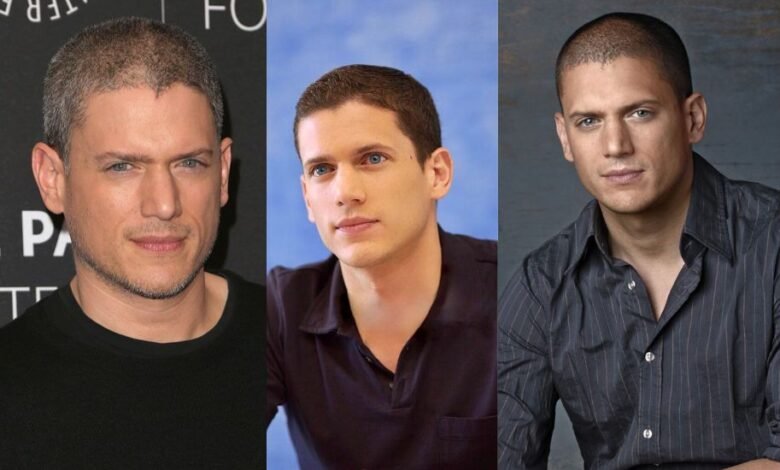
Few actors have left a mark as deep and multidimensional as Wentworth Miller. Known worldwide for his intense portrayal of Michael Scofield in Prison Break, Miller’s story extends far beyond television fame. His journey—from a reserved literature student at Princeton to a Hollywood icon and outspoken advocate for mental health and LGBTQ+ rights—reveals courage, intelligence, and self-awareness rarely seen in the entertainment industry.
This article explores Miller’s early life, the making of Prison Break, his work as a writer, his personal revelations, and how he continues to reshape narratives around identity, representation, and resilience.
Early Life and Academic Foundations
Wentworth Earl Miller III was born on June 2, 1972, in Chipping Norton, Oxfordshire, England, to American parents. His father, Wentworth E. Miller II, was a lawyer and educator of African-American, Jamaican, English, and German ancestry; his mother, Joy Marie Palm, was a special-education teacher of Russian, French, Dutch, Syrian, and Lebanese descent.
This unique multicultural background would later influence Miller’s nuanced perspectives on race and identity. Raised primarily in Brooklyn, New York, he attended Midwood High School before graduating from Quaker Valley Senior High School in Pennsylvania. His exceptional academic record earned him a place at Princeton University, where he majored in English Literature.
At Princeton, Miller honed both his intellect and creative instincts. He sang with the university’s a cappella group, the Princeton Tigertones, and wrote his senior thesis on classic literary themes of doubling and deception—an eerie foreshadowing of the complex dualities he would later embody on screen.
Breaking into Hollywood
After graduating in 1995, Miller moved to Los Angeles to pursue acting—a path that proved arduous. Without connections, he struggled for years, taking behind-the-scenes jobs in television production just to stay close to the industry.
His early appearances were modest: a few lines in Buffy the Vampire Slayer, a guest role on Popular, and a notable performance in the mini-series Dinotopia (2002). But even in small roles, his intensity and intelligence stood out.
Then came the opportunity that would define his career: Michael Scofield.
Prison Break: A Role that Changed Everything
When Prison Break premiered on Fox Network in 2005, audiences were instantly captivated by the show’s premise—a man intentionally incarcerated to break his innocent brother out of prison. As Michael Scofield, Wentworth Miller delivered a performance of quiet brilliance, portraying a structural engineer whose intellect and empathy made him both heroic and haunting.
Miller’s restrained charisma made Scofield an unforgettable character. His piercing gaze, methodical delivery, and emotional depth earned him a Golden Globe nomination for Best Actor in a Television Series – Drama.
The series ran for four seasons (2005–2009) and later returned for a fifth in 2017. Over its run, Prison Break became an international phenomenon, airing in more than 100 countries and gaining cult status in regions from the Middle East to South America.
Miller’s portrayal went beyond escapist TV—it introduced audiences to a protagonist driven by both intellect and emotion, redefining what a “TV hero” could be. He was not muscle-bound or loud; he was methodical, compassionate, and deeply human.
The Writer Behind the Actor
While most fans know Wentworth Miller as an actor, fewer realize his extraordinary gift for storytelling as a screenwriter.
In 2013, he made his writing debut under the pseudonym Ted Foulke with the gothic thriller Stoker, directed by Park Chan-wook (Oldboy). The film starred Nicole Kidman, Mia Wasikowska, and Matthew Goode, and was praised for its haunting beauty and psychological depth.
Critics admired Miller’s script for its layered character study and subversive take on grief and transformation. “Stoker plays like Hitchcock rewritten by a poet,” one reviewer remarked.
He later wrote The Disappointments Room (2016), further showcasing his ability to blend emotional trauma with horror metaphors. These projects revealed that Miller was more than a performer—he was a thinker and storyteller capable of exploring darkness, empathy, and redemption with rare subtlety.
Coming Out and Personal Reinvention
In August 2013, Miller publicly came out as gay through a letter declining an invitation to a Russian film festival. He cited Russia’s anti-LGBTQ laws as the reason, writing that he “could not in good conscience” attend an event in a country that persecuted people like him.
The statement reverberated globally. Miller’s coming out was more than a personal milestone—it was a defiant act of integrity. For years, he had avoided questions about his sexuality, fearing that honesty might end his career. Yet his decision to speak out turned him into a quiet but powerful voice for authenticity.
He later reflected:
“I’ve been out to myself for years, but coming out publicly was another matter. I wanted to claim my story, on my terms.”
Miller also revealed that he had long battled depression and suicidal thoughts, particularly during the height of his fame. In 2016, after a body-shaming meme about his weight went viral, he wrote a moving Facebook post explaining that the image had been taken during one of his darkest times. The post resonated with millions and became a defining example of using vulnerability to combat stigma.
Advocacy for Mental Health and Representation
Following these revelations, Miller began speaking openly about mental health and the importance of compassion. He has described depression as a “battle in the brain” that demands empathy rather than judgment. His honesty has inspired many fans who saw in him a mirror of their own hidden struggles.
In 2020, Miller announced he would no longer play straight characters, explaining that he wanted his work to align with his truth and to create space for more authentic LGBTQ+ storytelling. He stated:
“I’m out. Out of Prison Break. I just don’t want to play straight characters. Their stories have been told, and told again.”
That decision was met with both respect and disappointment among fans. But for Miller, it represented growth: a man choosing integrity over expectation.
In 2021, he disclosed that he had been diagnosed with autism as an adult—a revelation he approached with the same quiet courage that had defined his other public statements. Rather than claiming to be a spokesperson, he emphasized that his experience was still unfolding, saying:
“It’s been a long, flawed process, but I’m grateful. I get—now—that things can be different.”
Through all this, Miller has become a model of self-acceptance, showing that strength often lies in acknowledging one’s vulnerabilities.
Life Beyond the Spotlight
Miller’s recent years have been marked by selectivity. He has chosen fewer acting roles, prioritizing meaningful collaborations over mass exposure. He reunited with Prison Break co-star Dominic Purcell in the series The Flash and later Legends of Tomorrow, playing the witty antihero Captain Cold.
Fans rejoiced when news surfaced in 2024 that Miller and Purcell would once again collaborate—this time in a new drama titled Snatchback. While details remain scarce, the reunion signals Miller’s continued relevance and creative curiosity.
Off-screen, he continues to write, read, and engage with fans through thoughtful social-media posts that focus on mental health, kindness, and social justice rather than celebrity culture. His refusal to chase fame for its own sake reinforces his authenticity.
The Legacy of a Quiet Revolutionary
What makes Wentworth Miller extraordinary is not simply his acting range or writing skill—it’s his moral clarity. He has used fame as a platform for truth rather than self-promotion.
In an industry that often rewards artifice, Miller’s refusal to conform is quietly revolutionary. He dismantles toxic myths about masculinity, challenges Hollywood’s heteronormative narratives, and normalizes open discussion of mental health.
Moreover, his story challenges the traditional notion of success. For him, fulfillment isn’t measured by awards or headlines but by self-respect and alignment with one’s principles.
As an artist, he embodies a rare duality: brilliance and vulnerability, intellect and empathy, rebellion and grace.
Lessons from Wentworth Miller’s Journey
Miller’s life offers lessons beyond entertainment:
- Authenticity is Strength. Coming out and speaking about mental health took immense courage, yet it brought him peace and purpose.
- Resilience Redefines Success. His setbacks became sources of creativity—transforming pain into powerful art.
- Representation Matters. His decision to refuse straight roles underscored how visibility can shift cultural narratives.
- Self-Awareness Fuels Growth. Whether exploring autism or redefining his career path, Miller shows that evolving is not weakness—it’s wisdom.
Through his transparency, he has inspired millions to see that one can be both extraordinary and imperfect, both private and purposeful.
Conclusion
From the corridors of Princeton to the prisons of Fox River, from hiding his truth to embracing it boldly, Wentworth Miller has walked one of the most compelling journeys in modern entertainment. His artistry, intelligence, and advocacy have cemented him as more than a television icon—he is a voice of empathy in a culture that often confuses fame with fulfillment.
As he continues to write, reflect, and selectively perform, Miller’s influence grows not through spectacle but sincerity. His work and life remind us that representation, vulnerability, and mental wellness are not side notes to fame—they are the story itself.
And as we celebrate his ongoing journey, Empire Magazines stands proud to honor artists like Wentworth Miller who redefine success by living—and creating—truthfully.