Space Force Orbital Warship Carrier: From Strategic Vision to the Future of Space Defense

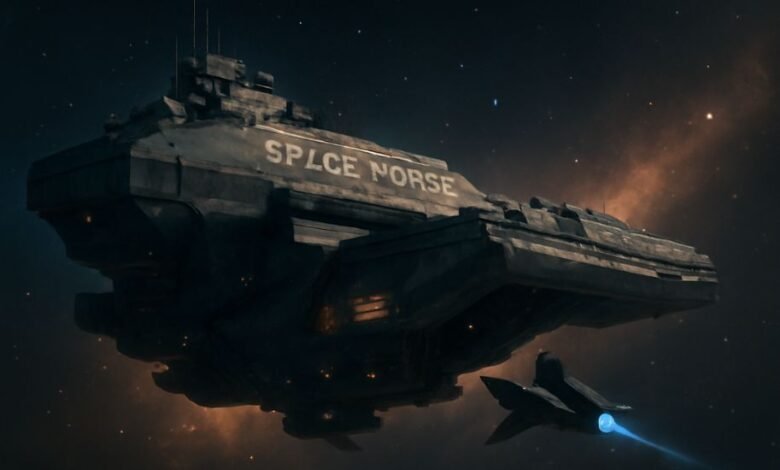
In recent years, the concept of a Space Force orbital warship carrier has captured global imagination. Social media, defense blogs, tech news outlets, and futurist think tanks frequently spotlight images of colossal warships drifting through low Earth orbit—part star cruiser, part military outpost. While some portrayals border on science fiction, others draw from genuine advances in space logistics, satellite deployment, and military readiness.
The United States Space Force (USSF), established in 2019, has accelerated the development of orbital assets that enhance surveillance, communication, and rapid deployment capabilities. Among the many projects under scrutiny, one idea repeatedly gains attention: an orbital “carrier” vessel capable of hosting and deploying smaller spacecraft, defensive systems, and strategic payloads.
While no literal weaponized battleship in orbit exists today, real-world technological programs—such as the SpaceWERX-backed Orbital Carrier initiative—lend growing credibility to concepts that once sounded futuristic. This article explores the phenomenon from every angle: what the idea means, what technology is driving it, how realistic the concept is, and where it fits in the broader geopolitical landscape.
1. Origins of the Orbital Warship Carrier Concept
The idea of a large space-borne carrier extends back decades. Science-fiction franchises such as Star Wars, Battlestar Galactica, and The Expanse popularized images of massive vessels capable of transporting fighter craft and projecting power across the solar system. The military, however, has long been more grounded in function than fantasy.
Early U.S. and Soviet space programs considered orbital platforms for reconnaissance and surveillance. But power projection through weaponized platforms in space was largely avoided due to the 1967 Outer Space Treaty, which restricts placing weapons of mass destruction in orbit. Instead, nations relied on ground-launched missiles and satellites.
The shift happened quietly as threats evolved.
The Militarization of Space
The modern satellite ecosystem is the backbone of global defense:
- GPS-guided weapons
- Strategic communications
- Missile detection
- Weather tracking for operational planning
- Intelligence, surveillance, and reconnaissance (ISR)
Rival powers began experimenting with anti-satellite (ASAT) weapons, cyber-attacks on space assets, and co-orbital “inspection” satellites capable of maneuvering near U.S. spacecraft—raising alarm among defense analysts.
This new era demanded a new doctrine: rapid response in orbit.
The idea of an orbital carrier, able to launch replacement satellites or counter threats without depending on ground-launched rockets, suddenly looked less like fiction and more like necessity.
2. What Blogs and Media Call the “Orbital Warship Carrier”
The online conversation around this concept exploded in 2024–2025. Articles from tech news sites, defense blogs, and emerging digital magazines began circulating dramatic interpretations:
- A “floating fortress” patrolling orbit
- A spacecraft with laser-based point defense systems
- A hangar bay storing reconnaissance drones
- A tactical hub coordinating real-time battlefield intelligence
- A “space aircraft carrier” deploying high-mobility microsatellites
These descriptions are imaginative extrapolations, but many draw from genuine defense innovations—especially the Gravitics Orbital Carrier, a modular on-orbit deployment platform that received up to $60M in SpaceWERX STRATFI funding.
Though not a weapon, this platform is repeatedly compared to an aircraft carrier due to one defining feature:
Pre-positioned Assets in Space
Unlike conventional satellites, which are designed for a single mission, an orbital carrier concept envisions:
- Storage of multiple deployable craft
- Maintenance and reconfiguration on-orbit
- Ability to maneuver across orbital lanes
- Rapid tactical deployment anywhere on the planet
As these ideas are filtered through sensational headlines, the phrase “orbital warship carrier” emerges as a hybrid term—half reality, half sci-fi—but grounded in genuine strategic logic.
3. The Real Program Behind the Buzz: Orbital Carrier Technology
To understand how much of this concept is real, we must examine the actual hardware under development.
Programmatically, the most advanced effort is the Orbital Carrier by Gravitics—a large satellite module designed to:
- Host several smaller satellites or spacecraft
- Provide power, propulsion, and communication support
- Deploy these payloads rapidly in response to emerging threats or missions
- Reduce reliance on expensive rocket launches
- Function as a “space logistics hub”
This platform is modular, with internal volumes ranging from 20–100 cubic meters or more. It resembles an orbital warehouse or garage rather than a battleship. But as analysts note:
“Any platform that can rapidly deploy spacecraft can also support defensive missions in a contested orbital environment.”
Therefore, while current carriers are not weaponized, the technological groundwork could evolve depending on future strategic pressures.
4. Key Technologies Enabling Future Orbital Carriers
Whether envisioned as military or multi-role platforms, orbital carriers rely on several rapidly advancing technologies.
4.1 High-Efficiency Propulsion Systems
Carriers require substantial maneuverability:
- Ion thrusters for long-duration stationkeeping
- Hall-effect thrusters for orbital changes
- Solar electric propulsion (SEP) for energy-efficient mobility
These systems allow slow but steady trajectory adjustments impossible for typical satellites.
4.2 Modular Satellite Bays and Hangars
A carrier must host craft of various shapes and sizes. Concepts include:
- Docking bays
- Deployable cubesat racks
- Robotic arms for servicing
- Rapid ejection systems for tactical deployment
This structure resembles a mix of payload fairing and orbital service module.
4.3 Autonomous Systems & AI Command Modules
In orbit, minutes matter. AI systems onboard handle:
- Threat detection (satellite proximity warnings)
- Resource management
- Precision maneuvering
- Collision avoidance
- Deployment sequencing
Autonomy reduces ground-control bottlenecks.
4.4 Defense & Security Systems (Speculative for Now)
Blogs often list futuristic defensive systems:
- Directed-energy (laser) interceptors
- Kinetic micro-interceptor drones
- Electronic warfare payloads
- Cyber shield modules
While these are not currently deployed, space security analysts consider them possible future additions—especially as competing nations expand their own orbital military tools.
4.5 Interoperable Communication Networks
Any orbital carrier must remain deeply integrated with:
- Space Force ground stations
- Secure tactical networks
- On-orbit relays using laser communication
- Allied defense systems
This creates a resilient multi-layered operational picture.
5. Strategic Advantages of an Orbital Warship Carrier
Why does this concept matter? Why are so many articles and analysts discussing it?
5.1 Tactical Responsiveness
Traditional space missions require:
- Scheduling a rocket
- Transporting hardware
- Fueling and integration
- Launch windows
- Weather clearances
An orbital carrier bypasses all of this.
Deployments become immediate: minutes or hours, not months.
5.2 Protection of Space Assets
If China or Russia deploy co-orbital threats, the U.S. could respond by:
- Launching interceptor microsatellites
- Using autonomous drones to reposition threatened assets
- Shifting the carrier itself
5.3 Deterrence
Just like naval aircraft carriers represent national power, orbital platforms signal strategic capability:
- Control of orbital lanes
- Rapid regional response
- Ability to project resilience and recovery
Global adversaries must reconsider the benefits of attacking U.S. satellites.
5.4 Repair and Servicing
An orbital carrier could function as a maintenance platform, improving the lifespan and flexibility of satellites.
5.5 Space Logistics Hub
Future lunar missions, Mars journeys, and asteroid operations may rely on orbital depots. The carrier could evolve into:
- Fuel storage hubs
- Transfer stations
- Crew support modules (far future)
Thus, even peaceful futures benefit from these developments.
6. Challenges and Limitations
Despite the hype, enormous barriers remain.
6.1 Arms-Control Treaties
Deploying weapons in space risks violating international agreements and destabilizing existing norms.
6.2 Cost and Engineering Complexity
A fully capable orbital carrier would require:
- Massive launch costs
- Radiation shielding
- Long-term life support (if crewed)
- Redundant power and propulsion
6.3 The Kessler Syndrome Threat
Any conflict in orbit risks generating debris that could:
- Threaten global satellite networks
- Shut down access to key orbits
- Endanger human spaceflight
6.4 Public Perception
Many fear the idea of a “Space Battleship” in orbit.
Public debate will influence political will and funding.
6.5 Technological Maturity
Some dreamed-of weapons—like high-energy lasers—are not yet practical in space due to:
- Power requirements
- Cooling challenges
- Beam dispersion over distance
So the full “warship” version remains theoretical.
7. Myth vs. Reality: What’s Actually Being Built?
Many online articles claim the Space Force is “nearing completion of its first orbital warship carrier.” These headlines exaggerate the truth.
What’s Real
- Orbital carriers as deployment platforms
- Modular on-orbit storage and servicing
- Maneuverable satellite buses
- Space logistics infrastructure
What’s Not (Yet) Real
- Giant space battleships
- Armor-plated war cruisers
- Laser cannons
- Crewed orbital carriers
That said, the line between “logistics platform” and “defensive asset” will blur as threats evolve. Historically, military platforms have a way of evolving from support roles into strategic assets.
8. The Future: What Could the Orbital Warship Carrier Become?
In 10–20 years, several evolutionary pathways exist:
8.1 The Orbital Defense Hub
A platform equipped with:
- Satellite shields
- Jamming systems
- Counter-surveillance systems
- Directed-energy defensive arrays
8.2 The Carrier-Like Deployment Platform
A vessel storing dozens of microsatellites, ready to deploy instantly.
8.3 Autonomous Patrolling Stations
AI-driven platforms monitoring orbital zones, responding faster than human-controlled systems.
8.4 Deep-Space Staging Posts
As space commerce expands, carriers could host:
- Maintenance for mining drones
- Transfer hubs for lunar spacecraft
- Cargo transition modules
8.5 Crewed Military Outposts (Far Future)
Some futurists imagine a hybrid between a space station and destroyer-class naval vessel.
This remains speculative, but no longer unimaginable.
9. Conclusion: A Symbol of a New Space Age
The phrase “Space Force orbital warship carrier” represents more than just a trending defense topic—it symbolizes humanity’s transition into a new era of space infrastructure, military preparedness, and orbital logistics. While we are far from deploying massive armored warships in orbit, the foundations being laid today will shape how nations secure their boundaries far above Earth.
As tensions rise and technological rivalry accelerates, orbital carriers—whether for logistics, deployment, or defense—will likely become a central component of U.S. and global security strategies. The line between sci-fi and reality is narrowing, and the next decade may decide whether orbital carriers remain conceptual visions or become fully operational assets.
This analysis and feature article is proudly published for readers of Empire Magazines, exploring the innovations that define our future.