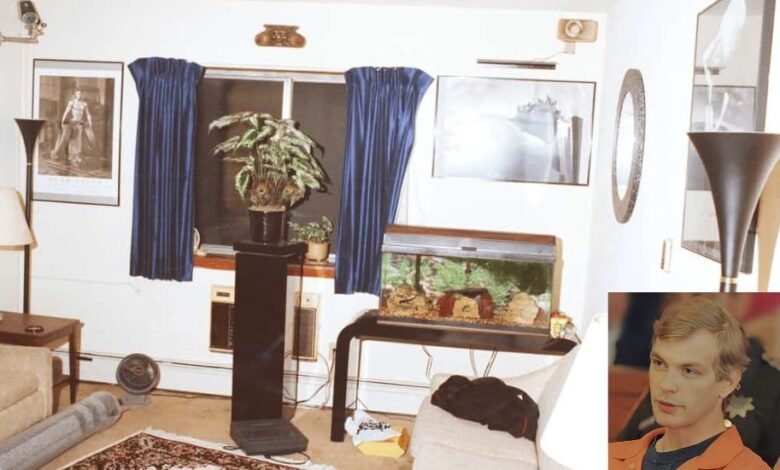
Few physical locations in American crime history carry the same dark resonance as Apartment 213 at 924 North 25th Street in Milwaukee. Known today simply as the Jeffrey Dahmer apartment, this compact, nondescript unit inside the Oxford Apartments has become synonymous with one of the most chilling serial crime cases in modern times. Though the building itself no longer stands, the story woven into its walls continues to hold a grim and cautionary power—one that reveals larger truths about policing failures, social neglect, vulnerable communities, and the unsettling banality behind real-world horror.
This article explores the apartment’s history, the environment surrounding it, how Dahmer used the space, and why the empty lot that remains today has become a site of reflection and unease rather than remembrance.
You may also read about: David Dahmer
A Quiet Building in a Struggling Neighborhood
When Jeffrey Dahmer signed the lease for Apartment 213 in May 1990, the Oxford Apartments were considered affordable, unremarkable, and positioned squarely within a low-income neighborhood on Milwaukee’s near West Side. The structure was a three-story, U-shaped brick building constructed in the 1960s—functional but far from attractive.
The area had its share of socioeconomic struggles: declining property values, high crime rates, and minimal city attention. For many, the Oxford Apartments were one of the few accessible housing options in the neighborhood. Most residents were working-class individuals or families, many of them people of color, often juggling financial pressures and safety concerns.
Dahmer paid around $300 a month, including most utilities. He was working regular hours at the Ambrosia Chocolate Factory, located not far from his new residence, and his quiet, solitary demeanor made him appear, at first glance, like just another tenant trying to get by in the city.
But behind the thin apartment walls, a far darker reality was unfolding.
Inside Apartment 213: A Disturbingly Ordinary Setting
One of the most haunting aspects of the Jeffrey Dahmer apartment case is how normal the unit appeared from the outside. Apartment 213 was a small one-bedroom layout: a modest living room, a galley kitchen, a bathroom, and a bedroom with a single window overlooking the street.
What would ultimately be discovered inside after Dahmer’s arrest, however, shocked the world.
The layout itself played a key role in how Dahmer operated. The kitchen offered a private workspace; the bedroom could be locked; the living room—a space that most tenants used for watching TV or having guests—became a chamber where Dahmer spent most of his time alone, often drinking heavily.
To neighbors, the signs were subtle but ominous:
- Unbearable smells drifting from the apartment
- Loud thuds or strange noises late at night
- The constant hum of a fan (which Dahmer used in attempts to mask odors)
- Occasional chemical smells, which he explained away as cleaning supplies
Residents complained to the building manager more than once. Dahmer’s explanations—spoiled meat, exotic fish, plumbing issues—were accepted without much challenge. In hindsight, many neighbors have expressed regret, frustration, and disbelief that an entire building lived beside a serial killer without realizing it.
The Missed Police Visit: A Tragic Turning Point
One widely discussed incident in the story of the Jeffrey Dahmer apartment is the police visit in 1991 that could have stopped him months earlier.
When a 14-year-old boy fled Dahmer’s apartment, drugged and disoriented, he was found by neighbors who called the police. Dahmer, reportedly calm and cooperative, told officers the boy was his adult lover who had simply had too much to drink. Despite residents pleading that something was wrong, officers escorted the teen back to Apartment 213.
Dahmer invited them inside. This moment has become one of the most controversial failures of policing in late-20th-century America.
The officers reported seeing nothing unusual—just a “messy” apartment. They left within minutes.
What they missed:
- A corpse in the bedroom
- Body parts hidden throughout the unit
- Evidence that could have immediately ended Dahmer’s crimes
This was a tragic and pivotal moment, and for many Milwaukee residents, particularly marginalized Black and brown communities, it deepened longstanding mistrust in law enforcement. The missed opportunity led to internal reviews, public outrage, and decades of discussion among criminal justice experts about bias, negligence, and systemic issues within the police department.
Discovery of the Apartment’s Secrets
On July 22, 1991, another would-be victim escaped from Dahmer’s apartment. This time, the police were not swayed by calm explanations or deceptive charm. Officers returned to Apartment 213, and upon searching it, they found photographic evidence documenting homicides, as well as human remains stored in various parts of the unit.
The interior of the apartment, photographed extensively during the investigation, became ingrained in public consciousness as a symbol of unthinkable violence disguised by mundane surroundings.
The horrifying discoveries led to Dahmer’s arrest and subsequent confession, and Apartment 213 immediately became a crime scene unlike any Milwaukee had ever seen.
Neighbors, Trauma, and the Shadow Left Behind
The residents of the Oxford Apartments lived with a unique kind of trauma: the realization that these atrocities occurred steps from their doors. Many felt violated, guilty, or shaken not only by the crimes but by the systemic failures that enabled them.
Local interviews and documentaries reveal several recurring themes:
Fear and disbelief
Many tenants struggled to reconcile the quiet man they passed in the hallway with the crimes later revealed.
Anger at law enforcement
The community’s frustration centered on the repeated complaints ignored and the botched welfare-check incident.
Concerns for safety
Parents worried that the trauma associated with the building would permanently scar the neighborhood’s reputation.
Demolition of the Oxford Apartments
After Dahmer’s arrest, the Oxford Apartments quickly transformed from a residential building to a dark tourist attraction. People visited to stare, take photos, or even attempt to break into the sealed apartment. The city recognized the ongoing disturbance and psychological harm this brought to nearby residents.
In 1992, about a year after the crimes came to light, the building was purchased for community redevelopment. On November 16, 1992, the Oxford Apartments were demolished.
Today, the site at 924 N. 25th Street is an empty grassy lot—quiet and unmarked. There is no memorial, no plaque, and no sign indicating what once stood there. The local community largely prefers it this way, viewing any formal marker as a potential magnet for sensationalism and dark tourism.
The emptiness of the lot speaks volumes:
A deliberate effort to prevent the glorification of tragedy while respecting the memories of victims whose lives were unjustly taken.
Why the Jeffrey Dahmer Apartment Continues to Captivate the Public
Even decades after Dahmer’s arrest, the apartment remains a focal point in documentaries, journalistic deep dives, and, more recently, the Netflix series Monster: The Jeffrey Dahmer Story. The series reignited global interest, prompting renewed online searches for photos, location information, and details about the apartment’s layout and history.
But the fascination surrounding the Jeffrey Dahmer apartment goes beyond mere curiosity. It raises complex issues:
1. The banality of evil
The ordinary appearance of the apartment challenges our assumptions about what danger looks like. Dahmer’s crimes took place not in an underground lair or isolated cabin—but in a normal city apartment, surrounded by people.
2. Questions about police conduct
Why were early warnings dismissed? This remains a case study in how biases and assumptions can cloud judgment, leading to catastrophic outcomes.
3. The ethics of true-crime content
As Dahmer’s story continues to circulate through pop culture, many question how to responsibly tell such a horrific narrative without sensationalizing or retraumatizing victims’ families.
4. Urban memory and trauma
The decision to leave the demolition site empty reflects a community’s struggle to balance memory, respect, and healing.
A Site Without a Marker: What the Empty Lot Represents Today
Walking past the lot today, you might not recognize its significance. Grass covers the foundation; a few trees stand nearby. The neighborhood has changed over the decades, with ongoing efforts to rebuild its sense of identity and stability.
The absence of a memorial is intentional. Local leaders, residents, and advocacy groups worry that marking the site would attract the wrong kind of attention—tourists seeking morbid thrills rather than paying respect to victims.
Instead, the lot has taken on a quieter, more symbolic meaning:
- A reminder of the victims and the importance of listening to marginalized voices
- A cautionary example of policing failures
- A lesson about isolation, neglect, and social blindness
- A rejection of the commercialization of tragedy
The empty space stands not as a monument to Dahmer, but as a rejection of his legacy.
The Jeffrey Dahmer Apartment in Media and Pop Culture
The notoriety of Apartment 213 has made it an unavoidable centerpiece in nearly all portrayals of the Dahmer case. Documentaries, books, podcasts, and streaming adaptations depict the apartment as the central stage of his crimes.
Media portrayals tend to fall into a few categories:
1. “Then & Now” neighborhood profiles
Reporters revisit the site to explore how the area has evolved and to interview longtime residents on how the events still shape local identity.
2. Investigative reconstructions
These focus on the timeline of crimes, police reports, and the physical evidence gathered inside the apartment.
3. Ethical critiques
Many articles reflect on whether dramatizations like the Netflix series exploit trauma for entertainment value—a debate that surged after victims’ families spoke out.
Despite the controversy, it’s clear the fascination persists because the apartment represents the intersection of horror and normalcy—a contradiction that unsettles and captivates audiences.
Why This Story Still Matters
More than three decades later, the Jeffrey Dahmer apartment remains deeply relevant for reasons that extend beyond true-crime intrigue:
- It exposes institutional blind spots—how prejudice and negligence can be deadly.
- It highlights the vulnerability of marginalized communities, especially young men of color who were repeatedly ignored despite obvious danger.
- It reminds us how predators exploit isolation, anonymity, and social disconnect.
- It underscores the need for ethical storytelling, ensuring victims are never overshadowed by the criminal.
Remembering what happened at Apartment 213 is not about dwelling on the gruesome details, but about amplifying the lessons that could prevent similar tragedies.
Final Thoughts
The Jeffrey Dahmer apartment at 924 North 25th Street, Apartment 213 has become an infamous landmark in American criminal history—not because of what it looked like, but because of what happened behind its closed door. Today, nothing remains of the physical structure, but the story continues to echo through discussions about justice, community, trauma, and social responsibility.
As we examine the events tied to Apartment 213, we must prioritize the victims, the survivors, and the lessons that emerged from a tragedy that should never have been allowed to unfold.
This article is published for informational and educational purposes by Empire Magazines.