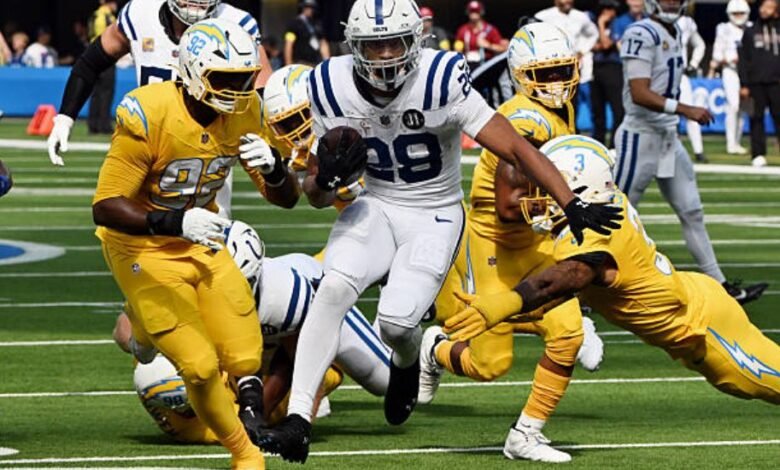
When you talk about NFL games that deliver drama, fireworks, and a showcase of raw talent on both sides of the ball, the Colts vs. Chargers matchup instantly deserves a spot on that list. Beyond the final scoreline, this game was a layered performance of offensive brilliance, defensive pressure, and individual star turns that changed the rhythm of all four quarters.
The goal of this article is simple: to break down the player stats from this clash in a detailed, analytical, and narrative-rich style — the kind of analysis that goes beyond numbers to explain what really happened on the field. Whether you’re crafting commentary, looking for insights for your blog, or simply reliving the game, this piece serves as your all-inclusive guide.
A Game of Early Momentum and Massive Offensive Output
From the opening whistle, the Colts came into this matchup with a sense of urgency and purpose. Their opening drives were not just productive — they were tactical masterpieces. Smart reads, efficient runs, and rhythmic passing plays helped Indianapolis seize control and build early momentum that Los Angeles struggled to counter for most of the first half.
On the opposing sideline, the Chargers displayed their trademark resilience. Even while under pressure, their passing attack remained explosive, driven by quarterback Justin Herbert’s ability to make deep-field throws under duress. But a slow start and defensive breakdowns in key moments became costly as the game stretched on.
Before breaking down the stats player by player, it’s important to recognize the broader structure of the game:
- Colts dominated early, using a balanced offense to build a commanding lead.
- Chargers fought back through the air, but their run game never found traction.
- Key individual performances told the real story of how each team executed or faltered.
Quarterback Duel: Daniel Jones vs. Justin Herbert
Daniel Jones (Colts)
23/34, 288 yards, 2 TDs
Daniel Jones proved once again why the Colts invested in his ability to control tempo and deliver under pressure. What stood out about Jones in this game wasn’t just his stat line — it was his composure. Every time the Chargers tried to tighten coverage or bring pressure, Jones countered with smart reads, quick releases, and perfectly timed passes.
He didn’t need to throw 400+ yards like Herbert did, because the Colts played from ahead. Jones’ efficiency was the glue that held the offense together. His throws to the sideline were sharp, his intermediate passes threaded through defenders, and his red-zone execution was textbook.
His best qualities in the game:
- Pocket discipline
- Play-action accuracy
- Third-down conversion efficiency
- Ability to avoid turnovers
Jones’ 288 yards don’t reflect the full story — his leadership and decision-making were the backbone of the Colts’ victory.
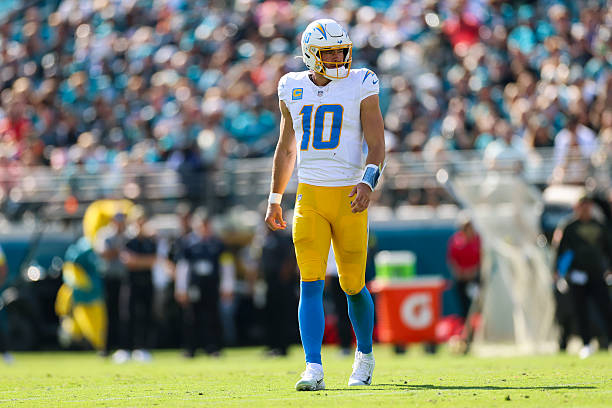
Justin Herbert (Chargers)
37/55, 420 yards, 3 TDs, 2 INTs
Statistically, Justin Herbert was sensational — in fact, his 420-yard performance ranks among the best by a losing quarterback this season. But numbers always need context. Herbert was playing catch-up from the second quarter onward, and the Chargers put the ball in his hands for nearly every meaningful drive.
What Herbert accomplished despite facing a well-structured Colts secondary was impressive. His deep shots were lasers, his sideline throws displayed high-level arm talent, and his ability to extend plays kept the Chargers alive deep into the game.
But the two interceptions? Those hurt. Both came at crucial junctures where a scoring drive could have changed momentum.
Herbert was the reason the Chargers stayed competitive — but also a reason they struggled to close the gap when it mattered.
His performance was equal parts elite and frustrating, and that duality defined the Chargers’ offensive story.
Running Backs: Jonathan Taylor Takes Over
Jonathan Taylor (Colts)
16 carries, 94 yards, 3 rushing touchdowns
Jonathan Taylor owned this game. While the Chargers’ defense braced for Jones’ passing attack, Taylor took advantage of every gap that opened. His touchdowns weren’t flukes — they were punishing, high-effort runs that showcased elite vision and acceleration.
Taylor scored on runs of 23, 8, and 19 yards, each one punctuating a drive and extending the Colts’ early lead.
What made Taylor’s performance special:
- Explosive acceleration through the second level
- Smart cutback decisions
- Red-zone dominance
- Ability to punish Chargers’ missed tackles
He may not have cracked 100 yards, but efficiency was the name of his game. He averaged nearly 6 yards per carry, and every touch carried weight.
Taylor was the offensive MVP for Indianapolis, hands down.
Chargers Rushing Attack
16 carries, 54 yards (team total)
This was the weakest element of Los Angeles’ game. With such a poor ground output, the Colts’ defense didn’t have to respect the run — and that allowed them to drop back into pass coverage more often, which only increased pressure on Herbert.
No single Chargers running back made an impact, and they rarely threatened between the tackles. This imbalance forced Herbert to shoulder more of the offensive burden and made the Chargers predictable in key moments.
Wide Receivers: A Showcase of Explosiveness
Keenan Allen (Chargers)
11 receptions, 119 yards, 1 TD
Reliable. Precise. Unstoppable on short and intermediate routes.
Keenan Allen once again proved why he’s one of the most technically refined receivers in the league. His route running kept the Colts secondary guessing, and his hands were as dependable as ever.
While Allen’s yardage contributed significantly to keeping the Chargers within reach, his presence also opened opportunities for other receivers — most notably, a breakout star.
Oronde Gadsden II (Chargers)
7 receptions, 164 yards, 1 TD
This was the breakout performance of the game.
Gadsden delivered chunk play after chunk play, including his first career touchdown. His size and speed combination created coverage mismatches all night, and Herbert repeatedly looked his way when he needed explosive gains.
If the Chargers have been searching for a future WR1 candidate, Gadsden’s performance should shift internal conversations fast.
His strengths during the game:
- Physical dominance against defenders
- Seam-route explosiveness
- High-point ability in contested catches
- Reliable release off the line
Gadsden’s rise was a silver lining in an otherwise uneven Chargers performance.
Colts’ Receiving Corps
The Colts didn’t have a single receiver with eye-popping numbers like Gadsden or Allen, but their unit functioned exceptionally well as a committee of contributors.
Key traits of Colts receivers in this game:
- Precision route running
- Clean hands and minimal drops
- Strong blocking support for Jonathan Taylor
- Picking up first downs in critical moments
This wasn’t a night for highlight-reel stat lines from Colts receivers — it was a night where they played disciplined, efficient, and complementary football, fitting perfectly into the game plan.
Defense: Pressure, Turnovers, and Tactical Adjustment
Colts Defense
The Colts’ defense deserves major credit for containing the Chargers early. Their two interceptions against Herbert weren’t accidents — they were the result of great anticipation, tight coverage, and reading Herbert’s eyes in high-pressure situations.
Key highlights of the Colts’ defensive performance:
- Strong early pressure on Herbert
- Effective disguising of coverage
- Limiting yards after catch
- Solid red-zone discipline
While they gave up large passing yardage later in the game, much of it came when the Colts were playing with a lead and adjusting into more conservative coverage shells.
Chargers Defense
The Chargers struggled for most of the game. Their biggest weaknesses included:
- Inability to stop Jonathan Taylor’s burst runs
- Failure to pressure Daniel Jones consistently
- Coverage breakdowns on key downs
- Poor tackling fundamentals
The defensive unit had occasional bright spots, but the lack of run defense and slow adjustments allowed Indianapolis to dictate the rhythm from the outset.
Turning Points and Narrative Flow of the Game
If you trace the momentum shifts of this matchup, three major turning points stand out:
1. Jonathan Taylor’s Early Touchdowns
These forced the Chargers to abandon balance and move into pass-heavy mode earlier than they preferred.
2. Herbert’s First Interception
This ended a promising Chargers drive and allowed the Colts to pile on more points before halftime.
3. Gadsden’s Big Plays Reviving Momentum
Although the Chargers never fully closed the gap, Gadsden’s breakout gave them a fighting chance late in the game.
The final quarter felt like Los Angeles punching through water — big gains but never enough to break free.
Final Analysis: A Tale of Control vs. Heroics
In the end, the Colts won because they controlled the game — through balance, smart play-calling, disciplined defense, and clutch individual performances.
The Chargers lost because they leaned too much on Herbert and provided too little support in the run game and defensive adjustments.
Top Colts Performers
- Jonathan Taylor — 3 TDs
- Daniel Jones — extremely efficient passing
- Colts secondary — 2 game-changing interceptions
Top Chargers Performers
- Justin Herbert — massive passing output
- Oronde Gadsden II — breakout star
- Keenan Allen — dependable chain mover
This game will be remembered for fireworks, but even more for how the Colts maintained structure while the Chargers relied on moments of brilliance.
Final Thoughts
The Colts vs Chargers match player stats reveal more than just numbers — they reveal contrasting football identities. One team won with balance and poise; the other impressed with individual explosiveness but struggled with consistency.
For more in-depth sports breakdowns, storytelling-driven analysis, and NFL insights, stay tuned to Empire Magazines — your home for detailed coverage that goes beyond the scoreboard.