United Flight UA967 Diverted Mid-Atlantic: What Triggered the Sudden Change?

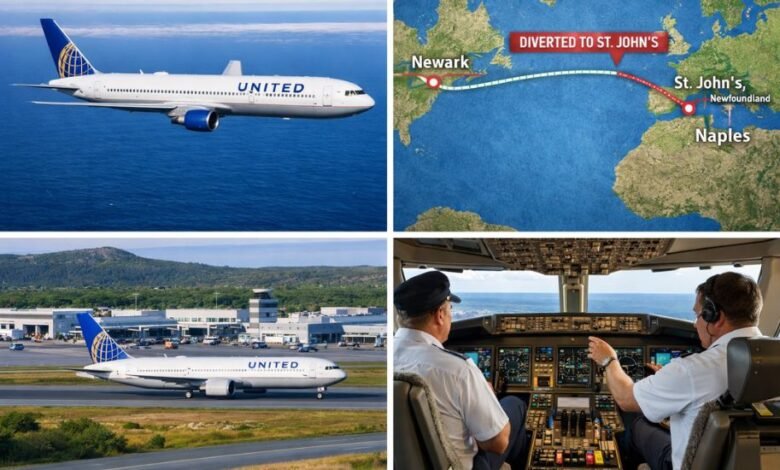
Flying across an ocean is one of modern travel’s quiet marvels—boarding in Europe and waking up closer to North America hours later. Yet even the most routine long-haul journeys can change course when safety systems flag something unexpected. That’s exactly what brought attention to United Flight UA967, a transatlantic service that made an unplanned stop mid-journey. In this article, we break down what occurred, why flight diversions are a normal part of aviation safety, how passengers were affected, and what this event reveals about long-haul operations today—all clearly, calmly, and without sensationalism.
What Really Happened With UA967
A Routine Transatlantic Flight That Took a Turn
United Flight UA967 was a regularly scheduled international flight connecting Naples, Italy, and Newark, New Jersey, operated by United Airlines. On the day in question, the aircraft—a Boeing 767-300—departed Naples and headed west across the North Atlantic.
Roughly midway through the journey, the flight crew elected to divert to St. John’s International Airport. The landing was safe and uneventful, with the airport well equipped to handle wide-body aircraft. After landing, passengers disembarked while the airline coordinated rebooking, meals, and accommodations. A replacement aircraft later completed the journey to Newark, allowing travelers to reach their destination with a delay rather than a cancellation.
Why It Was Diverted
Official statements described the reason as a “mechanical irregularity,” a broad aviation term used when onboard systems indicate something operating outside expected parameters. Importantly, this does not imply an emergency or immediate danger.
For long-haul flights over the Atlantic—where alternate airports are limited—pilots are trained to divert early if something feels off. St. John’s is a frequent choice for such situations due to its long runways, emergency readiness, and experience handling unexpected international arrivals.
Understanding Flight Diversions: Not Always What It Seems
What “Diversion” Really Means
A diversion simply means landing at a different airport than planned. It’s a preventive action, not a sign that something has gone wrong in a dramatic sense. Much like pulling over when a warning light appears in a car, it’s about caution and assessment.
Common Reasons Flights Change Course
Diversions commonly occur due to:
-
Weather concerns at the destination
-
Technical alerts or mechanical checks
-
Medical emergencies on board
-
Air traffic or runway availability issues
UA967’s diversion fits squarely within this routine safety framework.
What Passengers Experienced
For those on board, the diversion brought inconvenience rather than danger. Passengers described a smooth landing, professional cabin crew support, and the challenges typical of unexpected delays—rebooked connections, overnight accommodations, and altered plans. Despite the disruption, everyone arrived safely, underscoring the effectiveness of established diversion protocols.
The Wider Context: Aircraft Age, Maintenance, and What It Means
Aging Aircraft and Operational Realities
The Boeing 767 remains a dependable workhorse, but many airframes are decades old. Age alone doesn’t reduce safety; rigorous maintenance programs ensure continued airworthiness. However, older aircraft may generate more system alerts, prompting cautious decisions like the one made on UA967.
Between Reliability and Comfort
Airlines balance proven reliability with passenger expectations for newer cabins and efficiency. Events like this highlight how maintenance vigilance—not aircraft age—defines safety performance.
New Insight: How Transatlantic Safety Planning Works Behind the Scenes
Long-haul flights like UA967 operate under strict international safety rules designed specifically for ocean crossings. One key framework is ETOPS (Extended-range Twin-engine Operational Performance Standards), which dictates how far an aircraft can fly from the nearest suitable airport. Airlines must pre-plan multiple diversion options before departure, factoring in weather, runway length, rescue services, and fuel requirements. Throughout the flight, dispatchers on the ground continuously monitor aircraft data alongside pilots, reassessing diversion airports in real time. This layered system means that when a mechanical irregularity appears, the crew already knows where to go, how long it will take, and what support awaits on landing. Far from being improvised, diversions are rehearsed outcomes of detailed planning. UA967’s smooth reroute and landing demonstrate how these behind-the-scenes protocols quietly protect passengers every day, even when plans change mid-ocean.
Everyday Lessons From UA967’s Diversion
Safety Comes First
Aviation culture prioritizes precaution. Choosing to divert early prevents minor issues from escalating, even if it means inconvenience.
Communication Is Key
Clear explanations from crews help reduce passenger anxiety. Understanding why a diversion happens often matters as much as the outcome.
Preparing for the Unexpected
Flexible connections, carry-on essentials, and travel insurance can soften the impact when flights don’t go exactly as planned.
Conclusion
The diversion of United Flight UA967 was a measured, precautionary response to a mechanical irregularity—not a crisis. The crew diverted to a suitable airport, landed safely, and ensured passengers continued their journey with care. It’s a practical example of how modern aviation manages uncertainty: conservatively, collaboratively, and with safety above all else.
Frequently Asked Questions (FAQs)
Who decides whether a flight should divert?
The decision is made by the flight’s captain, in coordination with airline dispatchers and air traffic control, using established safety procedures.
Are transatlantic flights more likely to divert than shorter routes?
They aren’t more likely overall, but when issues arise, diversions are taken very seriously due to fewer alternate airports over open ocean.
Does weather influence diversion decisions even if the issue is mechanical?
Yes. Weather at potential alternate airports is always considered to ensure the safest possible landing option.
Will passengers be informed immediately during a diversion?
Crews typically share information as soon as it’s practical and accurate, balancing transparency with workload during critical flight phases.