Crossword puzzles have a funny way of turning everyday language into something that feels mysterious. A simple phrase like “optimistic exclamation” can leave even experienced solvers staring at a grid, wondering why such a common idea suddenly feels hard to pin down. This clue appears regularly in puzzles of all difficulty levels, and it often sparks confusion because it sounds broad but actually follows very specific conventions.
An optimistic exclamation is not just any positive word. In crossword language, it usually refers to a short, spoken reaction that expresses hope, confidence, or a favorable outlook. The challenge is that puzzles don’t always want the most obvious answer. They want the version that fits the grid, matches the tone of an exclamation, and aligns with how crossword editors think.
This topic might seem small, but it offers a great window into how crossword clues work, how solvers think, and why certain answers appear again and again. At Empire Magazines, we often explore everyday concepts that hide more complexity than they first appear to have, and this clue is a perfect example.
What “Optimistic Exclamation” Really Means in Crossword Language
In normal conversation, optimism can show up in many forms. Someone might say they feel confident, hopeful, or encouraged. But crossword clues compress language into tight, specific meanings. When a puzzle uses the phrase “optimistic exclamation,” it is pointing toward a spoken reaction, not a descriptive adjective or a long sentence.
That distinction matters.
Exclamation vs. Description
Crosswords are very precise about grammar and tone. An exclamation is something you might blurt out. It usually:
- Sounds conversational
- Can stand alone
- Expresses emotion or attitude immediately
By contrast, a descriptive word like “positive” or “optimistic” might describe a mood, but it is not something people naturally shout or say in reaction to a moment.
For example:
- Saying “This looks promising” is optimistic, but it’s a statement.
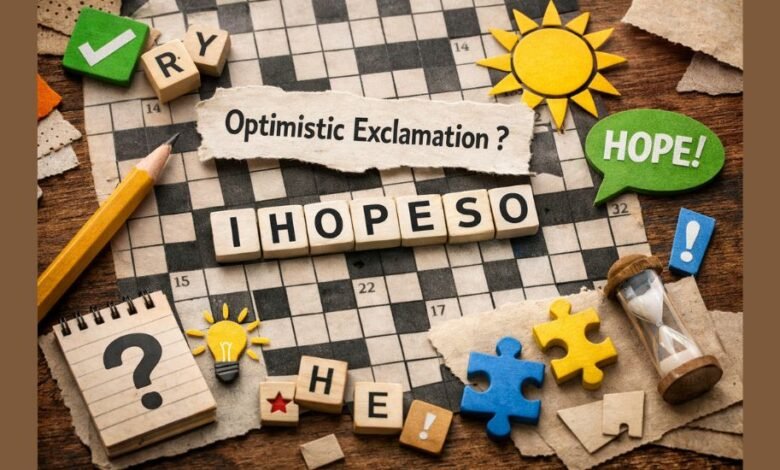
- Saying “I hope so!” is an optimistic exclamation.
Crossword clues almost always favor the second type.
Why the Clue Is Intentionally Vague
Puzzle constructors often keep clues broad to increase difficulty. “Optimistic exclamation” could theoretically fit dozens of phrases, but only a few meet crossword expectations. The solver has to rely on:
- Letter count
- Crossing words
- Common crossword vocabulary
This is why the clue shows up frequently. It gives puzzle makers flexibility while still pointing toward a familiar concept.
Common Answers and Why They Fit the Clue
Certain answers appear again and again when this clue is used. That repetition is not accidental. Crossword editors favor entries that are:
- Familiar to solvers
- Easy to clue in multiple ways
- Flexible across puzzle themes
Short, Hopeful Phrases
Most answers to “optimistic exclamation” are short phrases rather than single words. These phrases often sound like something someone would say when cautiously hopeful.
Examples of patterns you’ll often see:
- Expressions that include “hope”
- Mildly upbeat reactions rather than overly enthusiastic ones
- Casual spoken language rather than formal wording
This reflects how people express optimism in real life. Extreme excitement doesn’t always feel realistic, but quiet hope does.
Why Length Matters So Much
Crossword grids limit what answers can fit. A five-letter or seven-letter slot dramatically narrows the possibilities. That’s why some answers feel a little awkward when taken out of context. They weren’t chosen because they sound perfect; they were chosen because they fit.
Think of it like fitting furniture into a small room. You might love a large sofa, but if the space only allows a chair, you choose the chair. Crossword answers work the same way.
Spoken Language Over Formal Language
Crosswords lean heavily on spoken English. An optimistic exclamation is more likely to sound like something said casually than something written in an essay.
This is why you’ll almost never see:
- Long sentences
- Abstract philosophical optimism
- Technical language
Instead, you’ll see simple, everyday expressions that capture a hopeful tone quickly.
How Crossword Constructors Think About Optimism
To really grasp why this clue appears so often, it helps to understand how crossword creators think. They are not just filling boxes with words; they are building a balanced experience for the solver.
Emotional Balance in Puzzles
A good crossword mixes:
- Neutral clues
- Serious clues
- Light, conversational clues
“Optimistic exclamation” falls into the light category. It gives the puzzle a human feel. Without clues like this, grids would feel mechanical and dry.
Optimistic expressions also contrast nicely with clues that suggest doubt, frustration, or surprise. That emotional variety keeps solvers engaged.
Reusability Is Key
Constructors prefer clues and answers that can be reused across different puzzles without feeling stale. An optimistic exclamation works in:
- Daily puzzles
- Themed puzzles
- Easier grids for beginners
It doesn’t rely on pop culture, specific events, or specialized knowledge. That makes it safe and versatile.
Avoiding Ambiguity Without Over-Specifying
Ironically, the clue feels vague to solvers, but it is carefully calibrated. It avoids being too narrow while still steering the solver toward a specific type of answer.
If the clue were “hopeful sentence,” it would be too broad. If it were “three-word expression of cautious optimism,” it would be too obvious. “Optimistic exclamation” lands right in the middle.
Why Solvers Struggle With This Clue (and How to Approach It)
Even seasoned crossword fans can stumble on this clue. That’s not a sign of inexperience; it’s a sign that the clue is doing its job.
The Trap of Overthinking
Many solvers start by brainstorming big ideas:
- Confidence
- Success
- Positivity
But crosswords rarely want abstract concepts. They want something concrete and spoken.
A helpful mental shift is to imagine a real moment. Picture someone reacting to uncertain news. What would they say out loud? That reaction is closer to what the puzzle wants.
Using Cross Letters Effectively
Crossword solving is a process of elimination. If you’re stuck on “optimistic exclamation,” look at:
- The first and last letters from crossings
- Whether the answer sounds like natural speech
- Whether it could plausibly end with punctuation in real life
An exclamation point at the end of the answer is implied, even if it’s not written.
Recognizing Crossword Favorites
Some phrases are used more often than others. This doesn’t mean solvers should memorize lists, but pattern recognition helps. If an answer feels slightly awkward yet familiar, that’s often a clue that you’re on the right track.
This is similar to recognizing clichés in conversation. You may not love them, but you know them when you hear them.
The Broader Role of Optimistic Language in Crosswords
Beyond this specific clue, optimism plays an interesting role in puzzles as a whole. Crosswords reflect how people communicate, including how they express hope and uncertainty.
Optimism as a Neutral Emotional Tone
Optimistic exclamations are generally safe. They don’t offend, polarize, or rely on cultural context. That makes them ideal for puzzles meant for a wide audience.
In contrast, sarcasm or extreme emotion can be harder to clue fairly. Optimism sits comfortably in the middle.
Language as a Snapshot of Everyday Speech
Crosswords act like time capsules for language. The optimistic exclamations that appear today reflect how people actually talk. Short, understated expressions of hope are more common than dramatic declarations.
This mirrors broader communication trends:
- Casual tone over formal tone
- Brevity over long explanations
- Emotional nuance rather than extremes
Why These Clues Stick Around
Some clues fade as language changes. Others remain because they are flexible and timeless. “Optimistic exclamation” has staying power because people will always need ways to express hope, especially in uncertain situations.
That’s why this clue continues to appear decade after decade, even as puzzle styles evolve.
Final Thoughts: Why This Small Clue Matters More Than It Seems
At first glance, “optimistic exclamation crossword clue” looks like a minor puzzle detail. But when you unpack it, you see how much thought goes into even the simplest-looking clues. It reflects how crossword creators balance language, emotion, and structure, all while keeping solvers challenged but not frustrated.
For solvers, recognizing the logic behind this clue can make puzzles more enjoyable and less intimidating. Instead of guessing randomly, you start thinking like the puzzle itself. You look for spoken language, emotional immediacy, and common phrasing.
For readers of Empire Magazines, this topic is a reminder that everyday language often has layers we don’t notice until we’re asked to fit it into a grid. Optimistic exclamations aren’t just words; they’re snapshots of how people express hope in real life.
In the end, the charm of this clue lies in its simplicity. It doesn’t demand obscure knowledge or clever wordplay. It simply asks you to listen to how people talk — and that’s often the heart of a great crossword.
Frequently Asked Questions (FAQs)
What does “optimistic exclamation” mean in a crossword puzzle?
In crossword puzzles, an optimistic exclamation usually refers to a short spoken phrase that expresses hope or a positive outlook. It’s something a person might say aloud in response to uncertain but promising news, rather than a formal or descriptive word.
Is an optimistic exclamation always a positive word?
Not always a single word. In fact, crossword answers are often short phrases rather than adjectives. The key detail is that it sounds like natural speech and conveys optimism in the moment, not a long explanation.
Why does this clue appear so often in crosswords?
Puzzle creators like clues that are flexible and widely understood. “Optimistic exclamation” works well because it:
- Fits many grid sizes
- Uses everyday language
- Doesn’t rely on trends or pop culture
That makes it reusable across many puzzles and difficulty levels.
How can I tell if my answer fits this clue?
Ask yourself three questions:
- Does it sound like something someone would say out loud?
- Does it express hope or positivity?
- Would it make sense with an implied exclamation point?
If the answer is yes to all three, you’re likely on the right track.
Why do crossword answers sometimes feel awkward when read alone?
Crossword answers are chosen to fit grids, not to sound perfect on their own. An answer may feel slightly stiff outside the puzzle, but within the grid — supported by crossing letters — it usually makes sense.
Are optimistic exclamations the same as enthusiastic ones?
Not exactly. Optimistic exclamations tend to be measured and hopeful, not overly excited. Crossword puzzles often favor mild optimism over loud enthusiasm because it feels more natural and versatile.
Do letter count and crossings matter more than meaning?
They matter just as much. Even if an answer fits the meaning perfectly, it won’t work unless:
- The letter count matches the grid
- The letters agree with crossing words
Solving is always a balance between meaning and structure.
Is this clue common in easy or difficult puzzles?
It appears in both. In easier puzzles, the answer may be more obvious. In harder ones, the same clue might lead to a less expected phrasing, requiring careful attention to crossings.