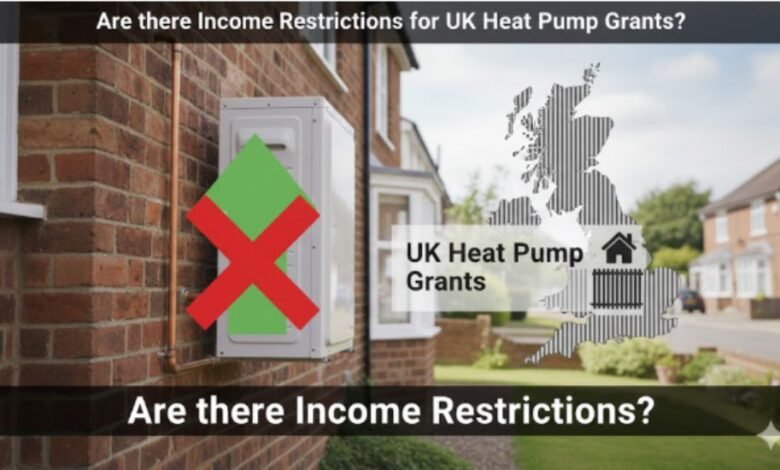
The UK runs two completely different heat pump grant schemes. One doesn’t care if you earn £20,000 or £200,000. The other won’t touch you unless you’re skint.
Which one applies to you? That’s the £7,500 question—or potentially the £20,000 question if you qualify for the right scheme.
Let’s cut through the bureaucratic nonsense.
The Two-Scheme Reality Nobody Explains Properly
The UK doesn’t have “heat pump grants”—it has two funding pathways that exist in parallel universes.
- Boiler Upgrade Scheme (BUS): Universal access, £7,500 grant, zero income restrictions. Runs until December 2027.
- ECO4 Scheme: Low-income only, potentially £10,000-£20,000+ total funding, strict income caps. Expires March 2026.
One’s for everyone. One’s for people struggling with energy bills. Which camp you’re in determines everything.
Boiler Upgrade Scheme: Income? Irrelevant.
Earn £25,000? £7,500 grant. Earn £250,000? £7,500 grant. Boiler Upgrade Scheme operates with total income blindness—it’s a climate policy, not a poverty program.
BUS eligibility hinges entirely on property criteria:
- You own the property (primary residence or second home)
- Located in England or Wales
- Valid EPC issued within last 10 years
- Current heating system runs on fossil fuels (gas, oil, LPG, electric)
- Heat pump capacity under 45kW
Notice what’s missing? Any mention of your salary, benefits status, or household income. BUS treats a millionaire and a minimum-wage worker identically.
Why No Income Restrictions?
Because BUS exists to decarbonise Britain’s housing stock, not redistribute wealth. The government wants heat pumps in every property type across every income bracket. Making it means-tested would slow adoption—simple as that.
If you’re reading this, wondering whether your £60,000 household income disqualifies you: it doesn’t. If your property meets the criteria, you’re in.
The BUS Application Reality
Apply through an MCS-certified installer. They handle the paperwork, redeem your voucher, and deduct £7,500 from your installation cost. Total process takes 2-4 weeks once you’ve chosen an installer.
No income verification. No benefit checks. No financial assessments whatsoever.
The only financial question BUS asks: can you afford the remaining £5,000-£7,000 after the grant? If yes, you’re good to go regardless of total income.
ECO4 Scheme: Income? Everything.
Now we’re in completely different territory. ECO4 runs on means-testing, benefit eligibility, and fuel poverty metrics. This is where income restrictions dominate every aspect of qualification.
Who Actually Qualifies for ECO4?
ECO4 targets households earning roughly under £31,000 annually or receiving qualifying benefits. But it’s more nuanced than a simple income cutoff.
Primary eligibility route: Qualifying benefits
- Universal Credit
- Pension Credit
- Housing Benefit
- Child Tax Credits
- Income-related Employment Support Allowance
- Income-related Jobseeker’s Allowance
If anyone in your household receives these? ECO4 eligibility is automatic. No income calculations needed—benefit receipt proves low-income status.
Secondary route: ECO4 Flex (income threshold)
For households not receiving benefits, local authorities can refer you if household income sits below £31,000 annually AND your property has poor energy efficiency (EPC rating E, F, or G).
This threshold varies slightly by region—some councils apply £28,000 caps, others stretch to £33,000. Local authority discretion means geographic lottery affects eligibility.
The ECO4 Flex Vulnerability Exception
Here’s where it gets interesting for edge cases.
Even if you exceed the £31,000 threshold, ECO4 Flex allows referrals for households considered “vulnerable to cold”—elderly occupants, residents with chronic health conditions (respiratory issues, cardiovascular disease), young children, or disabled household members.
Income becomes less absolute when vulnerability factors stack up. A household earning £35,000 with a 75-year-old occupant suffering from COPD? Local authority might approve ECO4 eligibility despite exceeding the income threshold.
Don’t assume you’re automatically excluded at £32,000—ask your council’s ECO4 coordinator about vulnerability assessments.
Grant Values: Why ECO4 Demolishes BUS for Qualifying Households
This is where understanding income restrictions becomes financially critical.
| Scheme | Heat Pump Grant | Additional Funding | Typical Total Value |
| BUS | £7,500 | None | £7,500 |
| ECO4 | £7,500 equivalent | Insulation, radiators, controls | £10,000-£20,000+ |
BUS gives you £7,500 toward a heat pump. Period. You’re funding the rest—typically another £5,000-£7,000.
ECO4? Often fully funded heat pump installation PLUS cavity wall insulation (£1,500-£3,000), loft insulation (£800-£1,500), radiator upgrades (£2,000-£4,000), and additional energy efficiency measures.
Why ECO4 Offers More
Because ECO4 obligates energy suppliers to fund fuel poverty reduction. They’re legally required to deliver energy efficiency improvements to low-income households as part of their operating licenses.
BUS comes from general taxation. ECO4 comes from energy company obligations. Different funding sources, radically different grant structures.
Critical Timing and Application Mistakes
The Scheme-Switching Problem
You cannot start a BUS application and then switch to ECO4 mid-process. Once you’ve signed with an installer and they’ve initiated BUS paperwork, that path locks in.
If you haven’t signed anything yet? Investigate ECO4 eligibility BEFORE committing to BUS. A two-week delay in checking ECO4 could unlock £10,000 additional funding.
The Expiration Pressure
BUS runs until December 2027—plenty of time to decide. ECO4 expires March 2026, 16 months away as of this writing.
If you qualify for ECO4, act faster. Waiting until 2026 risks missing the scheme entirely if local funding is allocated early or application volumes spike as the deadline approaches.
Some councils already report ECO4 waiting lists for 2025. First come, first served applies when funding gets tight.
Property Type Complications Beyond Income
Both schemes restrict certain property types regardless of income.
Neither BUS nor ECO4 fund:
- Replacement of existing heat pumps
- New build properties (except owner-built)
- Social housing (different funding routes exist)
ECO4-specific advantage for renters:
Private tenants can access ECO4 with landlord written consent. BUS treats rental properties inconsistently depending on circumstances—making ECO4 sometimes more accessible for renters despite income restrictions.
If you’re a tenant earning £25,000, ECO4 might be your only realistic pathway even though BUS technically allows rental property applications.
The Bottom Line
Income restrictions divide UK heat pump grants into two distinct worlds. Earn above £35,000? BUS is your pathway, and income doesn’t restrict you whatsoever. £7,500 is yours if the property qualifies.
Earn below £31,000 or receive benefits? ECO4 should be your first stop—potentially £10,000-£20,000 total funding crushes BUS’s universal £7,500 grant.
The cruel irony: income restrictions exist to expand funding for low-income households, not restrict it. If you qualify for ECO4, those “restrictions” actually unlock substantially better support than the unrestricted BUS scheme offers.
Check ECO4 eligibility before assuming you’re excluded. Check it before committing to BUS. And check it soon—March 2026 arrives faster than you think.