Bolivia National Football Team: History, World Cup Record, Copa América Success & Legendary Players

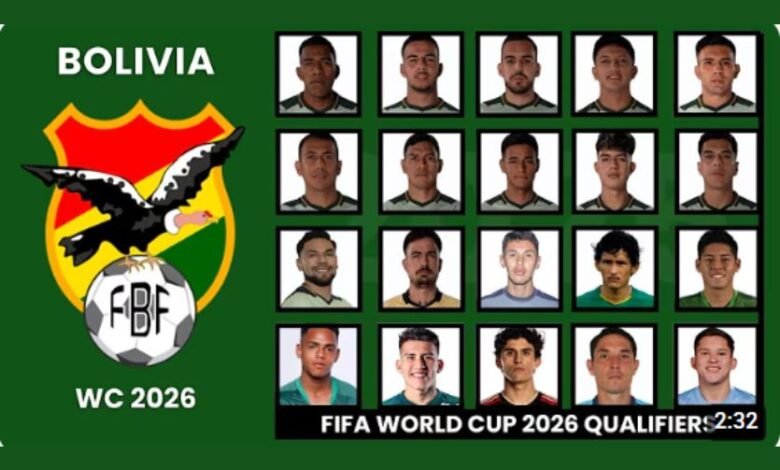
The Bolivia National Football Team represents Bolivia in international men’s football and is governed by the Bolivian Football Federation (FBF). As one of the ten members of CONMEBOL, South America’s governing football body, Bolivia regularly competes against some of the strongest football nations in the world. Although qualifying for major tournaments has often proven difficult, Bolivia has earned respect through memorable victories, a rich footballing tradition, and one of the most unique home advantages in international sport.
Over nearly a century of international competition, Bolivia has developed countless talented players, celebrated historic triumphs, and maintained a passionate football culture. The team’s identity is deeply connected to the country’s geography, history, and unwavering love for the beautiful game.
The Origins of Football in Bolivia
Football arrived in Bolivia during the late nineteenth and early twentieth centuries through British workers, engineers, and merchants who introduced the sport while working in mining and railway industries. As the game spread across the country, local clubs emerged, and football quickly became one of Bolivia’s favorite sports.
The Bolivian Football Federation was established in 1925, allowing the nation to organize official competitions and represent Bolivia internationally. Just one year later, Bolivia became affiliated with FIFA, opening the door to global competition. Since then, the national team has continuously represented the country in South American championships, World Cup qualifiers, and international friendlies.
Why Bolivia Is Known as La Verde
The Bolivia National Football Team is widely known by the nickname La Verde, meaning “The Green One.” The nickname comes from the team’s traditional green home jerseys, which symbolize the lush landscapes and natural beauty found across parts of Bolivia.
Green has become an important part of the team’s identity. Supporters proudly wear green during matches, stadiums are filled with green flags, and the nickname has become synonymous with Bolivian football itself. The team’s away kit is usually white, complemented by colors from the national flag.
Bolivia’s Early International Football Journey
Bolivia participated in the inaugural FIFA World Cup held in Uruguay in 1930, making it one of the earliest nations to compete in football’s most prestigious tournament. Although the team did not advance beyond the group stage, simply participating marked an important milestone in Bolivian sporting history.
The national team continued competing throughout South America during the following decades, gradually gaining experience against powerful neighbors such as Brazil, Argentina, Uruguay, Chile, and Paraguay. These matches helped establish Bolivia as a respected competitor despite facing significant challenges.
Bolivia returned to the FIFA World Cup in 1950 after qualifying for the tournament. Once again, the team exited during the group stage, but continued developing its football infrastructure and domestic competitions.
The Historic Copa América Triumph of 1963
The greatest achievement in Bolivia’s football history came in 1963 when the nation hosted the South American Championship, now known as Copa América.
Playing before enthusiastic home crowds and benefiting from familiar high-altitude conditions, Bolivia delivered an outstanding tournament performance. The team defeated several established football nations and finished as tournament champions, securing its first and only Copa América title.
Winning the championship remains one of the proudest moments in Bolivian sports history. The success united the country, elevated football’s popularity, and established Bolivia among South America’s respected football nations.
Even today, the 1963 triumph continues to inspire new generations of players who dream of repeating that historic success.
The Memorable 1994 FIFA World Cup Qualification
After decades without reaching football’s biggest tournament, Bolivia finally qualified for the 1994 FIFA World Cup held in the United States.
The qualification campaign remains one of the most celebrated chapters in the country’s sporting history. Bolivia earned impressive victories during CONMEBOL qualifying, including a famous home victory over Brazil. That result ended Brazil’s long unbeaten record in World Cup qualifying matches and shocked the football world.
The Bolivian squad featured talented players who combined technical ability, teamwork, and tactical organization. Although Bolivia did not advance beyond the group stage during the World Cup itself, simply reaching the tournament represented a tremendous accomplishment.
To date, the 1994 FIFA World Cup remains Bolivia’s most recent appearance at football’s greatest competition.
Copa América Performances Beyond 1963
While Bolivia has not won another Copa América title since 1963, the national team has enjoyed several memorable tournament campaigns.
One of the most significant came in 1997 when Bolivia once again hosted Copa América. Backed by passionate supporters, La Verde advanced all the way to the final after producing several impressive performances.
In the championship match, Bolivia faced Brazil. Despite their determined effort, the hosts finished as runners-up after losing to one of the strongest Brazilian teams of the era.
Bolivia also reached the quarterfinals during the 2015 Copa América, proving that the team remains capable of competing against South America’s elite under the right circumstances.
Bolivia’s Unique High-Altitude Home Advantage
One of the most fascinating aspects of Bolivian football is its extraordinary home advantage.
Many international matches are played at high-altitude stadiums located in La Paz or El Alto. The Estadio Hernando Siles sits approximately 3,637 meters above sea level, while the newer Estadio Municipal de El Alto rises to more than 4,100 meters, making it one of the highest international football venues in the world.
The thin mountain air creates difficult playing conditions for visiting teams that are not accustomed to such elevations. Players often experience reduced stamina, quicker fatigue, and breathing difficulties during matches.
Bolivian footballers, who regularly train and compete under these conditions, are naturally adapted to the altitude. This unique advantage has contributed to several famous victories against stronger football nations and remains an important part of Bolivia’s competitive identity.
Style of Play
Throughout its history, Bolivia has adapted its playing style according to available talent and coaching philosophy.
Modern Bolivia often emphasizes organized defending, disciplined teamwork, quick passing, and rapid counterattacks. The team also seeks to maintain possession while taking advantage of home conditions that can tire visiting opponents.
Young players have increasingly become central to Bolivia’s tactical approach. Coaches have focused on developing energetic squads capable of pressing aggressively while maintaining technical quality.
Although Bolivia may not always dominate possession against stronger nations, the team’s determination and work ethic frequently allow it to remain competitive.
Legendary Bolivian Footballers
Bolivia has produced several outstanding footballers who have become national icons.
Marco Etcheverry is widely regarded as one of Bolivia’s greatest players. His creativity, passing ability, and leadership made him the face of Bolivian football during the 1990s. He played a vital role in Bolivia’s qualification for the 1994 FIFA World Cup and enjoyed success at both club and international levels.
Erwin Sánchez also ranks among Bolivia’s finest footballers. A technically gifted midfielder, Sánchez represented Bolivia in numerous international tournaments and became known for his intelligence, vision, and goal-scoring ability.
Julio César Baldivieso contributed significantly to Bolivia’s golden generation with his excellent midfield performances and leadership qualities.
Other respected Bolivian football legends include Víctor Agustín Ugarte, Ramiro Blacut, Juan Manuel Peña, Carlos Trucco, and Joaquín Botero. Their achievements helped shape the country’s football history and inspired future generations.
More recently, young talents such as Miguel Terceros have emerged as promising representatives of Bolivian football’s future.
Challenges Facing Bolivia
Competing in South American football presents enormous challenges.
CONMEBOL includes several of the strongest football nations in history, including Brazil, Argentina, Uruguay, Colombia, Ecuador, Paraguay, Chile, Peru, and Venezuela. Every World Cup qualifying campaign requires Bolivia to face world-class opponents home and away.
Away matches remain particularly difficult because Bolivia loses much of its famous altitude advantage while facing technically superior teams on unfamiliar pitches.
Limited financial resources, smaller player development systems, and fewer internationally recognized domestic clubs also make sustained success more difficult compared to regional giants.
Nevertheless, Bolivia continues investing in youth development, coaching education, and improved football infrastructure to remain competitive.
Current Generation and Future Outlook
The current Bolivia National Football Team reflects a period of gradual rebuilding.
Young footballers are receiving greater opportunities to represent the national side, while experienced players continue providing leadership during important international fixtures.
Under coach Óscar Villegas, Bolivia has emphasized tactical discipline, attacking football, and long-term player development. The coaching staff has shown confidence in emerging talent while maintaining the team’s traditional fighting spirit.
Although qualifying for future FIFA World Cups remains challenging, recent improvements have encouraged supporters who believe Bolivia is capable of becoming increasingly competitive in South American football.
Investment in youth academies, professional coaching, and international experience could strengthen the national team for years to come.
Passionate Supporters and Football Culture
Football occupies a special place within Bolivian society. International matches attract enormous public interest, and supporters proudly follow La Verde through victories and disappointments alike.
When Bolivia plays at home, stadiums create an unforgettable atmosphere filled with green shirts, national flags, drums, songs, and passionate chants. Fans see the national team as more than just a football squad; it represents national identity, resilience, and unity.
Young children across Bolivia dream of wearing the green jersey one day, while former legends remain celebrated throughout the country for their contributions to Bolivian football history.
This enduring passion ensures that football continues to thrive despite the challenges faced by the national team.
Bolivia’s Place in South American Football
Although Bolivia does not possess the trophy collection of Brazil, Argentina, or Uruguay, its contribution to South American football should never be underestimated.
The nation’s Copa América triumph, multiple World Cup appearances, memorable victories over football powerhouses, and unique home environment have secured Bolivia an important place in the continent’s football heritage.
Every qualifying campaign reminds the football world that Bolivia is capable of producing surprises. Visiting teams understand that playing against La Verde in the Andes is among the most demanding experiences in international football.
As the team continues developing young talent and modernizing its football structure, optimism remains high that Bolivia can once again qualify for major international tournaments.
Conclusion
The Bolivia National Football Team represents determination, national pride, and an enduring passion for football. From competing in the first FIFA World Cup in 1930 to lifting the Copa América trophy in 1963 and qualifying for the 1994 World Cup, La Verde has created unforgettable moments that continue to inspire supporters across the nation.
While challenges remain in one of the world’s toughest football confederations, Bolivia’s commitment to youth development, tactical evolution, and competitive spirit offers hope for the future. The team’s remarkable home advantage, rich football history, legendary players, and devoted fan base ensure that Bolivia remains one of South America’s most unique and respected football nations. Whether competing in World Cup qualifiers, Copa América, or international friendlies, La Verde continues to embody the resilience and ambition of Bolivian football, carrying the dreams of an entire nation every time the players step onto the pitch.