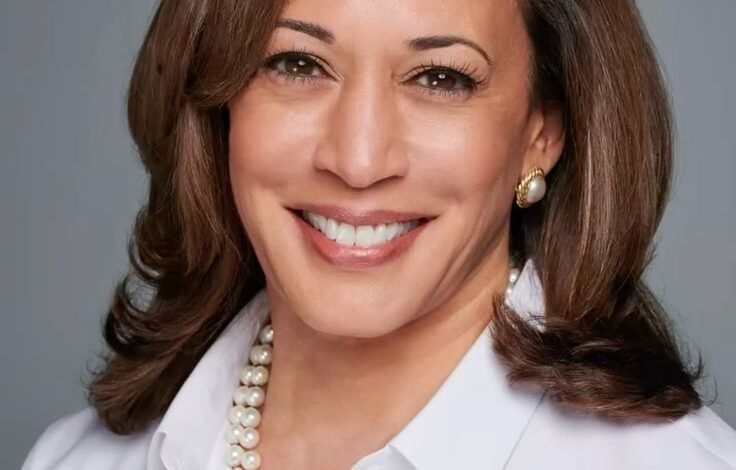
In the annals of American political history, few figures have risen to prominence with the speed, skill, and significance of Kamala Devi Harris. From her roots in a multicultural immigrant household to the White House as the 49th Vice President of the United States, Harris’s journey reflects the evolving face of America itself — diverse, determined, and democratic. Her ascent marks not just personal success but a symbol of change, progress, and representation for women and minorities across the globe.
Early Life and Family Background
Kamala Devi Harris was born on October 20, 1964, in Oakland, California, to immigrant parents who shaped much of her worldview and identity. Her mother, Shyamala Gopalan, was a biomedical scientist from Chennai, India, who conducted groundbreaking research on breast cancer. Her father, Donald J. Harris, emigrated from Jamaica and became a respected professor of economics at Stanford University. Growing up in a multicultural household, Kamala was exposed to two rich cultural heritages while being raised primarily by her mother after her parents’ separation. Shyamala instilled in Kamala and her younger sister, Maya, the importance of education, independence, and standing up for justice.
During her childhood, Harris attended both Black Baptist and Hindu temples, reflecting her family’s diverse background. She was deeply influenced by the civil rights movement of the 1960s and 1970s, often accompanying her mother to protests and community events that advocated equality and social change. Harris attended public schools in Berkeley, including the notable Thousand Oaks Elementary School, where she was part of the second class to integrate through a busing program — an experience that later shaped her views on race and education.
At the age of 12, her family moved to Montreal, Canada, when her mother accepted a research position at McGill University. There, Harris attended Westmount High School, where she demonstrated leadership and a growing interest in social issues. The move exposed her to yet another culture and strengthened her adaptability and global outlook. After graduating from high school, Harris returned to the United States to attend Howard University in Washington, D.C., one of the most prestigious historically Black colleges. Her early life — defined by multicultural experiences, strong maternal influence, and exposure to activism — laid the foundation for her lifelong commitment to justice, equality, and public service.
Kamala Harris Education
Kamala Harris’s educational journey played a pivotal role in shaping her values, leadership style, and commitment to justice. After completing high school in Montreal, Canada, she chose to attend Howard University in Washington, D.C.—one of the most prestigious historically Black universities in the United States. Known for its rich legacy of producing African American leaders, Howard became the place where Harris’s political consciousness and identity as a Black woman deepened. She majored in political science and economics, disciplines that would later underpin her career in law and public service. During her time at Howard, Harris was active in campus life, joining the debate team and the Alpha Kappa Alpha Sorority, Incorporated—the first African American Greek-letter sorority—which fostered her sense of sisterhood, service, and community engagement.
Howard’s environment exposed her to a diverse network of ambitious students and influential mentors, many of whom were deeply involved in political activism and social reform. Harris often credited her years there as transformative, calling Howard a “training ground for excellence.” The university’s emphasis on leadership and responsibility toward one’s community reinforced her belief in using education as a tool for empowerment and social change. It was also at Howard that Harris gained a deeper appreciation of her dual heritage and learned to navigate the complexities of race and identity in America.
After graduating from Howard, Harris pursued her legal education at the University of California, Hastings College of the Law, located in San Francisco. At UC Hastings, she earned her Juris Doctor (J.D.) degree, refining her understanding of criminal justice, constitutional law, and advocacy. Her legal education equipped her with the analytical skills and moral foundation to pursue a career as a prosecutor dedicated to fairness and reform. Harris passed the California bar exam in 1990, officially beginning her professional journey in law. Her education at Howard and UC Hastings not only prepared her academically but also nurtured her resilience, leadership, and lifelong commitment to public service—qualities that would eventually propel her to become the first woman, first African American, and first South Asian Vice President of the United States.
Kamala Harris Political Career
Kamala Harris’s political career is marked by historic achievements, resilience, and a steadfast commitment to justice and equality. Her journey began in the early 1990s when she worked as a deputy district attorney in Alameda County, California, where she gained a reputation for being a tough yet fair prosecutor. Her focus was on combating violent crime while also seeking reforms that emphasized rehabilitation and fairness within the justice system. Harris’s early work set the foundation for her rise in California politics. In 2003, she ran for and won the position of District Attorney of San Francisco, becoming the first woman, first African American, and first South Asian American to hold that office. During her tenure, she launched innovative programs such as “Back on Track,” which aimed to reduce recidivism by providing nonviolent first-time offenders with education and job opportunities instead of jail time.
In 2010, Harris made history again when she was elected Attorney General of California, narrowly defeating her opponent in one of the closest races in the state’s history. She became both the first woman and the first African American to hold the position. As Attorney General, Harris tackled issues such as foreclosure fraud, environmental protection, criminal justice reform, and marriage equality. She also played a significant role in negotiating a $25 billion settlement with major banks to provide relief to homeowners affected by the housing crisis. Though some critics argued that she was too cautious on certain progressive issues, Harris earned respect for her strategic thinking and pragmatic leadership style.
In 2016, Harris was elected to the United States Senate, representing California. As a senator, she served on key committees, including the Senate Judiciary Committee, where she gained national attention for her sharp questioning during high-profile hearings, including those of Supreme Court nominees and federal officials. Her work in the Senate focused on issues such as healthcare reform, immigration, criminal justice, and women’s rights.
Harris’s career reached a historic milestone in 2020 when she was elected Vice President of the United States alongside President Joe Biden, making her the first woman, first African American, and first South Asian American to hold the office. Her political career reflects a lifelong dedication to breaking barriers, advocating for justice, and representing the voices of the marginalized in American democracy.
Kamala Harris Vice President
Kamala Harris made history on January 20, 2021, when she was sworn in as the 49th Vice President of the United States, becoming the first woman, the first African American, and the first South Asian American to hold the nation’s second-highest office. Her election marked a defining moment in American history, symbolizing progress toward greater diversity and representation in government. Serving alongside President Joe Biden, Harris brought her extensive experience as a senator, attorney general, and district attorney to the White House, where she has focused on issues such as voting rights, immigration reform, reproductive freedom, and economic equity.
As Vice President, Harris has played a crucial role in advancing the Biden administration’s priorities, including managing efforts to address the COVID-19 pandemic, promoting infrastructure development, and tackling the root causes of migration from Central America. She has also been a leading voice on protecting democracy and ensuring access to the ballot box, often emphasizing the importance of civic engagement and equality under the law.
Internationally, Harris has represented the United States on diplomatic missions, strengthening alliances and advocating for global cooperation on issues like climate change, cybersecurity, and women’s empowerment. Despite facing intense scrutiny as the first woman and person of color in her position, Harris has continued to embrace her role with determination and resilience. Her vice presidency not only breaks historical barriers but also inspires future generations to believe that leadership at the highest levels of government is within reach for all Americans, regardless of gender or background.
Kamala Harris Parents
Kamala Harris was born to two accomplished and socially conscious immigrant parents who deeply influenced her values and worldview. Her mother, Shyamala Gopalan, was an Indian-born biomedical scientist from Chennai who conducted groundbreaking research on breast cancer. Intelligent, compassionate, and fiercely independent, Shyamala instilled in Kamala and her sister, Maya, the importance of education, equality, and standing up for what is right. Her father, Donald J. Harris, is a Jamaican-born economist who became a respected professor at Stanford University. He specialized in economic development and was an advocate for social and economic justice. Though her parents separated when Kamala was young, both played significant roles in shaping her identity and sense of purpose. Growing up in a multicultural and politically active household, Harris was encouraged to embrace both her Indian and Jamaican heritage, values of fairness, and the belief that one must always fight for the dignity of others.
Kamala Harris Husband
Kamala Harris’s husband, Douglas Emhoff, is an attorney and the first Second Gentleman of the United States. Born on October 13, 1964, in Brooklyn, New York, Emhoff is a graduate of the University of Southern California and the USC Gould School of Law. Before becoming the Second Gentleman, Emhoff had a successful legal career, working in both private practice and as a partner at a prominent law firm, where he specialized in entertainment, intellectual property, and commercial litigation. He has also taught as an adjunct professor at Loyola Law School in Los Angeles.
Emhoff has been a staunch supporter of his wife’s career, often highlighting the importance of gender equality and inclusion. When Harris made history by becoming the first woman, first African American, and first South Asian American Vice President, Emhoff’s role as the Second Gentleman represented another historic first.
While in the public eye, Emhoff has embraced his new position with grace, taking on causes such as supporting youth advocacy, education, and mentoring. His partnership with Harris has been marked by mutual respect, shared values, and a commitment to public service. Emhoff’s presence as the Second Gentleman underscores the evolving roles within American politics and challenges traditional gender norms in leadership positions.
Kamala Harris Children
Kamala Harris does not have biological children of her own, but she is a devoted stepmother to two children from her husband Douglas Emhoff’s previous marriage. Emhoff has two children, Cole and Ella, whom Harris has embraced as her own. Kamala has spoken warmly about her role as a stepmother, describing how she has built a strong and loving relationship with them. She is particularly close to Cole, who is a graduate of the University of Southern California, and Ella, who is a student at the University of Pennsylvania. Kamala has expressed pride in watching them grow and has often referred to them as “her kids,” emphasizing the importance of family and support in her life. Her stepmother role has further solidified her personal commitment to uplifting and empowering the next generation, whether through her public work or by being an active and loving family member.
Kamala Harris Age
Kamala Harris was born on October 20, 1964, making her 61 years old as of 2025. Her age reflects a lifetime of dedication to public service, having navigated multiple groundbreaking roles throughout her career. From becoming California’s first female and first African American Attorney General to her election as the first woman, first African American, and first South Asian American Vice President of the United States, Harris has consistently broken barriers. Her age symbolizes decades of experience, leadership, and advocacy for justice, equality, and opportunity, all of which continue to shape her work in government.
How Tall is Kamala Harris
Kamala Harris stands at 5 feet 2 inches (157 cm) tall. While her height may be considered shorter than average for many public figures, her influence and impact on American politics are monumental. Harris has made history as the first female, first African American, and first South Asian American Vice President of the United States. Her leadership, resilience, and advocacy for justice and equality have made her a towering figure in the political world, showing that one’s physical stature does not define the scope of their influence. Harris continues to inspire others, proving that greatness transcends appearances.
Kamala Harris Net Worth
Kamala Harris’s estimated net worth is around $8 million as of 2025. Her wealth has primarily come from her public service roles, including her time as Vice President of the United States, her books, and investments in real estate. Harris also benefits from pension benefits tied to her years of service in both the Senate and as Attorney General of California. A significant portion of her net worth is attributed to the appreciation of her real estate holdings, particularly her home in Los Angeles. While her net worth is substantial, it is relatively modest compared to many of her counterparts in the private sector, reflecting a career primarily centered around public service rather than wealth accumulation through business ventures. In addition to her salary and book royalties, Harris’s financial portfolio includes diversified investments, indicating a strategic approach to wealth-building outside of high-risk endeavors.
Kamala Harris as Attorney General of California
Kamala Harris served as the Attorney General of California from 2011 to 2017, making history as the first woman, first African American, and first South Asian American to hold the position. During her tenure, Harris implemented significant reforms in various areas, including consumer protection, criminal justice, and civil rights, all of which reflected her commitment to fairness, equality, and accountability.
One of Harris’s most notable accomplishments was her work on consumer protection. She played a central role in addressing the aftermath of the 2008 financial crisis, particularly the foreclosure crisis that affected millions of Californians. Harris was instrumental in negotiating a multi-billion-dollar settlement with major banks, securing relief for homeowners facing foreclosure. She also introduced the Homeowner Bill of Rights, which was designed to protect homeowners from predatory lending practices and ensure greater transparency and accountability in the mortgage industry. Additionally, she established a Privacy Enforcement and Protection Unit within her office to safeguard Californians’ data privacy and hold tech companies accountable for breaches.
In the realm of criminal justice, Harris focused on reforming California’s criminal justice system to reduce recidivism and improve rehabilitation. She launched the “Back on Track” program in Los Angeles, which provided nonviolent offenders with educational opportunities and job training instead of incarceration. This initiative aimed to break the cycle of re-offending and give individuals the tools to reintegrate into society. However, Harris’s record on criminal justice reform was not without controversy. Critics pointed to her office’s resistance to some progressive measures, such as opposing the early release of certain prisoners and handling wrongful conviction cases in ways that did not fully prioritize justice reform.
Harris also tackled issues related to environmental justice and public safety. She led efforts to hold corporations accountable for oil spills and environmental violations, securing settlements that benefited California’s communities and natural resources. She was also involved in combating organized crime, focusing on gangs and human trafficking, and working to enhance public safety through state-led initiatives.
Throughout her tenure as Attorney General, Harris balanced her role as a progressive reformer with the responsibilities of maintaining law and order, often walking a fine line between challenging the status quo and upholding the legal system. Her time as Attorney General shaped her political career, laying the foundation for her subsequent success in the U.S. Senate and, ultimately, the Vice Presidency.
Kamala Harris United States Senator from California
Kamala Harris served as a United States Senator from California from 2017 to 2021, following her historic election to the Senate in 2016. As the second African American woman and the first South Asian American woman to serve in the Senate, Harris brought a fresh, progressive voice to Washington, focusing on issues such as healthcare, criminal justice reform, immigration, and economic inequality. Her tenure in the Senate was marked by her sharp questioning, advocacy for marginalized communities, and tireless efforts to push for progressive policies that aligned with her vision of a fairer and more equitable America.
One of Harris’s key legislative priorities was healthcare. She was a strong advocate for expanding access to healthcare, pushing for policies like Medicare for All, which aimed to provide universal healthcare coverage to all Americans. As a member of the Senate Judiciary Committee, Harris also worked to protect reproductive rights and fought against efforts to repeal the Affordable Care Act. She was vocal about the need for federal protections for women’s healthcare, particularly in the face of state-level attacks on abortion access.
Criminal justice reform was another area where Harris made a significant impact during her time in the Senate. Drawing from her background as a former prosecutor, she advocated for reforms to address mass incarceration, mandatory minimum sentences, and racial disparities within the justice system. Harris introduced legislation aimed at reducing the use of cash bail, reforming sentencing laws, and expanding rehabilitation and reintegration programs for incarcerated individuals. She was also a staunch advocate for police reform, calling for measures to increase accountability and transparency within law enforcement agencies.
Harris’s work on immigration was also a defining aspect of her Senate career. She was a strong proponent of comprehensive immigration reform, including providing a pathway to citizenship for undocumented immigrants, particularly those brought to the U.S. as children under the Deferred Action for Childhood Arrivals (DACA) program. She consistently opposed efforts to dismantle DACA and fought for the protection of immigrant rights.
Throughout her time in the Senate, Harris earned a reputation for being a fierce and effective advocate for progressive causes, often using her platform to elevate issues that disproportionately affected people of color, women, and marginalized communities. Her ability to ask tough questions and hold powerful individuals accountable during Senate hearings, particularly during Supreme Court confirmation hearings, helped solidify her position as a prominent voice in American politics. Her work in the Senate laid the foundation for her successful run as Vice President in 2020, demonstrating her capacity for leadership and her unwavering commitment to public service.
Kamala Harris 2020 Presidential Campaign
Kamala Harris launched her 2020 presidential campaign in January 2019, aiming to become the first woman, first African American, and first South Asian American president of the United States. With a strong record as California’s Attorney General and U.S. Senator, she entered the race with high expectations and quickly gained national attention. Harris focused on issues such as healthcare reform, economic justice, racial equality, and criminal justice reform. Her campaign emphasized bold proposals like Medicare for All, raising the minimum wage, and tackling climate change, aiming to create a more inclusive and equitable America.
Early on, Harris gained momentum, particularly after a standout moment in a Democratic debate where she confronted Joe Biden on his past opposition to school busing, drawing praise for her sharp debating skills. However, as the race progressed, her campaign faced several challenges. Despite early fundraising success and strong debate performances, her polling numbers began to stagnate. The campaign struggled to maintain broad support, especially in key early-voting states, and Harris faced internal tensions over campaign strategy and direction.
By December 2019, facing financial difficulties and a lack of support, Harris suspended her campaign. Although her presidential bid was cut short, her candidacy had a lasting impact on the Democratic race and her political career. Her early campaign moments helped raise her national profile, and her eventual selection as Vice President on Joe Biden’s ticket in 2020 underscored the continued influence of her campaign and her ability to connect with voters on critical issues of race, justice, and equality.
Kamala Harris’s Impact and Legacy
Kamala Harris’s impact and legacy are already profoundly shaped by her groundbreaking career in public service, as well as her historic ascension to the vice presidency. As the first woman, first African American, and first South Asian American Vice President of the United States, Harris has shattered numerous barriers, not only in politics but in American society at large. Her rise to one of the highest offices in the country has served as a beacon of possibility for millions of people, particularly women and people of color, who have long been underrepresented in positions of power.
Throughout her career, Harris has championed issues of justice, equality, and civil rights. Her tenure as the Attorney General of California left a significant mark on both the state and national landscapes. She was an advocate for consumer protection, taking on major financial institutions during the 2008 housing crisis, and for reforming the criminal justice system, pushing for programs that focus on rehabilitation over incarceration for nonviolent offenders. Harris’s work in these areas showed her ability to balance the pursuit of justice with a vision for systemic change, advocating for both immediate reforms and long-term solutions that address root causes of inequality.
In the Senate, Harris continued her work on criminal justice reform, as well as on issues of healthcare, immigration, and economic equality. As a member of the Senate Judiciary Committee, she became known for her sharp questioning and willingness to hold powerful figures accountable. She challenged Supreme Court nominees, including questioning Judge Brett Kavanaugh during his confirmation hearing in 2018, gaining national attention for her incisive line of questioning. Her stance on policies such as healthcare reform, immigration rights, and reproductive rights showed her to be an unwavering advocate for vulnerable communities, especially in a political landscape increasingly defined by partisanship and division.
Her 2020 presidential campaign, while brief, further cemented her as a formidable force in American politics. Despite suspending her campaign before the Democratic primaries reached their conclusion, Harris’s candidacy was instrumental in driving national conversations around racial justice, economic reform, and the importance of representation. Her presidential bid was historic, marking her as one of the most high-profile women of color to run for the nation’s highest office.
However, it was her selection as Vice President alongside Joe Biden that truly defined her political legacy. In November 2020, after a bitter and divisive election, Harris became the first woman ever elected to the vice presidency, a role that continues to expand its scope and influence under her leadership. As Vice President, she has been entrusted with handling some of the most complex issues facing the nation, including immigration reform, voting rights, and the ongoing challenges of the COVID-19 pandemic. Her diplomatic efforts abroad, particularly her role in strengthening relationships with allies in Latin America and Asia, have also highlighted her international stature.
Harris’s legacy, however, extends beyond policy and political achievement. Her story is one of perseverance, resilience, and representation. She embodies the spirit of the American dream—an immigrant’s child who rises to the highest ranks of government—proving that systemic change is possible even in a country with deep-rooted challenges around race and gender. Her ability to break barriers has created a lasting impact on future generations, inspiring countless young women and people of color to pursue leadership roles in public service, knowing that their voices can make a difference at the highest levels. As she continues to serve as Vice President, Harris’s legacy is still unfolding, but her influence will undoubtedly be felt for years to come, not only for her accomplishments but for the doors she has opened for others to follow.
Conclusion
Kamala Harris’s historic rise to the Vice Presidency represents a groundbreaking shift in American politics, marking a significant moment for representation and inclusion. From her time as California’s Attorney General to her service in the U.S. Senate, Harris has consistently fought for justice, equality, and progressive reform. As the first woman, first African American, and first South Asian American to hold the office of Vice President, she has broken barriers and set a new standard for leadership. Her impact is already shaping the future of American governance, inspiring future generations to follow in her footsteps. For more in-depth coverage and analysis on her journey, as well as her evolving political legacy, Empire Magazine provides valuable insights into her transformative role in shaping the nation’s future.
FAQS
Who is Kamala Harris?
Kamala Harris is the 49th Vice President of the United States, the first woman, first African American, and first South Asian American to hold the office.
What was Kamala Harris’s early life like?
Kamala Harris was born in Oakland, California, to immigrant parents and grew up in a multicultural household, which shaped her values of justice and equality.
What is Kamala Harris’s educational background?
Harris graduated from Howard University and later earned her law degree from UC Hastings College of the Law in San Francisco.
What was Kamala Harris’s first political position?
Harris started her political career as a deputy district attorney in Alameda County, California.
What role did Harris play as California’s Attorney General?
As Attorney General, Harris implemented reforms in criminal justice, consumer protection, and environmental justice, breaking barriers as the first woman and first African American in the role.
What were Kamala Harris’s key achievements in the Senate?
In the Senate, Harris focused on healthcare reform, immigration, and criminal justice reform, earning national recognition for her powerful questioning of nominees.
When did Kamala Harris become Vice President?
Harris was elected Vice President of the United States in 2020, making history as the first woman, African American, and South Asian American in the role.
How has Kamala Harris impacted women and minorities?
Harris’s election symbolizes progress for women and minorities, inspiring future generations to pursue leadership roles in politics.
What is Kamala Harris’s political vision?
Harris advocates for racial justice, healthcare reform, economic equity, and women’s rights, with a focus on systemic change and inclusion.
What are Kamala Harris’s key policies as Vice President?
As Vice President, Harris focuses on addressing the COVID-19 pandemic, promoting infrastructure development, immigration reform, and protecting voting rights.
What is Kamala Harris’s role in the Biden administration?
As Vice President, Harris plays a vital role in advancing the administration’s policies on issues such as voting rights, immigration reform, and economic recovery.
How did Kamala Harris become Vice President?
Harris was selected as Joe Biden’s running mate during the 2020 election, and together they won the presidency, making history with her vice presidency.
What is Kamala Harris’s stance on healthcare?
Harris supports expanding access to healthcare through policies like Medicare for All and advocates for protecting the Affordable Care Act.
What did Kamala Harris accomplish as District Attorney?
As District Attorney of San Francisco, Harris introduced programs aimed at reducing recidivism, focusing on rehabilitation for nonviolent offenders.
What is Kamala Harris’s approach to criminal justice reform?
Harris has pushed for reforming mass incarceration, reducing mandatory minimum sentences, and advocating for rehabilitation over punishment.
What challenges did Kamala Harris face during her political career?
Harris faced challenges like navigating criticism on certain policies while balancing her progressive values with pragmatic leadership as a prosecutor and elected official.
What is Kamala Harris’s impact on diversity and inclusion?
Harris’s election to the Vice Presidency highlights the importance of diversity, serving as a powerful example of representation for women, people of color, and immigrants.
How has Kamala Harris represented the U.S. internationally?
Harris has strengthened international relationships, focusing on diplomacy with allies in Latin America, Asia, and advocating for global cooperation on issues like climate change and cybersecurity.
Does Kamala Harris have any children?
While Harris does not have biological children, she is a devoted stepmother to her husband’s two children from a previous marriage.
What are Kamala Harris’s personal values?
Harris values education, equality, justice, and community, with a strong commitment to public service and empowering marginalized groups.
What are some of Kamala Harris’s signature achievements as Vice President?
As Vice President, Harris has been instrumental in championing voting rights, addressing immigration reform, and leading efforts to combat the COVID-19 pandemic.
How has Kamala Harris supported women’s rights?
Harris has been a vocal advocate for women’s reproductive rights, pushing for federal protections and fighting efforts to undermine access to abortion.
What was Kamala Harris’s role in the 2020 election?
Harris played a critical role in securing voter engagement, especially among women, people of color, and younger voters, helping to secure the Biden-Harris victory.
What did Kamala Harris accomplish as California’s Attorney General?
Harris was instrumental in securing a $25 billion settlement for homeowners during the foreclosure crisis and expanding consumer protections.
What’s Kamala Harris’s relationship with her family?
Harris has spoken often about the importance of family, including her close bond with her mother, Shyamala Gopalan, and her stepchildren, Cole and Ella.
What role did Kamala Harris play in the Black Lives Matter movement?
As a former prosecutor and Senator, Harris has consistently advocated for police reform and justice for victims of police violence, supporting the Black Lives Matter movement.
What does Kamala Harris stand for in terms of racial justice?
Harris advocates for racial justice by pushing for reforms in the criminal justice system, promoting equity in education, and tackling systemic racism in housing and employment.
What is Kamala Harris’s vision for the future of America?
Harris envisions a more inclusive America, where opportunities for economic prosperity, education, and healthcare are available to everyone, especially marginalized communities.
How does Kamala Harris balance public life and family life?
Harris has shared that her strong family values and her partnership with her husband, Douglas Emhoff, provide balance and support in her demanding political career.
What does Kamala Harris say about leadership?
Harris believes that leadership means lifting others up, being compassionate, and working toward creating a fairer, more just society for all citizens.
What inspired Kamala Harris to pursue a career in law and politics?
Harris was inspired by her mother’s dedication to social justice and her own desire to fight for equality, particularly for marginalized communities.
What is Kamala Harris’s stance on climate change?
Harris supports comprehensive climate action and policies that address the root causes of climate change, with a focus on clean energy and environmental justice.
What are Kamala Harris’s views on immigration?
Harris is a strong advocate for immigration reform, supporting pathways to citizenship for undocumented immigrants and defending DACA recipients.
How does Kamala Harris advocate for economic justice?
Harris pushes for policies that ensure economic opportunities for all, focusing on raising the minimum wage, supporting small businesses, and reducing income inequality.
What challenges did Kamala Harris face during her presidential campaign?
Harris faced financial difficulties and a lack of broad support during her 2020 presidential campaign, which ultimately led to her suspension before the primaries.
How does Kamala Harris handle criticism in her political career?
Harris has remained resilient in the face of criticism, focusing on her goals of advancing justice, equity, and representation for marginalized communities.
What is Kamala Harris’s relationship with her Vice President role?
Harris has embraced her role as Vice President, working alongside President Biden to address pressing national issues, particularly in pandemic recovery and economic development.
What role did Kamala Harris play in the 2020 Black Lives Matter protests?
While not directly involved in protests, Harris supported the movement, advocating for police reform, racial justice, and accountability in law enforcement.
How does Kamala Harris contribute to education reform?
Harris supports expanding access to quality education, including free community college and student loan debt relief, focusing on educational equity for underserved communities.
What’s next for Kamala Harris’s political future?
While still serving as Vice President, Harris is expected to continue advocating for social justice issues, and her future may include further leadership roles in American politics.
What does Kamala Harris say about overcoming adversity?
Harris emphasizes resilience, encouraging people to persist in the face of challenges and to fight for justice and equality no matter the obstacles.
What is Kamala Harris’s stance on police reform?
Harris advocates for reforms that focus on accountability, community policing, and reducing racial bias in law enforcement.
What was Kamala Harris’s role in the COVID-19 pandemic response?
Harris worked closely with the Biden administration to help coordinate the national response to the pandemic, including vaccine distribution and economic relief efforts.
How did Kamala Harris break barriers in her career?
Harris broke multiple barriers as the first woman, first African American, and first South Asian American to hold major political offices, including Vice President.
What is Kamala Harris’s relationship with her constituents?
Harris maintains a close relationship with her constituents, prioritizing listening to their concerns and representing their interests in her political work.
How did Kamala Harris support civil rights?
As a prosecutor, Harris fought for justice for marginalized groups, working on cases involving racial discrimination, police brutality, and housing inequality.
What motivates Kamala Harris to continue her work?
Harris is motivated by her commitment to social justice, her belief in equality, and her desire to create a future where all Americans have equal opportunities.
What is Kamala Harris’s perspective on the American Dream?
Harris believes in the American Dream, emphasizing that success should not be limited by one’s background, and that hard work and opportunity should be accessible to all.
How did Kamala Harris’s multicultural background shape her?
Growing up in a multicultural household, Harris embraced her dual heritage and learned to navigate complex cultural and racial identities, which shaped her values and policies.
What impact has Kamala Harris had on global diplomacy?
Harris has represented the U.S. on the global stage, engaging in diplomatic efforts to strengthen international relationships, especially with countries in Latin America and Asia.
If you’re looking for more insightful, educational, and informative articles that explore the journeys of influential leaders, trailblazers, and changemakers like Kamala Harris, look no further. At Empire Magazine, we strive to provide our readers with rich content that not only informs but also inspires. Whether you’re interested in politics, social justice, history, or the stories of impactful figures shaping the world, we’ve got you covered. Visit our site to explore more articles that educate and empower you to stay informed and engaged in today’s evolving world.