The New Age of Sports Puzzles
In the golden era of digital games, where attention spans are fleeting and viral sensations come and go, few creations have captured the imagination of sports fans quite like Immaculate Grid. What began as a modest trivia game designed for baseball enthusiasts has evolved into a daily ritual for hundreds of thousands of players worldwide. Combining the intellectual satisfaction of a crossword puzzle with the statistical depth of sports databases, Immaculate Grid is not just another online fad — it’s a cultural phenomenon at the intersection of data, fandom, and nostalgia.
From its minimalist design to its near-perfect balance of simplicity and challenge, Immaculate Grid has carved its niche as a thinking fan’s game — a test of memory, knowledge, and obsession. Whether you’re a lifelong baseball fanatic, a casual football follower, or a basketball geek, the game invites you into a world where your sports knowledge is both your sword and your shield.
What Is the Immaculate Grid?
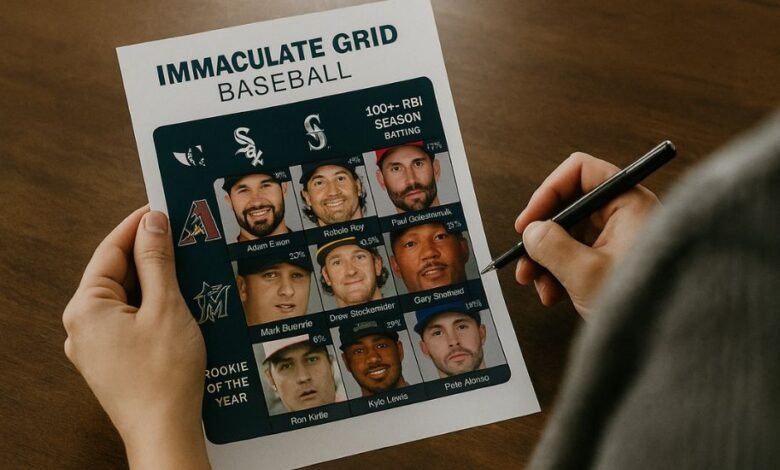
At its core, Immaculate Grid is a browser-based sports trivia game. Each day, players face a new 3 × 3 grid — nine empty squares intersected by rows and columns labeled with specific categories. These categories might include teams, awards, or statistical milestones. To fill in each square, the player must name an athlete who satisfies both conditions — for instance, a player who has represented both the Chicago Cubs and New York Yankees, or someone who has played for Toronto Blue Jays and hit 30+ home runs in a season.
You get exactly nine guesses — one for each square. Each correct answer locks in, and each wrong answer costs you a spot. The goal is to complete the “grid” perfectly — achieving an immaculate score. Beyond accuracy, players are also graded on rarity, a score measuring how uncommon their chosen players are compared to others who completed the same puzzle. The rarer the player, the lower the rarity score — a badge of honor among hardcore fans.
Like Wordle, there’s only one grid per day. That scarcity fuels anticipation and competition, as players rush to share their results across social media, Reddit, and sports forums.
The Birth of a Trivia Sensation
Immaculate Grid was created by Brian Minter, an Atlanta-based software developer and sports fan. The first baseball grid was published on April 4, 2023, just as the MLB season kicked off. Initially, it circulated quietly among baseball Reddit threads and niche sports blogs. But word spread fast. The elegant gameplay, powered by data from Baseball Reference, caught the attention of Sports Reference LLC — the company behind the internet’s most trusted sports databases. In July 2023, Sports Reference officially acquired Immaculate Grid, integrating it with its network and ensuring its long-term growth.
This acquisition transformed the small fan project into a professional-grade daily platform. With access to rich datasets and an established user base, the game expanded beyond baseball. New versions soon appeared: Immaculate Grid Football, Basketball, Hockey, and even Soccer (under the name Immaculate Footy). Each version retained the same logic and thrill, tailored to the unique stats and history of its respective sport.
The Rules of Perfection
While the game looks simple, it’s underpinned by meticulous rules:
- Dual Conditions – Each square represents the overlap between two categories (e.g., “New York Yankees” × “Cy Young Award Winner”).
- One Shot per Box – Once you’ve guessed a name for a square, it locks — correct or not.
- Player Eligibility – The chosen athlete must genuinely meet both criteria; playing for both teams, or achieving the milestone with that team.
- One Player per Grid – You can’t reuse the same athlete in multiple boxes.
- Rarity Score – The fewer other users who chose your player, the better your rarity score.
This balance of precision and restraint is what keeps the game intellectually satisfying. It rewards encyclopedic knowledge — remembering a reliever who once played one season for the Mariners and another for the Reds — yet it also encourages strategy. Do you pick the obvious player everyone will know? Or dig deeper for that forgotten backup infielder to chase a lower rarity score?
The Psychology Behind the Grid
The enduring charm of Immaculate Grid lies in its dual appeal to intellect and nostalgia. The game doesn’t simply test knowledge — it invites reflection. Each box conjures memories: the veterans who switched teams late in their careers, the underdogs who had one great season, the all-stars who briefly donned unlikely jerseys.
For sports fans, the grid acts as a mental museum. You find yourself remembering where you were when a player hit that milestone, or how it felt watching them in a different uniform. The game subtly celebrates the storytelling nature of sports — that careers are not just numbers, but narratives of movement, triumph, and reinvention.
It also appeals to completionist instincts. The nine-square design is small enough to feel achievable, yet complex enough to remain challenging. Each correct guess triggers a microdose of satisfaction — a dopamine hit that fuels another day’s play.
Community and Culture: From Reddit to TikTok
The Immaculate Grid community is vibrant, opinionated, and endlessly creative. On Reddit’s r/baseball, daily threads feature users comparing their grids, bragging about rarity scores, and debating whether certain player selections should count.
Some share their reasoning for obscure picks:
“I went with Juan Pierre for the Dodgers–Marlins box. I remember his 2006 season — total speed demon!”
Others post memes celebrating perfect grids or lamenting near-misses (“8/9 — I forgot who hit 30 HR for the Rays!”).
Meanwhile, on TikTok and YouTube, sports creators stream their live grid-solving sessions. Fans watch and comment in real time, offering hints or playfully mocking mistakes. This social virality mirrors the Wordle phenomenon — part competition, part collaboration.
For many, Immaculate Grid has become a daily ritual. Office workers play it with colleagues over coffee; friends compare scores in group chats. Its appeal spans generations — from Gen Z fans learning history to Baby Boomers reliving it.
Strategy, Skill, and the Rarity Chase
Playing Immaculate Grid well requires a mix of memory, deduction, and pattern recognition. Over time, regular players develop strategies:
- Multi-Team Journeymen: Players who’ve played for many teams (like Edwin Jackson or Cliff Lee) are “cheat codes.” They unlock multiple intersections easily.
- Award Hunters: Knowing who’s won MVPs, Cy Youngs, or Rookie of the Year titles pays off when those awards appear as categories.
- Era Balance: A balanced knowledge of modern and classic players widens your guessing range.
- Rarity Consciousness: To achieve a low rarity score, you must think obscure — names that casual fans wouldn’t recall.
This combination of skill and strategy turns the grid into a competitive sport of its own. Fans boast about getting “perfect but low” grids — nine correct answers with a rarity score below 50. Some even maintain spreadsheets tracking their personal performance.
Expansion Beyond Baseball
The transition from baseball to other sports marked a turning point. Immaculate Grid Football introduced a new demographic of NFL fans. Basketball and hockey versions soon followed, each adapting the rules to their statistical ecosystems.
For example, in the NBA version, you might see:
- “Played for Lakers × Scored 50+ Points in a Game”
- “Chicago Bulls × Defensive Player of the Year”
These grids introduced new challenges — smaller rosters, different awards, and a faster pace. Soccer’s version (Immaculate Footy) broadened the game’s reach internationally, appealing to fans across Europe, South America, and Asia.
This cross-sport expansion underscores the game’s genius: the framework is universal, but the trivia is infinitely adaptable.
Criticism and Controversy
No cultural hit comes without debate. Some players have criticized the ambiguity of rules — particularly whether a player must achieve a milestone while on a team or simply have achieved it in their career. One viral article on Defector described a user’s frustration after guessing Anquan Boldin for a “Ravens × 1,000 Yard Season” box — only to find he achieved that mark while with the Cardinals, not the Ravens.
Others argue that the obsession with rarity has turned the game into an elitist competition. Instead of celebrating knowledge, it sometimes feels like a race to remember the most obscure benchwarmer. Yet even critics concede that this tension — between common knowledge and deep trivia — is part of what keeps the game alive.
Why It Works: The Wordle Effect
Like Wordle, Connections, and other modern puzzles, Immaculate Grid benefits from short, daily engagement. It doesn’t demand hours — just a few focused minutes. Its minimalist interface and lack of ads enhance the experience, emphasizing satisfaction over monetization.
Moreover, it taps into the data-driven fandom of the modern era. Sports today are inseparable from analytics. Baseball, in particular, is a sport of statistics — WAR, OPS+, ERA+, WHIP — all acronyms that define eras. Immaculate Grid weaponizes that culture, turning numbers into narrative.
It also satisfies a psychological need: mastery. Completing a perfect grid proves not just fandom, but expertise — a credential earned through years of watching, remembering, and caring.
Global Appeal: Beyond American Borders
Although rooted in American sports culture, Immaculate Grid’s success hints at a broader global appetite for sports trivia. The soccer edition opened the floodgates, attracting fans from Pakistan, India, the UK, and Brazil — countries where sports fandom runs deep.
For Pakistani fans especially — who thrive on cricket’s statistical richness — the idea of a data-driven trivia game feels familiar. The mental exercise of connecting clubs, players, and milestones echoes the way fans debate cricket stats and records. A “Cricket Grid” could easily be the next frontier.
The Future of Immaculate Grid
As Sports Reference continues to expand the platform, several possibilities loom:
- Mobile App Versions — A native app with push notifications and performance tracking.
- User-Generated Grids — Custom daily challenges where fans create and share their own grids.
- Global Sports Expansion — Cricket, Formula 1, rugby, and esports versions are natural next steps.
- AI-Enhanced Play — Integrating AI to verify ambiguous answers or generate personalized challenges.
The simplicity of the format ensures longevity. As long as fans crave competition and nostalgia, Immaculate Grid will endure — an evolving museum of sports memory disguised as a puzzle.
Why It Matters
Beyond the daily fun, Immaculate Grid represents something deeper: the merging of sports culture and interactive media. It turns passive consumption into active engagement. Instead of scrolling through highlights, players recall history, debate, and connect across generations.
It’s a form of storytelling — one square at a time. Every player named is a reminder that sports are more than trophies and stats; they’re about journeys, transitions, and forgotten legacies. The grid preserves those legacies by making fans relive them.
Conclusion: The Empire of Memory
In an era where attention spans are measured in seconds, Immaculate Grid thrives on memory. It’s an antidote to forgetfulness — a tribute to players who might otherwise fade into the background of sports history.
For the fan, every completed grid is a victory of recollection over time. For the community, it’s a celebration of shared obsession. And for the creators, it’s proof that brilliance often lies in simplicity.
As the game continues to grow — crossing sports, continents, and generations — one thing is certain: the Immaculate Grid isn’t just a trivia game; it’s the purest expression of sports nostalgia in the digital age.
And if you’re reading this on Empire Magazines, you’re part of that growing community of fans who still believe that the past is worth remembering — one immaculate guess at a time.
Frequently Asked Questions (FAQs) about Immaculate Grid
1. What is Immaculate Grid?
Immaculate Grid is an online sports trivia game where players fill out a daily 3×3 grid by naming athletes who meet both row and column criteria — such as teams, awards, or milestones. The goal is to complete all nine boxes correctly using your sports knowledge.
2. Who created Immaculate Grid?
The game was created by Brian Minter, an Atlanta-based software developer, and launched on April 4, 2023. It was later acquired by Sports Reference LLC, the company behind well-known sites like Baseball Reference and Pro Football Reference.
3. How do you play Immaculate Grid?
Each day, a new 3×3 grid appears. You must pick a player for each square who fits the conditions of both the row and column. For example, if the row says “New York Yankees” and the column says “MVP Winner”, you’d choose a player who won an MVP while playing for the Yankees.
4. What is a rarity score in Immaculate Grid?
The rarity score shows how uncommon your answers are compared to others. Lower scores mean you used rarer player selections — a badge of honor among serious fans.
5. Can you play Immaculate Grid for sports other than baseball?
Yes! While it began with MLB, the creators have expanded it to include football, basketball, hockey, and soccer (known as Immaculate Footy). Each version has sport-specific categories and rules.
6. Is Immaculate Grid free to play?
Absolutely — the game is 100% free and playable on its official website Immaculate Grid. No downloads or sign-ups are required.
7. Why is it called “Immaculate Grid”?
The term “immaculate” comes from baseball’s “immaculate inning” — a perfect performance. Similarly, an “Immaculate Grid” means completing all nine squares flawlessly.
8. How many guesses do you get in Immaculate Grid?
You get nine total guesses — one per square. Each correct or incorrect guess counts toward that limit, so accuracy and strategy are both important.
9. Can I replay old grids?
Yes! The website allows you to browse and replay previous grids, so you can practice or test your historical knowledge any time.
10. Why is Immaculate Grid so popular?
Its appeal lies in its simplicity, nostalgia, and challenge. The game rewards memory, strategic thinking, and deep sports knowledge — and its daily format makes it a habit, much like Wordle for sports fans.