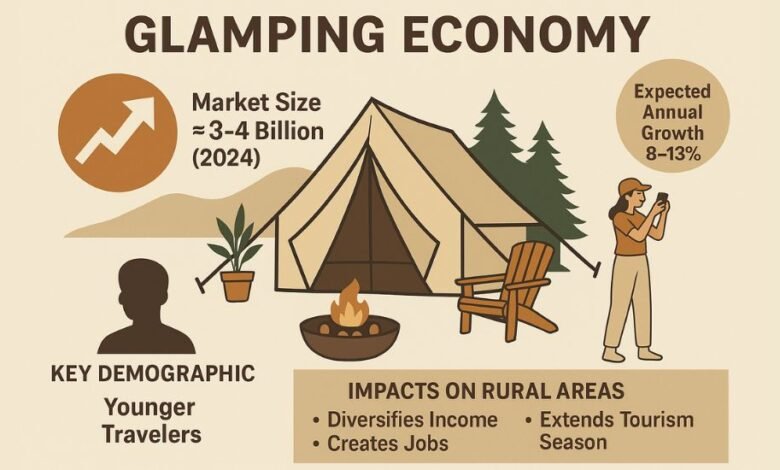
Over the past decade, a new kind of outdoor escape has moved from quirky niche to serious business: the glamping economy. What began as a playful mash-up of “glamorous” and “camping” has become a fast-growing segment of the wider travel and hospitality industry, blending nature, comfort and social-media-ready aesthetics into one profitable package.
Industry analyses estimate that the global glamping market is already worth several billion dollars and is expected to at least double, if not triple, over the coming decade. Annual growth rates are commonly projected in the high single to low double digits. That means glamping is no longer just a lifestyle trend; it is a meaningful piece of the modern tourism economy, attracting investors, entrepreneurs and landowners around the world.
From Sleeping Bags to Smart Pods
Traditional camping appeals to people who enjoy roughing it: pitching their own tent, cooking on camp stoves, waking up with dew on the ground and, very often, a stiff back. Glamping answers a different desire: the romance of nature without the discomfort. Guests want crisp sheets, private bathrooms, curated interiors and sometimes high-speed Wi-Fi, all wrapped in a forest, desert, lakeside or mountain setting.
Operators have responded with an explosion of formats, including:
- Canvas safari tents with real beds and wood stoves
- Geodesic domes with skylights for stargazing
- Tiny houses and architect-designed cabins with hotel-style amenities
- Treehouses, yurts, pods and restored vintage caravans
From a business perspective, glamping is not just “better camping.” It represents a product upgrade: higher nightly rates, longer stays and a more experience-focused guest. That value-add sits at the core of the glamping economy. It turns relatively inexpensive land—a hillside, a woodland edge, a disused field—into a high-margin, year-round asset.
Who Is Fueling the Glamping Economy?
Demographically, glamping aligns almost perfectly with the preferences of younger, experience-driven travelers. Surveys of outdoor travelers consistently show that new campers and glampers are disproportionately drawn from younger generations, especially those who prioritize unique experiences over traditional hotel stays.
Several forces converge in this audience:
- Experience over possessions
Many younger travelers prefer to spend money on memorable experiences rather than physical goods. A weekend in a stylish tent overlooking a river feels more distinctive and shareable than a standard city hotel room. - Social media aesthetics
Glamping sites are designed to look good: string lights, outdoor baths, panoramic windows, cozy firepits and carefully styled interiors. These details effectively become free marketing whenever guests post photos and videos of their stay. - Wellness and mental reset
Glamping is often framed as a digital detox with comfort: time in nature that still allows good sleep, good coffee and hot showers. Hosts increasingly incorporate yoga decks, saunas, cold plunges, walking trails and meditation spaces so guests feel they are investing in their wellbeing, not just booking a bed. - Remote work and flexible schedules
With remote and hybrid work now widely accepted, glamping stays can extend beyond the classic weekend. A dome or cabin with reliable Wi-Fi and a comfortable workspace allows guests to combine work and leisure, boosting mid-week occupancy and smoothing demand.
The result is a steady flow of guests willing to pay premium prices for spaces that combine comfort, nature and novelty. This willingness to spend is what gives the glamping economy its momentum.
A Global Market in the Making
Glamping has become visible in many corners of the world: forest cabins in Europe, desert domes in the Middle East, beachfront tents in Asia, mountain yurts in North America and beyond. The underlying mechanics of the glamping economy, however, look surprisingly similar across regions:
- Under-used or undervalued land
- Growing domestic and regional travel
- Strong interest in nature-based experiences
- Social media amplifying distinctive locations
Globally, market research estimates the size of the glamping sector in the low- to mid-billion-dollar range for recent years, with projections of robust growth through the 2030s. Although numbers vary between studies, the broad picture is clear: the glamping economy is expanding much faster than many traditional accommodation sectors.
In some countries, glamping sits inside an even larger “camping economy”, which covers everything from basic tents and caravan parks to upscale outdoor resorts. In these markets, glamping is the high-value tip of a much bigger iceberg: a way to increase revenue per visitor while still promoting outdoor recreation.
The Rural Dividend: How Glamping Transforms Local Economies
The glamping economy has its greatest impact in rural and semi-rural areas that were previously overlooked by mainstream tourism. A conventional hotel chain might dismiss a quiet valley or isolated coastline as unviable, but a small cluster of glamping units can turn that same landscape into a thriving destination.
1. Farm and Land Diversification
Many farmers and landowners now view glamping as a strategy to diversify income without abandoning their primary activities. A handful of well-placed pods, cabins or tents can generate significant revenue, helping cover rising costs, support long-term land management or finance ecological restoration projects.
Diversification also reduces risk. When income no longer relies solely on crop prices or livestock sales, rural businesses become more resilient to shocks, whether economic or climatic.
2. Job Creation and Local Supply Chains
Even a small glamping site supports a range of jobs and services:
- Construction and carpentry for initial builds
- Cleaning, maintenance and laundry for ongoing operations
- Landscaping, gardening and forestry work
- Guided activities, from hiking and kayaking to cultural tours
Guests also spend money in nearby cafes, restaurants, shops, fuel stations and attractions. This creates a local multiplier effect: money arrives with visitors and circulates among local businesses rather than flowing out to distant corporate headquarters.
3. Extending the Tourism Season
Glamping units can be insulated, heated and designed to function outside the traditional summer window. With thoughtful design, a site can host comfortable stays in spring and autumn, and sometimes year-round. This extends the tourism season, smoothing revenue and providing more consistent employment in regions that once depended on a short peak.
4. Place Branding and Storytelling
A distinctive glamping site often becomes a visual symbol for its region: the dome overlooking vineyards, the tent perched above a canyon, the cabin framed by northern lights. Such imagery spreads quickly, rebranding the surrounding area as a must-visit destination. Over time, this new identity attracts additional visitors, events and investment.
In many places, glamping is not just a new form of accommodation. It is part of a broader renewal of rural economies and identities.
Inside the Business Model: Why Glamping Can Be Profitable
Behind the cozy blankets and firepits is a business model that can be compelling when approached strategically.
Higher Revenue per Night
A basic campsite might charge a modest nightly fee. A glamping unit on the same land can often command several times that amount, especially if it offers private facilities and striking views. This uplift in revenue per available night is the financial backbone of glamping.
Leaner Operations than Hotels
Glamping sites usually require fewer staff than full-service hotels. There may be no restaurant to run, no large lobby and fewer common areas. With self-check-in, automated messages and simple on-site systems, a small team can manage a relatively large number of units.
Modular and Scalable
Unlike traditional hotels, which commonly demand heavy up-front investment, glamping developments can often scale gradually. An owner may start with two or three units, test demand, refine the concept, then reinvest into additional pods, tents or cabins over time. This modular approach reduces risk and allows the business to grow organically.
Direct Relationships with Guests
Glamping lends itself to direct booking channels, such as a site’s own booking system and social media presence. Direct bookings reduce commission fees and help build loyal communities of returning guests. Personalized communications, loyalty discounts and seasonal offers all become easier when the relationship is direct rather than mediated.
Sustainability: Buzzword or Backbone?
Many glamping projects are marketed as eco-friendly alternatives to conventional resorts. The idea is simple: small-scale structures, low impact on the land and an emphasis on nature. In practice, the picture is mixed, but glamping can indeed support sustainability when done well.
Positive elements include:
- Low-impact construction, often on stilts or platforms that avoid heavy foundations
- Use of renewable energy systems, such as solar panels and battery storage
- Water-saving fixtures and, in some cases, composting toilets
- Landscapes planted or restored with native vegetation rather than lawns
However, eco-branding alone is not enough. A glamping site that involves extensive land clearing, heavy traffic to fragile ecosystems or excessive use of disposable materials cannot truly claim to be low impact. As the glamping economy matures, guests are becoming more discerning, looking for evidence of genuine environmental care rather than just rustic decor.
The long-term credibility of the glamping economy will depend on how effectively operators balance growth with real environmental stewardship: managing waste, energy, water and visitor impacts in ways that protect the places guests come to enjoy.
Design Trends Shaping the Next Wave
As competition increases, successful glamping operators stand out through design, storytelling and experience, not just the basic idea of a tent with a bed.
Some notable trends include:
- Themed and story-driven stays
Units designed around astronomy, local folklore, wine, wellness, adventure or creative pursuits create a strong sense of identity. Guests feel they are stepping into a narrative, not just a generic space. - Wellness-focused retreats
Saunas, hot tubs, cold-plunge barrels, yoga platforms, outdoor massage decks and forest-bathing paths turn an overnight stay into a holistic retreat. This can attract guests who might otherwise book urban spas or resort packages. - Subtle use of smart technology
Keyless entry, app-based information, discreet security and automated lighting improve convenience while maintaining a natural atmosphere. The goal is for technology to be felt as ease, not seen as screens everywhere. - Food as a highlight
Breakfast baskets, local ingredient hampers, communal dinners or partnerships with nearby chefs can raise the perceived value of a stay. Food becomes part of the story of place, not just an add-on.
In short, glamping is increasingly about curating an entire micro-world around the guest: a blend of design, hospitality and narrative that justifies higher nightly rates and attracts repeat visitors.
Risks and Challenges in the Glamping Economy
No rapid-growth sector is free from risk. The glamping economy faces several challenges that entrepreneurs, investors and planners need to consider.
- Regulation and Zoning
Rules regarding land use, short-term rentals, environmental protection, building codes and fire safety are evolving in many regions. Operators that expand without considering this regulatory landscape may face sudden restrictions or costly retrofits. - Over-saturation and Imitation
As more glamping sites appear, some areas risk becoming crowded with similar offerings. When the market fills with look-alike tents and domes, competition shifts to price, and margins can shrink. Distinctive concepts and authentic local integration become essential. - Climate and Environmental Risks
Outdoor accommodations are directly exposed to storms, wildfires, floods, heatwaves and other climate-related hazards. Building for resilience—careful site selection, insurance, emergency planning and robust infrastructure—is crucial. - Economic Uncertainty
Glamping is a discretionary expense. In times of economic stress, some travelers may cut back on higher-end experiences. Operators need strategies for adjusting prices, offering flexible packages and maintaining value even when budgets tighten.
Recognizing these risks does not diminish the opportunities. Instead, it highlights the need for thoughtful planning and long-term thinking within the glamping economy.
The Next Chapter of the Glamping Economy
Looking ahead, the glamping economy is likely to continue evolving along several key paths:
- From Niche to Mainstream “Outdoor Hospitality”
What once looked like a trend is becoming an established category. Glamping is joining hotels, guesthouses and vacation rentals as a standard option for travelers, especially in regions known for natural beauty. - Deeper Integration with Local Culture
Expect more projects that highlight local architecture, crafts, food and stories. Glamping can serve as a stage for cultural exchange, where guests learn about regional traditions in ways that feel personal and immersive. - Data-informed Design and Operations
Booking patterns, guest feedback and occupancy data will increasingly drive decisions about unit types, amenities and pricing. Operators who listen to the numbers as well as to their guests will refine their offerings more quickly.
In essence, the glamping economy is part of a broader shift in travel: away from standardization and toward experiential, place-based, nature-connected stays. For travelers, that means more ways to escape, reset and reconnect. For rural communities and landowners, it means a powerful tool for renewal—if managed thoughtfully, with an eye on people, profit and planet alike.
As this transformation unfolds, Empire Magazines aims to shine a light on the ideas, innovations and stories behind it: exploring how glamping reshapes local economies, redefines outdoor hospitality and reflects changing dreams about what travel should feel like in the modern world.
FAQs about the Glamping Economy
1. What is meant by the “glamping economy”?
The glamping economy refers to all the businesses, jobs and spending connected to luxury camping—such as glamping sites, outdoor resorts, suppliers, experience providers, construction services and local tourism businesses that benefit from glamping guests.
2. How big is the glamping economy today?
Recent market research suggests that the global glamping industry is already worth several billion dollars and is growing faster than many traditional accommodation sectors, with forecasts often showing high single to double-digit annual growth.
3. Why is glamping growing so quickly?
Glamping combines comfort and nature in a way that fits modern lifestyles. Younger travelers want unique experiences, Instagram-worthy stays, wellness breaks and flexible work-friendly escapes—all of which glamping can provide in one package.
4. How does glamping help rural areas?
Glamping allows landowners and farmers to earn extra income from scenic land by hosting guests. This brings new jobs, supports local shops and restaurants, extends the tourism season and can help keep small rural communities economically alive.
5. Is glamping more profitable than traditional camping?
In many cases yes. A glamping unit can charge several times more per night than a basic camping pitch on the same land, especially when it offers private bathrooms, hot tubs, striking views or special experiences. That higher nightly rate is a key driver of the glamping economy.
6. What are the main costs of starting a glamping business?
Typical costs include land preparation, buying or building structures (tents, domes, cabins, pods), bathrooms, utilities, furnishings, permits, branding and marketing. Many operators start small with a few units and expand gradually as demand grows.
7. Is glamping really eco-friendly?
It can be, but it depends on how a site is designed and managed. Low-impact construction, renewable energy, water-saving systems and careful waste management support sustainability. Heavy land clearing, high traffic or excessive use of disposable materials can undermine eco claims.
8. Who is the typical glamping guest?
Most glamping guests are experience-driven travelers who like nature but don’t want to sacrifice comfort. They’re often couples, small groups of friends, young families, remote workers and wellness seekers looking for short breaks and weekend escapes.
9. What trends will shape the future of the glamping economy?
Key trends include wellness-focused retreats, themed and story-driven stays, smart technology for self-check-in and operations, deeper links with local food and culture, and more data-driven pricing and design decisions by operators.
10. Is glamping just a trend or a long-term market?
All signs point to a long-term market. As travelers continue to look for experiential, nature-connected and sustainable stays, glamping is becoming a permanent part of the wider outdoor hospitality and tourism landscape rather than a short-lived fad.