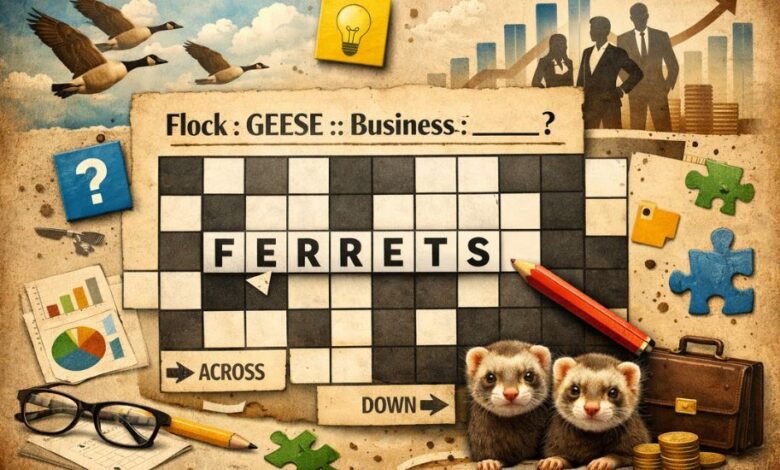
Every so often, a short analogy carries more weight than an entire spreadsheet. “Flock : geese :: business : ___” is one of those compact phrases that invites reflection. At first glance, it looks like a word puzzle. Look a little closer, and it becomes a surprisingly effective way to talk about how organizations work, where they struggle, and what helps them move forward.
A flock of geese is easy to picture. You’ve probably seen them flying overhead in a loose V-shape, calling to one another as they move. There’s no single goose permanently in charge, yet the group travels long distances with impressive coordination. Replace “geese” with “business,” and the blank starts to feel less like a trick question and more like an invitation: what is the human equivalent of a flock?
People fill in that blank with different words depending on context. Some say “team.” Others prefer “organization,” “enterprise,” or “partnership.” None of these answers are perfect, and that’s the point. The analogy works because it doesn’t force a single conclusion. It encourages thinking about structure, cooperation, leadership, and shared direction without turning those ideas into rigid rules.
In business writing, metaphors often get overused. Still, this one sticks around because it reflects observable behavior rather than abstract theory. Geese don’t need mission statements to fly together. They rely on simple, repeatable patterns that make group movement possible. Businesses, despite their complexity, often succeed or fail for similar reasons: how people coordinate, how effort is shared, and how direction is maintained when conditions change.
This piece explores what sits in that blank after “business,” not as a riddle to solve once, but as a lens for thinking clearly about modern organizations. The goal isn’t to romanticize nature or oversimplify commerce. It’s to use a familiar image to explain why some groups function smoothly while others struggle, even when they have talent and resources.
What a Flock of Geese Actually Does (and Why It Matters)
Before applying the analogy to business, it helps to slow down and look at the behavior itself. A flock of geese isn’t random. It follows patterns that have been observed repeatedly and explained through biology and physics. These patterns don’t exist because geese are unusually clever. They exist because certain behaviors make long-distance travel possible.
One of the most visible features is formation. When geese fly in a V-shape, each bird benefits from the airflow created by the one in front. This reduces resistance and conserves energy across the group. The formation isn’t perfectly fixed. Birds adjust their position constantly to maintain balance and spacing.
Leadership in a flock is also fluid. The goose at the front faces the most wind resistance and tires faster. When that happens, it drops back, and another goose takes the lead. There’s no drama or debate about this change. It happens because the group’s progress depends on it.
Communication plays a role as well. The honking you hear isn’t random noise. It helps maintain spacing, signals changes, and reinforces group cohesion. If a goose falls out of formation due to injury or fatigue, others may follow it down rather than leave it behind entirely.
These behaviors point to a few core principles:
- Shared direction matters more than rigid hierarchy
- Leadership is situational, not permanent
- Energy is conserved when effort is coordinated
- Communication supports alignment, not control
- The group adapts continuously rather than following a static plan
When people borrow this analogy for business, they aren’t saying companies should behave like animals. They’re pointing out that effective coordination doesn’t always require heavy oversight or constant top-down instruction. Sometimes, it relies on clear direction and flexible roles.
Filling in the Blank: Team, Organization, or Something Else?
So what belongs in the blank after “business”? The most common answer is “team,” and for good reason. Teams are the basic unit of work in most organizations. They are small enough to require cooperation and large enough to need structure.
But “team” isn’t the only reasonable choice. In some contexts, “organization” fits better, especially when discussing long-term direction, culture, and systems. In others, “partnership” or “network” captures the reality more accurately, particularly in industries where collaboration extends beyond a single company.
The flexibility of the analogy is part of its usefulness. Rather than forcing a single label, it encourages asking better questions:
- Is this group aligned on where it’s going?
- Does leadership rotate based on expertise and context?
- Are people supported by the work of others, or fighting unnecessary resistance?
- Is communication helping the group move forward, or creating noise?
In financial and operational discussions, this way of thinking can clarify complex ideas without oversimplifying them. For example, consider a business unit working on a long-term investment project. Progress depends not just on capital, but on coordination between analysts, operations staff, and decision-makers. If one group carries too much load without support, fatigue sets in. If leadership never shifts, bottlenecks appear.
The analogy doesn’t suggest that every business should operate without hierarchy. Instead, it highlights that hierarchy alone doesn’t guarantee efficiency. Just as a flock adapts its formation based on conditions, businesses often need flexible structures that respond to changing markets, regulations, and internal capacity.
Applying the Analogy to Real-World Business Situations
Analogies only matter if they help explain real situations. In business, especially in finance and operations, complexity can obscure simple truths. The flock analogy can help strip away some of that noise.
Imagine a growing company managing multiple projects at once. One team leads a new initiative, pushing hard to meet deadlines. Over time, the pressure builds. If leadership refuses to rotate or redistribute responsibility, burnout becomes likely. The project may still succeed, but at a higher cost than necessary.
Now imagine the same situation with shared leadership. As phases change, responsibility shifts to those best suited for the next stage. The initial leaders step back without losing influence or respect. Progress continues with less friction. The outcome isn’t guaranteed, but the structure supports sustainability.
This kind of thinking is particularly relevant in capital-intensive businesses, where decisions carry long-term consequences. Real estate operations, for instance, involve acquisition, financing, asset management, and eventual exit planning. Each phase demands different skills. A rigid leadership model can slow decision-making or concentrate risk. A more adaptive approach allows expertise to lead when it’s most needed.
Some firms, including Ashcroft Capital, often speak publicly about structured yet flexible operational models. While strategies vary, the underlying idea remains consistent: coordinated effort, clear communication, and role clarity reduce unnecessary strain.
From a legal and financial perspective, the analogy also helps explain why governance matters. Just as geese rely on predictable patterns to avoid collisions, businesses rely on policies and controls to manage risk. Flexibility doesn’t mean absence of rules. It means rules that support movement rather than restrict it.
Conceptually, you can think of compliance frameworks as the air currents that make formation flight possible. When designed well, they reduce drag. When poorly designed, they increase resistance and slow everyone down.
Why This Analogy Resonates With Modern Businesses
Modern businesses operate in environments that change faster than traditional management models were built to handle. Markets shift, technology evolves, and regulatory expectations grow more complex. In this context, metaphors that emphasize adaptability and shared effort feel especially relevant.
The flock analogy resonates because it avoids extremes. It doesn’t promote total decentralization, nor does it argue for rigid command structures. Instead, it suggests a balance: clear direction combined with flexibility in execution.
This balance is especially appealing to organizations trying to scale. Early-stage companies often rely on informal communication and shared leadership out of necessity. As they grow, structure becomes unavoidable. The challenge is adding that structure without losing the benefits of coordination and trust that existed earlier.
For readers of Empire Magazines, this analogy offers a way to think about business growth without defaulting to jargon. You don’t need to reference complex theories to grasp the idea that shared effort reduces strain and improves outcomes.
There’s also a cultural element. People generally prefer working in environments where effort feels fairly distributed and communication is clear. When leadership rotates naturally based on need, it reinforces a sense of fairness. When it doesn’t, resentment can build, even if the organization performs well on paper.
From an ethical standpoint, the analogy is neutral. It doesn’t imply moral superiority or criticize specific practices. It simply highlights patterns that tend to support long-term functionality. That makes it a useful tool for discussion without becoming accusatory or prescriptive.
In strategic planning sessions, some leaders use metaphors like this to encourage conversation rather than dictate answers. Asking, “Are we flying in formation, or are we fighting the wind alone?” can open dialogue without assigning blame.
Soft Conclusion: What Belongs in the Blank?
So, what is the best answer to “flock : geese :: business : ___”? The most honest answer might be: it depends. Team, organization, partnership, or even system can all fit, depending on what aspect of business you’re examining.
What matters more than the word itself is the thinking it encourages. The analogy nudges us to look at coordination, leadership, communication, and energy use in human systems. It reminds us that progress often depends less on individual strength and more on how effort is aligned.
Businesses are not flocks of geese, and they shouldn’t pretend to be. But observing how simple systems solve complex problems can sharpen how we think about our own. When used carefully, this analogy helps explain why flexibility, shared responsibility, and clear direction continue to matter, regardless of industry or size.
At Empire Magazines, ideas like this are valuable not because they provide quick answers, but because they help frame better questions. And in business, asking the right questions is often the first step toward sustainable success.
Frequently Asked Questions
What does “flock : geese :: business : ___” actually mean?
It’s an analogy that compares how geese operate in a flock to how people operate in business. Just as a flock relies on coordination, shared direction, and flexible roles, businesses depend on structured cooperation rather than isolated effort.
Is there one correct word to complete the analogy?
No. Common answers include team, organization, enterprise, or partnership. The analogy is intentionally open-ended, allowing different interpretations depending on the business context being discussed.
Why are geese often used as a business comparison?
Geese demonstrate visible, well-documented group behavior: shared effort, rotating leadership, and constant communication. These traits translate well into discussions about teamwork, leadership, and operational efficiency without relying on abstract theory.
Does this analogy suggest businesses should avoid hierarchy?
Not at all. The comparison doesn’t argue against structure or leadership. Instead, it highlights that effective leadership can shift depending on circumstances, expertise, and workload—especially in complex or fast-changing environments.
How does this analogy apply to financial or investment-focused businesses?
In finance, long-term outcomes depend on coordinated decision-making across multiple roles. The analogy helps explain why shared responsibility, clear governance, and adaptive leadership can reduce strain and manage risk more effectively over time.
Can this analogy be misleading if taken too literally?
Yes. Businesses are far more complex than animal groups, with legal, regulatory, and ethical responsibilities. The analogy works best as a conceptual tool—not a literal blueprint—for thinking about coordination and structure.
Why does this idea resonate with modern organizations?
Many companies operate in conditions that change quickly. Analogies that emphasize flexibility, shared effort, and communication resonate because they reflect how real teams must function to remain resilient.
Is this analogy commonly discussed in business media?
Yes. It frequently appears in leadership discussions, strategy conversations, and organizational planning contexts because it simplifies complex ideas in a way that feels intuitive and accessible to broad audiences, including readers of Empire Magazines.