Imamia Students Organization: A Beacon of Ideological Unity, Empowerment, and Advocacy for Shia Students

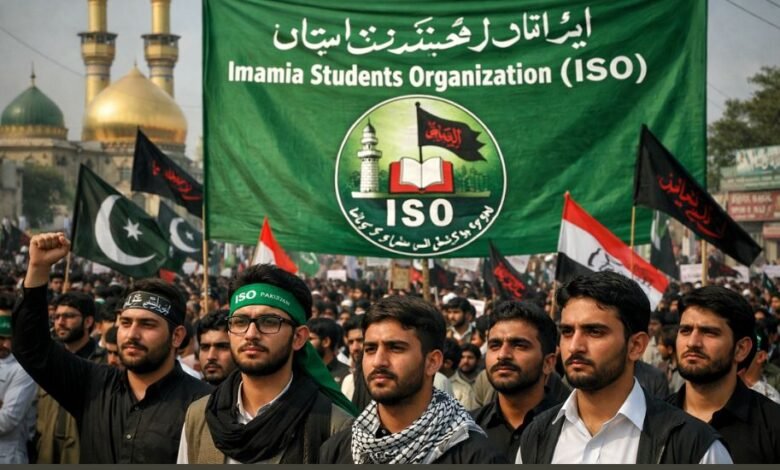
The Imamia Students Organization (ISO) has carved a unique and influential space within Pakistan’s student communities. Founded in 1972, this organization has not only become an advocate for the welfare of Shia Muslim students but also a cornerstone of Shia religious activism within the broader Muslim student body. Through its focus on education, social welfare, and the promotion of Islamic values, the ISO has continuously worked to empower the youth while maintaining a strong allegiance to the Shi’a ideology. Its widespread influence, controversial engagements, and an unyielding commitment to its mission reflect a powerful narrative of perseverance, unity, and ideological persistence.
Introduction to Imamia Students Organization
The Imamia Students Organization (ISO) is an influential and dynamic student organization that primarily caters to the needs and welfare of Shia Muslim students in Pakistan. It functions as both a welfare entity and a socio-political organization with deep roots in religious and spiritual guidance. ISO’s primary objective is to promote Islamic values, particularly those rooted in Shi’a Islam, and to ensure that Shia Muslim students receive the educational, social, and spiritual support necessary for their growth. The organization operates across Pakistan, with branches in almost every province, city, and major university, thus making it one of the most widely recognized student bodies in the country.
ISO was established during a time when the student landscape in Pakistan was undergoing significant changes. In the early 1970s, Pakistan’s political environment was marked by upheaval, and the Shia community felt the need to carve out a space for themselves in the face of rising secularism and political uncertainty. The formation of ISO provided an avenue for Shia students to come together, form a unified voice, and advocate for their interests within academic institutions and beyond. Over the decades, the ISO has continued to grow and diversify, reflecting the changing needs of Shia students in an increasingly complex world.
Early History and Background
The ISO was founded on May 22, 1972, at the University of Engineering and Technology in Lahore, Pakistan. The organization emerged from a need to address the educational and ideological concerns of Shia Muslim students, who were often marginalized in the broader student community. The founding members, including prominent scholars and leaders, sought to create an organization that would cater specifically to Shia Muslims’ unique educational, social, and religious needs. Among the founders were Ayatollah Syed Murtaza Hussain Sadar ul Fazil, Molana Agha Ali Moosvi, and Molana Safdar Hussain Najafi, all of whom played an instrumental role in the establishment and development of the organization.
The early years of ISO were marked by a strong emphasis on Islamic teachings, particularly those aligned with the Twelver Shia tradition. This was a time when Shia students in Pakistan felt the need to not only maintain their religious identity but also to establish their presence in an academic environment where they often faced challenges regarding their beliefs and practices. The founders envisioned ISO as a platform where Shia students could unite, share ideas, and support one another in navigating the complexities of academic life while remaining grounded in their religious beliefs.
As the organization gained traction, it quickly expanded beyond Lahore, with chapters being established in major cities like Karachi, Islamabad, and Rawalpindi. This expansion was driven by the recognition that the Shia student body was widespread and needed a unified platform to address common concerns. The ISO’s ability to quickly establish itself as a significant player in Pakistan’s student landscape laid the foundation for its future success.
Rise to Prominence
The rise of ISO to prominence in Pakistan’s student and political spheres can be attributed to several key moments and achievements that showcased the organization’s commitment to its core values. One of the most significant turning points in ISO’s history was its role in advocating for the restoration of student unions in Pakistan. During the early 1980s, the military regime of General Zia-ul-Haq banned student unions in an attempt to curb political activism on university campuses. The ISO, alongside other student organizations, played an important role in protesting this ban and demanding the right for students to organize freely.
ISO’s efforts to restore student unions were successful, and in the years that followed, the organization became a dominant voice within Pakistan’s student community. The ISO also played a crucial role in organizing protests, awareness campaigns, and educational initiatives aimed at promoting Shia Muslim rights, both within the student community and beyond. Over time, the ISO’s influence expanded from the university campuses to the political and social spheres, as it began to address broader societal issues, such as sectarian violence, religious intolerance, and social inequality.
The organization’s involvement in political activism also marked its growing relevance in Pakistan’s national discourse. As a student body that was not afraid to challenge political authorities and call for reforms, ISO attracted both admiration and criticism. Its advocacy for Shia Muslims, in particular, resonated with many, as it highlighted the struggles of a marginalized community that had often been overlooked in the mainstream political narrative.
Key Activities and Programs
The ISO is known for its comprehensive approach to student welfare, which includes a wide range of activities that support both the academic and social well-being of its members. These activities are central to the organization’s mission of empowering Shia Muslim students and ensuring their holistic development. The ISO’s primary focus is on religious education, with an emphasis on Islamic studies, particularly Shia theology and history. The organization organizes regular seminars, lectures, and study groups to promote knowledge about the teachings of the Ahlul Bayt (the family of Prophet Muhammad) and other central figures in Shia Islam.
In addition to religious education, ISO also places a significant emphasis on academic support. The organization organizes workshops, tutoring programs, and career guidance sessions to help students achieve their educational and professional goals. ISO has established scholarship programs that provide financial assistance to deserving students, ensuring that financial constraints do not prevent them from pursuing their academic dreams.
ISO is also deeply committed to social welfare, with a range of initiatives aimed at improving the lives of students and their communities. These include blood donation drives, medical camps, and food distribution programs, especially during the holy month of Ramadan. The organization also plays an active role in disaster relief efforts, providing aid to communities affected by natural disasters such as floods and earthquakes.
Another key aspect of ISO’s activities is its commitment to fostering unity among Muslim students of all sects. Despite its focus on Shia Muslims, ISO has consistently emphasized the importance of interfaith dialogue and cooperation. The organization regularly organizes interfaith events and discussions to promote understanding between different Islamic sects and to combat sectarian violence, which remains a persistent issue in Pakistan.
Public Image, Criticism, and Controversies
While the ISO has enjoyed widespread support within the Shia Muslim community, it has also faced criticism and controversy, particularly regarding its political involvement and perceived sectarianism. Some critics argue that ISO’s strong alignment with the Shia clerical establishment and its emphasis on Shia-specific issues have sometimes led to tensions with Sunni student groups and other religious communities. These tensions have occasionally led to clashes on university campuses, raising concerns about the organization’s role in contributing to sectarian divisions.
Additionally, some political analysts have expressed concern about ISO’s involvement in broader political movements, particularly its alignment with the political ideologies of Iran and other Shi’a-majority countries. While ISO leaders deny any formal ties with foreign governments, its ideological stance and support for the concept of Velayat-e-Faqih (guardianship of the Islamic jurist) have raised questions about the organization’s influence in Pakistan’s domestic politics. Despite these controversies, the ISO maintains a significant following and continues to operate as a powerful force within the student community.
Conclusion
The Imamia Students Organization has undoubtedly left a lasting impact on Pakistan’s student movement. Over the course of more than four decades, ISO has become a leading voice for Shia Muslim students, advocating for their rights, promoting their welfare, and preserving their religious identity. Through its commitment to education, social activism, and unity, ISO has empowered countless students to pursue their dreams while remaining true to their faith. While the organization has faced its share of challenges and criticisms, its influence within Pakistan’s educational and political spheres cannot be denied. The legacy of the Imamia Students Organization is one of resilience, empowerment, and a deep commitment to Shia Muslim students in Pakistan.
At Empire Magazines, we continue to shed light on influential organizations and movements shaping today’s world, offering insights into their journeys, challenges, and contributions to society.