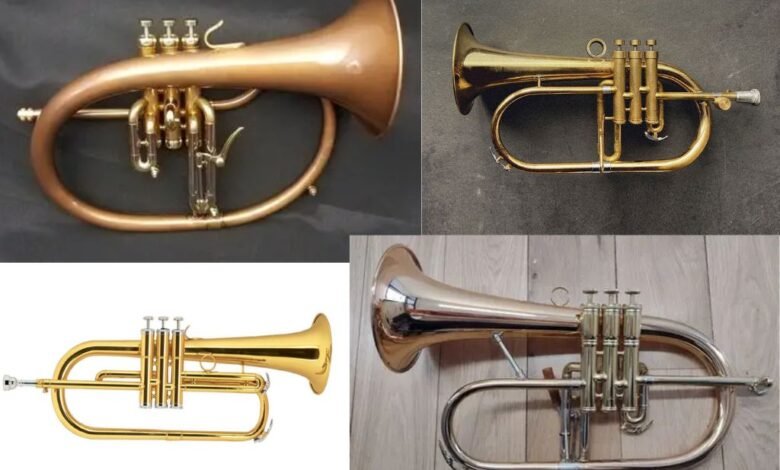
In the vast and sonorous family of brass instruments, few possess the subtle charm and emotional depth of the flugelhorn. Often described as the softer, more lyrical counterpart to the trumpet, the flugelhorn occupies a distinctive niche in both historical and modern music. Its warm, rounded tone has made it a favorite among jazz musicians, brass band performers, and composers seeking a more intimate brass sound.
Though it may not command the same immediate recognition as the trumpet or trombone, the flugelhorn’s expressive qualities have ensured its enduring relevance. To understand its importance, one must explore not only its construction and sound but also its historical journey and evolving role in music.
Origins: From Battlefield Signals to Concert Halls
The story of the flugelhorn begins in early 19th-century Europe, a time when military communication relied heavily on brass instruments. Before the invention of valves, instruments like the bugle were used to convey commands across distances. These early instruments were limited in pitch, but their clarity made them effective for signaling.
The flugelhorn emerged as a natural evolution of the bugle when valve technology was introduced. Around the 1820s, instrument makers began experimenting with ways to expand the musical capabilities of brass instruments. By incorporating valves, they transformed simple signaling tools into fully chromatic instruments capable of playing complex melodies.
The name “flugelhorn” derives from the German word Flügel, meaning “wing” or “flank.” Historically, it referred to the instrument used to direct troops on the battlefield’s flanks. Over time, however, its role shifted from military utility to musical artistry. As orchestras and bands grew in sophistication, the flugelhorn found its place among instruments designed not for command, but for expression.
Design and Construction: The Science Behind the Sound
At first glance, the flugelhorn resembles a trumpet. Both instruments are typically pitched in B♭ and use a system of three valves to alter pitch. However, the similarities largely end there. The flugelhorn’s defining feature lies in its conical bore, which gradually widens along the length of the tubing. This contrasts with the trumpet’s mostly cylindrical bore.
This difference in shape has a profound effect on sound production. A conical bore allows air to flow more smoothly, reducing the sharpness of overtones and creating a softer, more blended tone. The instrument also features a wider bell, which further diffuses the sound, giving it a more enveloping quality.
Another crucial component is the mouthpiece. Flugelhorn mouthpieces are deeper and more funnel-shaped than those of trumpets. This design encourages a broader vibration of the lips, contributing to the instrument’s rich and mellow timbre.
Materials also play a role. Most flugelhorns are made of brass, often finished with lacquer or silver plating. These finishes not only affect appearance but can subtly influence the instrument’s tonal characteristics.
The Signature Sound: Warmth and Expressiveness
The flugelhorn’s tone is its most celebrated feature. While the trumpet is known for its brilliance and projection, the flugelhorn offers a sound that is often described as warm, velvety, and introspective. It lacks the sharp edge of the trumpet, replacing it with a rounded softness that is ideal for lyrical playing.
This tonal quality makes the flugelhorn particularly effective in conveying emotion. In jazz, for example, it is frequently used for ballads and slower compositions where nuance and phrasing are paramount. The instrument allows musicians to explore subtle dynamics, from whisper-soft passages to gently swelling crescendos.
Listeners often compare the flugelhorn’s sound to a blend between the trumpet and the French horn. It carries enough brightness to remain distinct, yet enough warmth to blend seamlessly with other instruments. This balance makes it a versatile addition to ensembles.
Role in Jazz: A Voice of Emotion
The flugelhorn has become especially prominent in jazz, where individuality and expression are highly valued. Many jazz musicians turn to the instrument when they want to achieve a more intimate or reflective mood.
One of the reasons for its popularity in jazz is its ability to produce smooth, legato lines. Unlike the trumpet, which can sound sharp or piercing in certain contexts, the flugelhorn excels at creating flowing melodies that feel almost vocal in nature.
Legendary jazz artists have embraced the instrument for its expressive capabilities. Its use in recordings and live performances has helped define the sound of entire eras within the genre. Whether used in small ensembles or larger big bands, the flugelhorn often serves as a vehicle for emotional storytelling.
Brass Bands and Beyond
While jazz has played a significant role in popularizing the flugelhorn, it is equally important in the tradition of brass bands. In these ensembles, the instrument often occupies a central melodic role, bridging the gap between higher-pitched cornets and lower brass instruments.
Its ability to blend makes it invaluable in group settings. Rather than cutting through the ensemble, the flugelhorn weaves into the overall texture, enriching the harmonic landscape. This makes it particularly effective in passages that require cohesion and warmth.
In orchestral settings, the flugelhorn is used less frequently but still holds a place in certain compositions. Composers may call for it when they desire a softer brass color that cannot be achieved with standard instruments. Its presence adds a unique tonal dimension that enhances the overall palette of the orchestra.
Playing the Flugelhorn: Technique and Challenges
For musicians, transitioning to the flugelhorn from the trumpet is relatively straightforward. The fingering system is identical, which means that trumpet players can adapt quickly. However, mastering the instrument requires adjustments in technique.
The flugelhorn demands greater control of airflow and embouchure. Because of its conical bore and deeper mouthpiece, it responds differently to breath pressure. Players must learn to produce a consistent, centered tone without forcing the sound.
One of the challenges lies in the upper register. The flugelhorn is less suited to high, powerful notes than the trumpet. Attempting to push it beyond its natural range can result in a strained tone. As a result, musicians often focus on the instrument’s strengths, particularly its mid and lower registers.
Articulation also differs slightly. The flugelhorn favors softer, more rounded attacks, which align with its overall tonal character. Sharp, aggressive articulation can sound out of place, so players must adapt their style accordingly.
Variants and Innovations
Over time, instrument makers have developed various types of flugelhorns to suit different musical needs. While the standard three-valve model remains the most common, some versions include a fourth valve to extend the lower range. Others use rotary valves instead of piston valves, offering a different feel and response.
Regional variations have also emerged. In parts of Europe, instruments similar to the flugelhorn have been adapted for specific musical traditions. These variations highlight the instrument’s versatility and its ability to evolve alongside cultural practices.
Modern manufacturing techniques have further improved the instrument’s consistency and playability. Advances in materials and design have allowed for greater precision, ensuring that today’s flugelhorns meet the demands of professional musicians.
The Flugelhorn in Contemporary Music
In today’s musical landscape, the flugelhorn continues to thrive. It appears in a wide range of genres, from jazz and classical to pop and film scores. Composers and arrangers value its unique tone, which can add depth and warmth to any composition.
In film music, for instance, the flugelhorn is often used to evoke emotion or nostalgia. Its gentle sound can underscore moments of reflection, romance, or melancholy. This has made it a popular choice for soundtracks seeking to connect with audiences on an emotional level.
The instrument has also found its way into experimental and fusion genres, where musicians explore new sonic possibilities. Its adaptability ensures that it remains relevant in an ever-changing musical world.
Cultural and Musical Significance
Beyond its technical characteristics, the flugelhorn holds cultural significance as an instrument of expression. It represents a shift from functionality to artistry, embodying the evolution of music itself.
From its origins as a signaling device to its role in modern performance, the flugelhorn reflects the human desire to communicate not just information, but emotion. Its sound resonates with listeners because it captures something deeply personal and universal.
Musicians often speak of the instrument as having a “voice” of its own. This perception underscores its ability to convey feeling in a way that transcends words. Whether in a jazz club, a concert hall, or a recording studio, the flugelhorn continues to touch audiences with its distinctive sound.
Conclusion: An Instrument of Subtle Power
The flugelhorn may not dominate the spotlight in the way some instruments do, but its impact is undeniable. Its warm tone, expressive capabilities, and rich history make it an essential part of the brass family.
In a world that often celebrates volume and brilliance, the flugelhorn offers something different: subtlety, depth, and intimacy. It reminds us that music is not only about being heard, but about being felt.
As musicians and listeners continue to explore its possibilities, the flugelhorn’s legacy will undoubtedly endure. Its voice—gentle yet powerful—will remain a testament to the beauty of musical expression.