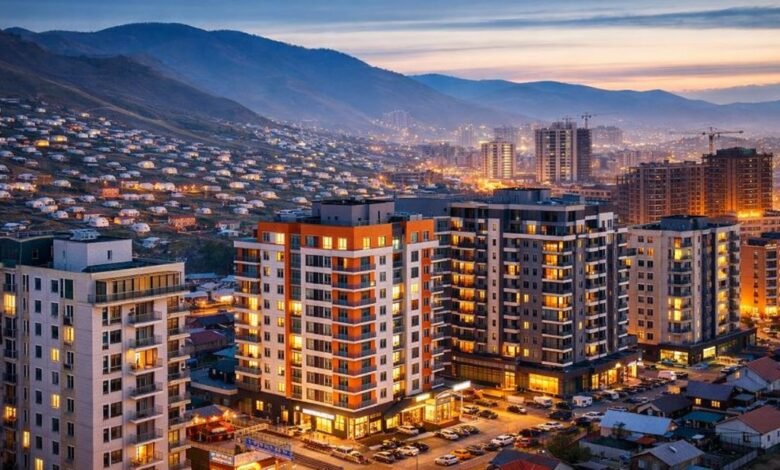
In a rapidly urbanizing world, housing is more than just shelter—it is a reflection of economic progress, cultural identity, and social transformation. Few terms capture this intersection as effectively as oronsuuts, a Mongolian word that has come to symbolize the country’s transition from a nomadic heritage to a modern, city-centered way of life. While the term itself simply refers to residential housing—most commonly apartments—its implications stretch far beyond bricks and concrete. Oronsuuts represents comfort in extreme climates, opportunity in growing cities, and a profound shift in how people define home.
This article explores the meaning, history, and significance of oronsuuts, tracing its role in Mongolia’s urban development while examining the broader cultural, economic, and social changes it embodies.
The Meaning and Linguistic Roots of Oronsuuts
The word oronsuuts (орон сууц) is rooted in the Mongolian language, where it combines two distinct elements: “oron,” meaning place or space, and “suuts,” meaning dwelling or residence. Together, they form a term that translates directly to “dwelling place” or “residential unit.” In contemporary usage, however, oronsuuts most often refers to apartment-style housing in urban environments.
Unlike generic housing terminology in many languages, oronsuuts carries contextual specificity. It is not merely a structure where people live; it implies a modern, organized, and infrastructure-supported living arrangement. The term is closely associated with city life, particularly in Mongolia’s capital, Ulaanbaatar, where large-scale apartment developments define the urban landscape.
Understanding oronsuuts requires moving beyond its literal translation. It is a linguistic marker of societal change, encapsulating Mongolia’s evolving relationship with land, mobility, and permanence.
From Nomadic Roots to Permanent Structures
For centuries, Mongolian life was shaped by mobility. The traditional dwelling, known as the ger (or yurt), is a portable, circular tent designed to be dismantled and relocated with ease. This housing system was perfectly suited to a nomadic lifestyle dependent on seasonal migration and livestock herding.
The emergence of oronsuuts marks a significant departure from this tradition. Beginning in the mid-20th century, Mongolia underwent a process of urbanization influenced by industrialization and political transformation. As people migrated to cities in search of education, employment, and improved living conditions, the need for permanent housing grew rapidly.
Apartment complexes began to replace temporary dwellings, offering stability and access to essential services. Over time, this shift reshaped not only the physical environment but also the social fabric of the country. Families that once moved across vast steppes now settled in fixed neighborhoods, redefining concepts of community and belonging.
Oronsuuts, therefore, is more than a type of housing—it is a symbol of Mongolia’s transition from a nomadic civilization to an urban society.
Urbanization and the Growth of Cities
The rise of oronsuuts is inseparable from the growth of Mongolia’s cities, particularly Ulaanbaatar, which has experienced rapid population expansion over the past few decades. Rural-to-urban migration has been a defining trend, driven by factors such as climate challenges, economic opportunities, and access to public services.
As the population of urban areas increased, so did the demand for housing. Oronsuuts developments emerged as the most practical solution, allowing for high-density living in limited space. Multi-story apartment buildings became a common sight, reshaping the skyline and accommodating thousands of residents within compact areas.
This transformation has not been without challenges. Rapid urbanization has placed pressure on infrastructure, leading to issues such as traffic congestion, air pollution, and housing shortages. Nevertheless, oronsuuts remains central to addressing these challenges, providing a framework for organized and scalable urban living.
Architecture and Design of Oronsuuts
Architecturally, oronsuuts buildings vary widely, reflecting different periods of development and economic conditions. Early apartment complexes, often constructed during the socialist era, were characterized by functional designs with minimal ornamentation. These buildings prioritized efficiency and uniformity, offering basic amenities to a growing urban population.
In contrast, modern oronsuuts developments incorporate contemporary design principles. Newer buildings often feature improved insulation, advanced heating systems, and aesthetically appealing exteriors. Developers increasingly focus on creating comfortable living environments that meet international standards, incorporating elements such as elevators, parking facilities, and recreational spaces.
Despite these advancements, the fundamental purpose of oronsuuts remains unchanged: to provide reliable, durable, and climate-appropriate housing. In a country where winter temperatures can drop dramatically, architectural considerations such as insulation and heating are not luxuries but necessities.
Climate Considerations and Practical Benefits
Mongolia’s harsh climate plays a crucial role in shaping its housing solutions. Winters are long and severe, with temperatures frequently falling well below freezing. In such conditions, traditional ger dwellings, while culturally significant, can be difficult to heat efficiently and may lack modern sanitation facilities.
Oronsuuts addresses these challenges by offering centralized heating systems, consistent access to electricity, and indoor plumbing. These features significantly improve quality of life, reducing the physical strain associated with extreme weather.
The benefits extend beyond comfort. Improved housing conditions contribute to better public health outcomes, as residents have access to clean water, proper sanitation, and stable indoor environments. In this sense, oronsuuts is not only a housing solution but also a public health asset.
Social Transformation and Community Life
The shift from nomadic to apartment living has had profound social implications. In traditional settings, communities were defined by mobility and kinship networks, with families living in close proximity within flexible arrangements. Oronsuuts introduces a different model, where individuals and families reside in fixed units within shared structures.
This change has led to the development of new forms of community interaction. Apartment living encourages closer daily contact among neighbors, fostering relationships that are shaped by proximity rather than movement. Shared spaces such as hallways, courtyards, and elevators become sites of social exchange.
At the same time, the transition has required adjustments. For many, moving into an oronsuuts involves adapting to rules, schedules, and collective responsibilities associated with shared living environments. Noise considerations, maintenance duties, and building management are all aspects of urban life that differ from the autonomy of nomadic living.
Despite these challenges, oronsuuts has contributed to the emergence of a modern urban culture, where convenience and connectivity play central roles.
Economic Implications of Oronsuuts Development
The expansion of oronsuuts housing has had significant economic implications. The construction of apartment complexes has become a major industry, generating employment and stimulating investment. Real estate development, in particular, has emerged as a key sector within Mongolia’s economy.
As demand for housing continues to rise, property values and rental markets have grown in importance. For many individuals, owning an oronsuuts apartment represents not only a place to live but also a valuable financial asset. This has led to increased interest in home ownership and long-term investment in urban property.
Government policies have also played a role in shaping the housing market. Initiatives aimed at improving affordability and expanding access to housing have supported the development of new projects. However, balancing supply and demand remains an ongoing challenge, particularly in rapidly growing urban areas.
Challenges and Inequalities
While oronsuuts offers numerous advantages, it also highlights existing inequalities and challenges within Mongolia’s urban landscape. Not all residents have equal access to modern housing, and disparities persist between those living in apartment complexes and those in informal settlements or ger districts.
Affordability is a major concern. As property prices rise, many families struggle to secure adequate housing, leading to overcrowding and financial strain. Infrastructure limitations, particularly in older buildings, can also affect living conditions.
Environmental issues further complicate the picture. Urban expansion has contributed to air pollution, especially during winter months when heating demands are high. Addressing these challenges requires coordinated efforts involving government policy, urban planning, and sustainable development practices.
The Cultural Significance of Oronsuuts
Beyond its practical and economic dimensions, oronsuuts carries deep cultural significance. It represents a redefinition of what it means to have a home in modern Mongolia. While traditional values remain important, the concept of stability has taken on new meaning in an urban context.
For many, moving into an oronsuuts apartment is a milestone, symbolizing progress, independence, and integration into city life. It reflects aspirations for a better future, where access to education, healthcare, and employment opportunities is more readily available.
At the same time, the persistence of ger districts within urban areas serves as a reminder of Mongolia’s nomadic heritage. The coexistence of these two housing systems highlights the complexity of cultural transition, where tradition and modernity continue to intersect.
Misinterpretations and Digital Confusion
In recent years, the term “oronsuuts” has occasionally appeared in unrelated online contexts, sometimes associated with digital platforms or misleading content. These usages often stem from misunderstandings or attempts to capitalize on unfamiliar terminology for search engine optimization.
It is important to clarify that the authentic meaning of oronsuuts remains firmly grounded in housing and urban development. Misinterpretations do not reflect the term’s cultural or linguistic significance and should be approached with caution.
For writers and researchers, maintaining accuracy in the use of such terms is essential, particularly when exploring topics that intersect with cultural identity and social change.
The Future of Oronsuuts
Looking ahead, the evolution of oronsuuts is likely to mirror global trends in urban housing. Technological advancements are beginning to influence building design, with features such as energy-efficient systems, smart home technologies, and sustainable materials gaining prominence.
Urban planning efforts are also focusing on creating integrated communities, where residential, commercial, and recreational spaces coexist within cohesive environments. Mixed-use developments are becoming more common, offering residents greater convenience and reducing the need for long commutes.
Sustainability will play a critical role in shaping the future of oronsuuts. As concerns about climate change and environmental impact grow, there is increasing emphasis on reducing energy consumption and improving air quality. Innovations in construction and infrastructure will be key to addressing these challenges.
Conclusion: A Symbol of Transformation
Oronsuuts is far more than a term for apartment housing—it is a reflection of Mongolia’s ongoing transformation. It tells a story of adaptation, resilience, and progress, capturing the complexities of a society navigating the balance between tradition and modernity.
From its linguistic roots to its role in urban development, oronsuuts embodies the changing nature of home in a rapidly evolving world. It represents not only physical structures but also the aspirations and experiences of the people who inhabit them.
As Mongolia continues to grow and urbanize, oronsuuts will remain a central element of its landscape, shaping how communities are built and how individuals connect with their environment. In understanding oronsuuts, one gains insight into a broader narrative—one that speaks to the universal human pursuit of stability, comfort, and belonging in an ever-changing world.