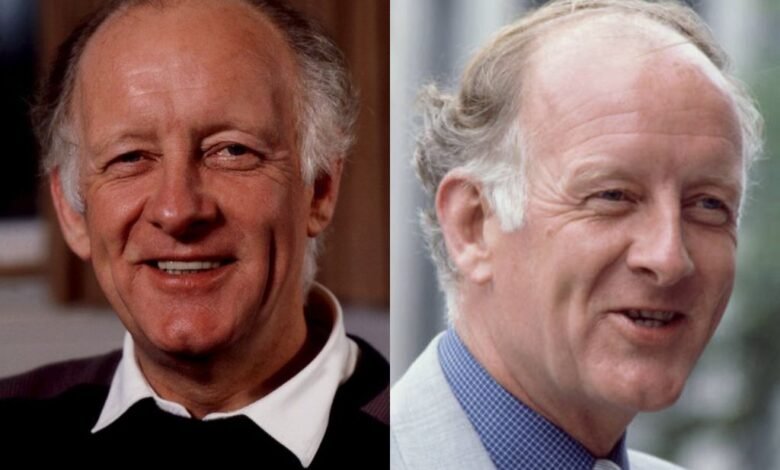
Introduction
Frank Bough was one of the most recognisable faces on British television during the 1970s and early 1980s. Known for his calm presenting style, professionalism in live broadcasting, and ability to handle high-pressure sports coverage, he became a central figure in the BBC’s sports and early breakfast television output. At the height of his career, he was regarded as a trusted national broadcaster, particularly through programmes such as Grandstand and Breakfast Time. However, his reputation suffered a major public collapse in the late 1980s following a personal scandal that ended his BBC career. Despite this, his contribution to British broadcasting remains significant.
Early Life and Background
Francis Joseph Bough was born on 15 January 1933 in Fenton, Stoke-on-Trent, England. He grew up in Oswestry, Shropshire, where he attended Oswestry Boys’ High School after passing the 11-plus examination. From an early age, he showed both academic ability and sporting talent.
He later studied history at Merton College, Oxford, where he also played football at a competitive university level, earning an Oxford Blue. His sporting interest would later shape his professional career in broadcasting.
After university, Bough completed National Service in the Royal Tank Regiment. His first steps into broadcasting came through British Forces Radio, where he gained experience in presenting and communication. This early exposure laid the foundation for his transition into professional journalism and television.
Entry into Broadcasting
Bough joined the BBC in the 1960s, initially working in regional news and sports reporting. His natural on-screen presence and calm delivery style quickly made him stand out.
At a time when television broadcasting was becoming more central to British life, Bough developed a reputation for reliability and composure. These qualities made him particularly suitable for live sports coverage, where unpredictability is common and presenting skill is crucial.
Rise to Fame with Grandstand
Frank Bough’s defining career breakthrough came when he became a presenter on the BBC sports programme Grandstand. He joined in 1968 and went on to become one of its main anchors until 1983.
Grandstand was a flagship Saturday afternoon sports programme that covered a wide range of live sporting events including football, horse racing, rugby, athletics, and major international competitions. Bough’s role placed him at the centre of British sports broadcasting during a period of major public interest in televised sport.
During his time on Grandstand, he also covered major international sporting events:
- Multiple FIFA World Cups
- Six Olympic Games
- Rugby championships and athletics events
His ability to handle live broadcasts smoothly, often switching between multiple events and commentators, made him one of the most trusted broadcasters in the country.
Nationwide and Expanding Television Role
Alongside sports broadcasting, Bough also became a presenter on the BBC current affairs magazine programme Nationwide. The show mixed news, human interest stories, and studio discussions.
His presence on Nationwide helped him transition from purely sports broadcasting into general television presenting. This expanded his public profile and reinforced his image as a versatile and authoritative broadcaster.
Breakfast Television Pioneer: Breakfast Time
In 1983, Bough became one of the lead presenters of the BBC’s first breakfast television programme, Breakfast Time. This marked a major shift in British broadcasting, as morning television had previously been limited.
He co-hosted the programme alongside journalists such as Nick Ross and Selina Scott.
Breakfast Time was innovative in style, mixing news, interviews, lifestyle features, and informal discussion. Bough’s relaxed and reassuring presentation style made him an ideal fit for the format. The programme became highly popular and established the foundation for breakfast television in the UK.
Career at Its Peak
By the early 1980s, Frank Bough had become one of the most recognisable television personalities in Britain. His career combined:
- High-profile sports presenting (Grandstand)
- Current affairs broadcasting (Nationwide)
- Morning television innovation (Breakfast Time)
At this stage, he was widely seen as a symbol of dependable BBC broadcasting. His calmness under pressure and authoritative tone made him particularly trusted by viewers.
The Scandal and Fall from Grace
In 1988, Frank Bough’s career suffered a dramatic collapse following revelations published in British tabloids. Reports alleged that he had been involved in cocaine use and attended parties involving sex workers.
The public reaction was immediate and severe. At the time, such revelations involving a high-profile BBC presenter caused major controversy, as public expectations of broadcasters were very strict.
As a result:
- The BBC terminated his employment
- His public reputation was heavily damaged
- He became associated more with scandal than broadcasting achievement
This event is often referred to as his “fall from grace,” marking a sharp turning point in his life and career.
Life After the BBC
Despite the scandal, Frank Bough did not disappear entirely from broadcasting. He later worked for other media organisations, including ITV, Sky Television, and LBC radio.
However, his roles were lower profile compared to his BBC career. He never returned to mainstream national prominence on the level he once held.
Over time, he gradually stepped back from broadcasting and eventually retired in 1998. He lived a quieter life in Berkshire in his later years, away from the media spotlight.
Public Perception and Reputation
Frank Bough’s public image remains complex. On one hand, he is remembered as:
- A pioneer of live sports broadcasting
- A key figure in the development of breakfast television
- A highly professional live presenter
On the other hand, his career is often discussed in relation to his personal scandal, which overshadowed his later professional life.
Media historians frequently describe him as an example of how quickly public reputation can change in the television industry.
Death
Frank Bough died on 21 October 2020 at the age of 87. He passed away in a care home in England. His death was reported as due to natural causes associated with age.
Following his death, tributes focused largely on his broadcasting achievements rather than his personal controversies. Many colleagues remembered him as a skilled live presenter who helped shape modern British television broadcasting.
Legacy
Frank Bough’s legacy in British broadcasting can be divided into two parts.
Professional Legacy
- One of the most important sports broadcasters of his generation
- Pioneer of live multi-event sports coverage on television
- Key figure in the establishment of breakfast television in the UK
- Influenced later generations of presenters in live broadcasting style
Cultural Legacy
- Represents both success and vulnerability in public broadcasting careers
- His life is often cited in discussions about media reputation and personal scandal
- Remains a notable figure in the history of BBC television development
Despite controversy, his contributions to television broadcasting remain historically significant.
Conclusion
Frank Bough’s life reflects both the heights of British broadcasting success and the fragility of public reputation. From his early days as a sports presenter to becoming a household name through Grandstand and Breakfast Time, he played a major role in shaping television presentation styles in the UK. Although his career was overshadowed by scandal in the late 1980s, his influence on live broadcasting and television history remains important.
Frequently Asked Questions (FAQs) – Frank Bough
1. Who was Frank Bough?
Frank Bough was a British television presenter and journalist best known for hosting BBC programmes such as Grandstand, Nationwide, and Breakfast Time. He was one of the most prominent TV broadcasters in the UK during the 1970s and early 1980s.
2. What is Frank Bough most famous for?
He is most famous for presenting:
- Grandstand (BBC sports programme)
- Breakfast Time (BBC’s first breakfast television show)
He was also known for his calm and professional live broadcasting style.
3. What happened to Frank Bough?
Frank Bough’s career was heavily affected in 1988 when he became involved in a public scandal involving allegations of drug use and inappropriate personal conduct. This led to his dismissal from the BBC and a major decline in his mainstream broadcasting career.
4. What was Frank Bough’s cause of death?
Frank Bough died on 21 October 2020 at the age of 87. His death was reported as due to natural causes related to old age.
5. What was Frank Bough’s role in Grandstand?
He was one of the main presenters of Grandstand, the BBC’s flagship Saturday sports programme, where he covered major sporting events including football, rugby, athletics, and international competitions.
6. Who is Selina Scott in relation to Frank Bough?
Selina Scott co-presented Breakfast Time with Frank Bough in 1983. She was part of the original BBC breakfast television presenting team.
7. Did Frank Bough recover his career after the scandal?
He continued to work in broadcasting after leaving the BBC, including roles at ITV, Sky TV, and LBC radio, but he never regained his previous national prominence.
8. How is Frank Bough remembered today?
Frank Bough is remembered as a pioneering television presenter who helped shape live sports broadcasting and breakfast television in Britain, although his legacy is also linked to the controversy that ended his BBC career.
9. When did Frank Bough retire?
He officially retired from broadcasting in 1998 after working in various media roles following his BBC departure.
10. Where did Frank Bough live later in life?
In his later years, Frank Bough lived a quiet, private life in Berkshire, England, away from public attention.