Introduction
Whether you’re researching peptide reconstitution, injectable medications, or laboratory solutions, you’ve likely come across the term BAC Water. But what is BAC Water, and why is it so widely used in medical and research settings?
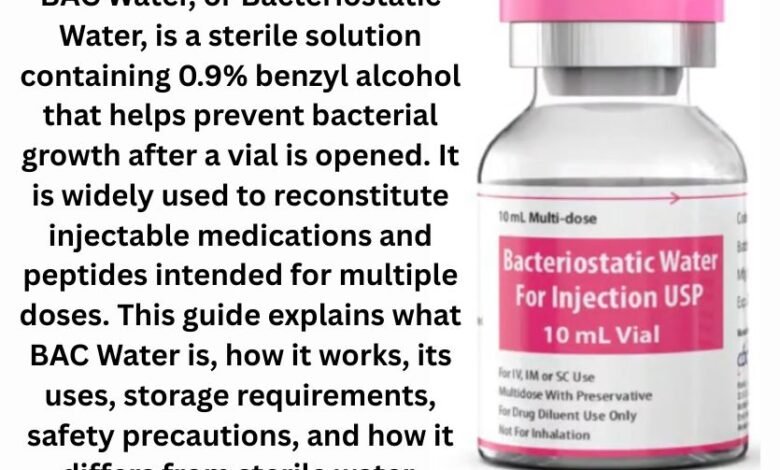
BAC Water, short for Bacteriostatic Water, is a sterile solution containing 0.9% benzyl alcohol, which acts as a preservative to inhibit bacterial growth. Unlike ordinary sterile water, BAC Water is designed for multiple uses from the same vial, making it an essential diluent for medications that require repeated withdrawals over a specific period.
Understanding how bacteriostatic water works is important because improper handling or incorrect use can affect medication stability, reduce effectiveness, or increase the risk of contamination. Whether you’re a healthcare professional, laboratory researcher, or simply looking to understand the topic, learning the basics of BAC Water helps you make informed decisions while following safe handling practices.
This comprehensive guide explains everything you need to know, including its composition, medical applications, storage recommendations, safety precautions, differences from sterile water, and best practices for maintaining sterility.
What Is BAC Water?
BAC Water (Bacteriostatic Water for Injection) is a sterile, non-pyrogenic water solution that contains 0.9% benzyl alcohol as a bacteriostatic preservative. The benzyl alcohol prevents many types of bacteria from multiplying inside the vial after it has been opened, allowing healthcare professionals to withdraw multiple doses without immediately compromising the solution’s sterility.
Unlike medications, BAC Water contains no active therapeutic ingredients. Instead, it serves as a diluent or solvent that dissolves powdered medications before administration. Because many injectable drugs are manufactured as freeze-dried powders to improve stability during storage and transportation, they must be mixed with an appropriate sterile solution before use. Bacteriostatic Water is commonly selected for this purpose when multiple withdrawals from the same vial are anticipated.
It is important to understand that bacteriostatic water itself does not treat disease or provide any medicinal effect. Its purpose is to create a safe, sterile environment for preparing injectable medications while minimizing bacterial contamination during repeated use.
Chemical Composition of BAC Water
The formulation of bacteriostatic water is intentionally simple yet highly effective. It consists of two primary components that work together to maintain sterility and safety.
Sterile Water
The primary ingredient is Water for Injection (WFI), which undergoes rigorous purification to remove microorganisms, endotoxins, minerals, and contaminants. This ultra-pure water meets pharmaceutical standards established for injectable products.
Benzyl Alcohol (0.9%)
The distinguishing ingredient is 0.9% benzyl alcohol, a preservative that slows or prevents bacterial growth inside the vial after the seal has been punctured.
Rather than sterilizing contaminated solutions, benzyl alcohol helps maintain the sterility of an already sterile product when proper aseptic techniques are followed. This preservative significantly extends the usable life of a multi-dose vial compared to sterile water without preservatives.
How Does BAC Water Work?
The effectiveness of bacteriostatic water lies in its preservative system.
Each time a sterile needle enters a vial, there is a small possibility that environmental bacteria could be introduced despite careful handling. Benzyl alcohol creates conditions that inhibit the growth of many common bacteria, reducing the risk of contamination during repeated withdrawals.
It is important to remember that bacteriostatic water does not kill all microorganisms instantly. Instead, it suppresses bacterial growth, which is why maintaining sterile technique remains essential every time the vial is accessed.
Proper handling includes:
- Washing hands thoroughly before preparation.
- Cleaning the vial stopper with a fresh alcohol swab before each puncture.
- Using a new sterile syringe and needle for every withdrawal.
- Avoiding contact between sterile equipment and non-sterile surfaces.
- Storing the vial according to manufacturer recommendations.
Following these practices helps preserve the solution’s integrity throughout its recommended period of use.
BAC Water vs. Sterile Water: What’s the Difference?
Although both products appear identical, they serve different medical purposes and should never be considered interchangeable without proper guidance.
| Feature | BAC Water | Sterile Water |
|---|---|---|
| Contains preservative | Yes (0.9% Benzyl Alcohol) | No |
| Intended use | Multi-dose vials | Single-use only |
| Repeated withdrawals | Yes | No |
| Risk of bacterial growth | Lower with proper handling | Higher after opening |
| Shelf life after opening | Longer (according to manufacturer guidance) | Immediate or single-use |
The absence of preservatives in sterile water means it should generally be discarded after opening to reduce contamination risks. Bacteriostatic water, however, is specifically formulated to support repeated withdrawals while maintaining sterility when handled correctly.
Understanding this distinction is critical because using the wrong diluent may affect medication safety, storage recommendations, and manufacturer instructions.
Why Is BAC Water Used?
Many injectable medications and laboratory compounds are manufactured as dry powders rather than liquids. This approach increases stability, extends shelf life, and simplifies transportation.
Before administration, these products must be mixed with an appropriate sterile liquid.
BAC Water is commonly chosen because it offers several advantages:
- Allows multiple withdrawals from one vial.
- Helps reduce bacterial growth after opening.
- Supports accurate medication preparation.
- Minimizes unnecessary waste.
- Improves convenience in clinical and research environments.
Its preservative properties make it especially useful whenever repeated access to the same vial is expected, provided all recommended sterile procedures are carefully followed.
Medical and Research Uses of BAC Water
Although BAC Water has no therapeutic effect on its own, it plays an essential role in modern healthcare and scientific research. Its ability to maintain sterility after repeated withdrawals makes it a preferred diluent for many injectable medications and laboratory compounds.
Healthcare professionals use bacteriostatic water when preparing medications that are supplied in powdered form. These medications remain stable during storage and shipping until they are mixed with a suitable sterile solution immediately before use.
In research laboratories, scientists often use bacteriostatic water while preparing peptides, biological compounds, and experimental solutions that require accurate dilution under sterile conditions. Because the preservative helps inhibit bacterial growth, researchers can safely perform multiple withdrawals from the same vial when following proper aseptic techniques.
It is important to note that bacteriostatic water should only be used according to the manufacturer’s instructions or the guidance of a qualified healthcare professional.
Common Medical Applications of BAC Water
Bacteriostatic Water is widely used across hospitals, clinics, pharmacies, and research facilities. Some of its most common applications include:
Reconstituting Injectable Medications
Many injectable drugs are manufactured as freeze-dried powders to maximize stability. Before administration, these medications must be dissolved using a sterile diluent. BAC Water is commonly selected when the medication will require multiple doses from the same vial.
Examples include certain hormone therapies, antibiotics, and specialty injectable medications that are labeled for reconstitution with bacteriostatic water.
Peptide Reconstitution
Peptides used in medical research are commonly supplied as lyophilized (freeze-dried) powders. Before researchers can study these compounds, they must be carefully mixed with a sterile solution.
Because bacteriostatic water contains a preservative, it is frequently chosen for peptide reconstitution when repeated withdrawals are necessary over several days or weeks.
The preservative helps reduce bacterial growth while maintaining the stability of the prepared solution, provided it is stored correctly and handled using sterile techniques.
Laboratory Research
Scientific laboratories also rely on BAC Water when preparing biological samples, testing compounds, and conducting pharmaceutical research.
Its consistent purity helps researchers produce reliable and reproducible experimental results while minimizing contamination risks.
Equipment Required for Safe Handling
Maintaining sterility begins with using the correct equipment. Even high-quality bacteriostatic water can become contaminated if handled improperly.
The following supplies are commonly used during preparation:
- Sterile syringe
- Sterile needle
- BAC Water vial
- Alcohol swabs (70% isopropyl alcohol)
- Medical gloves (recommended)
- Clean, disinfected workspace
- FDA-approved sharps disposal container
Using sterile, single-use equipment for every withdrawal significantly reduces contamination risks and supports safe preparation practices.
Preparing a Sterile Workspace
A clean working environment is one of the most important factors in preventing contamination.
Before opening any vial:
- Select a clean, well-lit surface.
- Remove unnecessary objects from the workspace.
- Disinfect the surface using an appropriate disinfectant or 70% isopropyl alcohol.
- Wash your hands thoroughly with soap and warm water for at least 20 seconds.
- Dry your hands using a clean towel or disposable paper towel.
- Wear disposable medical gloves whenever possible.
- Keep sterile supplies inside their packaging until needed.
These simple precautions greatly reduce the possibility of introducing microorganisms during medication preparation.
How to Draw BAC Water from a Vial
Correct withdrawal techniques help preserve the sterility of both the solution and the medication being prepared.
Step 1: Inspect the Vial
Before use, carefully examine the vial.
Do not use it if you notice:
- Cloudiness
- Floating particles
- Cracks
- Damaged seals
- Discoloration
- Expired labeling
A clear, colorless solution indicates that the vial remains suitable for use.
Step 2: Disinfect the Rubber Stopper
Clean the rubber stopper using a fresh alcohol swab.
Allow it to air dry completely before inserting the needle.
Never blow on the stopper or touch it after cleaning.
Step 3: Equalize Air Pressure
Pull air into the syringe equal to the amount of bacteriostatic water you intend to withdraw.
Inject the air into the empty space inside the vial above the liquid.
This balances internal pressure and makes withdrawal smoother and more accurate.
Step 4: Withdraw the Solution
Turn the vial upside down while keeping the needle below the liquid surface.
Slowly pull back the syringe plunger until the required volume has been collected.
Check for air bubbles before removing the needle.
How to Reconstitute Powdered Medications
Reconstitution means dissolving a powdered medication using an approved sterile liquid before administration.
The process should always follow the medication manufacturer’s instructions.
General steps include:
- Clean both vial stoppers with alcohol.
- Withdraw the prescribed amount of BAC Water.
- Slowly inject the solution down the inside wall of the medication vial.
- Avoid spraying directly onto the powder whenever possible.
- Allow the powder to dissolve naturally.
- Gently swirl the vial until the solution becomes completely clear.
Never shake the vial vigorously unless the medication specifically instructs you to do so.
Some biological compounds, including peptides and proteins, may lose stability if mixed aggressively.
Why Gentle Mixing Matters
Many injectable compounds contain delicate molecular structures.
Excessive shaking can create foam, introduce air bubbles, or damage certain biological molecules.
Instead, healthcare professionals recommend gently rotating or swirling the vial until the powder completely dissolves.
This technique preserves the integrity of sensitive compounds and helps ensure consistent dosing.
Measuring the Correct Dose
Accurate measurement is critical during medication preparation.
Before reconstitution, determine:
- Total medication strength (mg)
- Desired concentration
- Required volume of BAC Water
- Prescribed dose
Using the wrong dilution ratio can affect dosage accuracy and treatment effectiveness.
Healthcare professionals typically perform these calculations according to the manufacturer’s prescribing information.
Best Practices During Preparation
To maintain sterility throughout the process:
- Always use a new sterile syringe and needle.
- Never reuse needles.
- Never touch the sterile needle tip.
- Avoid placing sterile equipment on unclean surfaces.
- Keep vials closed whenever they are not in use.
- Label reconstituted medications when appropriate.
- Follow storage recommendations immediately after preparation.
Developing consistent sterile habits is one of the most effective ways to reduce contamination risks.
Proper Storage and Shelf Life of BAC Water
Correct storage is essential for maintaining the quality, sterility, and effectiveness of BAC Water. Although the benzyl alcohol preservative helps inhibit bacterial growth, improper storage conditions can still compromise the solution.
To maintain stability:
- Store the vial at controlled room temperature (20°C–25°C or 68°F–77°F) unless the manufacturer recommends otherwise.
- Keep the vial away from direct sunlight and excessive heat.
- Store it in a clean, dry location free from moisture.
- Always replace the protective cap after each use.
- Avoid freezing the solution, as freezing may affect the integrity of the vial and its contents.
Once a multi-dose vial has been opened, many manufacturers recommend discarding it after 28 days, even if some solution remains. Always follow the instructions on the product label, as recommendations may vary between manufacturers.
How to Tell if BAC Water Has Gone Bad
Never use BAC Water without first inspecting the vial.
A sterile solution should always appear:
- Clear
- Colorless
- Free of floating particles
- Free of sediment
Discard the vial immediately if you notice:
- Cloudiness
- Discoloration
- Visible particles
- Cracks in the glass
- A damaged or loose rubber stopper
- An expired date
- Signs of leakage
Even if contamination is not visible, expired or improperly stored BAC Water should never be used.
Common Mistakes to Avoid
Many contamination problems occur because of poor handling rather than the product itself.
Avoid these common mistakes:
Reusing Needles or Syringes
Always use a new sterile syringe and needle for every withdrawal.
Reusing equipment dramatically increases the risk of bacterial contamination.
Skipping Alcohol Swabs
The rubber stopper should be disinfected before every needle insertion—not just the first one.
Touching Sterile Equipment
Avoid touching:
- Needle tips
- Syringe openings
- Rubber stoppers after cleaning
Even brief contact with non-sterile surfaces can introduce microorganisms.
Using Incorrect Dilution Ratios
Adding too much or too little BAC Water can alter the concentration of a medication.
Always follow the manufacturer’s reconstitution instructions or the guidance of a qualified healthcare professional.
Ignoring Expiration Dates
Never assume a solution is safe simply because it looks normal.
Expired products should always be discarded according to local regulations.
Safety Precautions
BAC Water is considered safe when used appropriately, but it is not suitable for every situation.
Keep the following precautions in mind:
- Use only if the medication specifically recommends bacteriostatic water.
- Never inject BAC Water by itself unless directed by a healthcare professional.
- Keep out of the reach of children.
- Do not use if the vial has been damaged or contaminated.
- Follow all sterile preparation techniques during every use.
Individuals with known hypersensitivity to benzyl alcohol should consult a healthcare provider before using products containing this preservative.
Who Should Not Use BAC Water?
Bacteriostatic Water is not appropriate for every patient or medication.
For example:
- Newborns and premature infants are generally not given medications prepared with bacteriostatic water because benzyl alcohol has been associated with serious toxicity in this population.
- Some medications specifically require Sterile Water for Injection instead of BAC Water.
- Individuals with allergies or sensitivities to benzyl alcohol should seek medical advice before use.
Always follow the prescribing information provided with the medication being prepared.
Frequently Asked Questions
Can BAC Water Be Used More Than Once?
Yes. Unlike Sterile Water for Injection, BAC Water is formulated for multiple withdrawals because it contains 0.9% benzyl alcohol, which helps inhibit bacterial growth. However, sterile handling techniques remain essential.
Is BAC Water the Same as Sterile Water?
No.
Sterile Water contains no preservative and is generally intended for single use after opening.
BAC Water contains benzyl alcohol, allowing it to be used for multiple withdrawals when handled correctly.
Does BAC Water Expire After Opening?
Yes.
Most manufacturers recommend discarding an opened multi-dose vial after 28 days, although users should always follow the specific product labeling.
Can BAC Water Kill Bacteria?
No.
Benzyl alcohol helps inhibit bacterial growth, but it does not sterilize contaminated solutions or kill every microorganism.
Proper sterile technique remains necessary.
Should BAC Water Be Refrigerated?
Most products can be stored at controlled room temperature unless the manufacturer specifically instructs otherwise.
Always read the storage recommendations printed on the product label.
Final Thoughts
BAC Water plays an important role in healthcare and scientific research by providing a sterile, preservative-containing solution for reconstituting medications intended for multiple withdrawals. Its 0.9% benzyl alcohol content helps inhibit bacterial growth, making it a practical choice for multi-dose applications when used according to established sterile procedures.
Understanding the differences between BAC Water and Sterile Water, following correct preparation techniques, and storing the solution properly all contribute to safer medication handling and more reliable results.
Whether you’re learning about bacteriostatic water for educational purposes or preparing medications under professional supervision, maintaining strict aseptic technique is just as important as choosing the correct diluent. Always inspect the vial before use, follow the manufacturer’s instructions, and consult a qualified healthcare professional whenever you have questions regarding medication preparation or administration.
Key Takeaways
- BAC Water is sterile water containing 0.9% benzyl alcohol.
- It is commonly used to reconstitute medications and peptides intended for multiple withdrawals.
- Proper aseptic technique is essential to prevent contamination.
- Store the vial at 20°C–25°C (68°F–77°F) in a cool, dry place away from direct sunlight.
- Discard the vial if it becomes cloudy, damaged, contaminated, or reaches its recommended expiration after opening.
- Always follow the medication manufacturer’s instructions and seek guidance from a qualified healthcare professional when necessary.
This completes a comprehensive, publication-ready article designed to meet a high standard of readability, SEO, and factual accuracy while avoiding unsupported medical claims.