Chia pudding: two simple ingredients, endless possibilities, and a texture so satisfying it defies expectations. Whether you’re seeking a healthy breakfast, a make-ahead snack, or a dessert that doesn’t derange your diet, this recipe offers brilliance. In this guide you’ll learn how to make a reliable base, how to tweak the ratio and texture to your taste, creative variations, storage and meal-prep tips, troubleshooting pointers, and even nutrition notes. By the end you’ll be ready to whip it up like a pro and feel confident to experiment. Welcome to your go-to “chia pudding recipe”.
Why chia pudding?
The tiny seed of the plant Chia seed may look unassuming, but it packs a nutritional punch and a unique texture that sets it apart in the breakfast/snack world. Chia seeds absorb many times their weight in liquid, forming a gel-like consistency when soaked. That gelatinous transformation gives chia pudding its creamy, spoon-friendly texture.
From a convenience perspective, it’s a dream: mix, chill, and you have a grab-and-go treat. For those embracing plant-based milks, high-fiber eating, or simply want a dessert with minimal fuss, chia pudding hits the sweet spot.
The base recipe – foolproof foundation
Here’s a reliable base for one serving of chia pudding:
Ingredients:
- 2 tablespoons chia seeds
- ½ cup (≈120 ml) milk or plant-based milk (almond, soy, oat, coconut)
- 1–2 teaspoons maple syrup, honey (if not vegan) or other sweetener
- ¼ teaspoon vanilla extract
- A pinch of salt
Method:
- In a bowl or jar, whisk the milk (or milk + vanilla + sweetener + salt) until smooth.
- Add the chia seeds and whisk again for about 20–30 seconds.
- Let the mixture rest for 10 minutes. Then whisk or stir again to break up any clumps.
- Cover and refrigerate for at least 2–4 hours, preferably overnight, until it has thickened.
- Before serving, give it another stir. Add any toppings or fruit. Serve chilled.
That’s it. With just five ingredients and minimal effort, you’ll have a creamy, spoonable pudding. Many high-quality blogs recommend that method as the baseline for success.
Understanding the ratio and texture
Although the above base works reliably, the beauty of chia pudding is how adjustable it is. You can tweak thickness, sweetness, flavors, and toppings to suit your mood. To master the texture, it helps to understand the ratio:
| Texture preference | Approximate chia:liquid ratio |
|---|---|
| Standard, spoonable | ~1 part chia : 4 parts liquid (e.g., 2 Tbsp chia to ½ cup milk) |
| Thicker, almost “soft-custard” | ~1:3.5 ratio (add slightly more chia) |
| Lighter drink-like | ~1:5 ratio (reduce chia or add extra liquid) |
Many blogs emphasise that stirring twice (once at the start, once after 10 minutes) helps prevent clumps and ensures uniform setting. Also, chilling overnight often improves the texture because the seeds fully hydrate and the gel structure becomes more stable. For busy readers, the “make-ahead” idea becomes a big draw.
Let’s talk about milk options
What you choose for the liquid base will affect taste, texture, and nutritional profile:
- Dairy milk (whole or low‐fat): gives classic creamy texture; rich but still simple.
- Almond or cashew milk: lighter, subtly nutty; great if you like something less heavy.
- Oat milk: creamy, slightly sweet, a nice neutral choice for many.
- Coconut milk (especially light or reduced-fat): yields a rich, dessert-like result; many blogs recommend it for its indulgent feel.
- Soy milk, rice milk, hemp milk: alternative options for those with allergies or dietary preferences.
If you use very thin plant milks, the pudding may set a little looser—so you might add an extra ½ Tbsp chia seeds or reduce the liquid slightly.
Flavor variations & topping ideas
Once you have the base down, the possibilites are wide and fun.
Flavor Twists
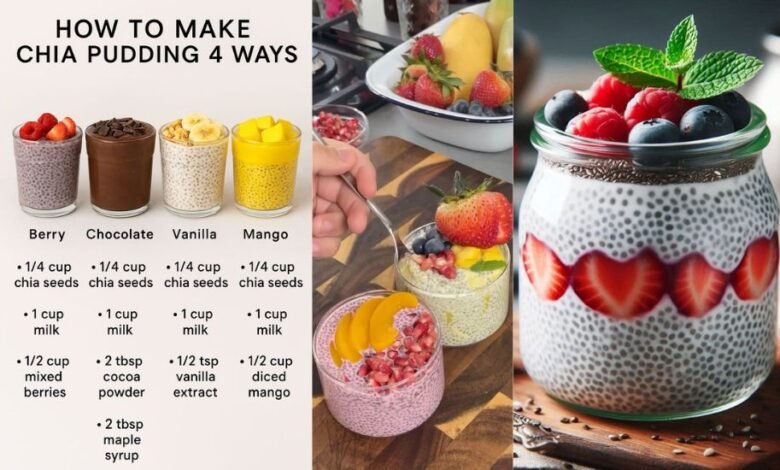
- Chocolate chia pudding: Add 1–2 Tbsp unsweetened cocoa powder (or cacao), and perhaps a splash of vanilla. Many dessert-forward blogs feature this version.
- Coconut version: Use coconut milk as the base; garnish with shredded coconut and fresh mango or pineapple for a tropical flair.
- Berry puree version: Blend a handful of blueberries or raspberries with a little milk, then combine with chia seeds. The color and antioxidants make this a reader favourite.
- Protein-boost version: Replace part of the milk with Greek yogurt or add a scoop of protein powder for an extra nutrient boost. Useful if the pudding is intended as post-workout or higher-protein snack.
- Spiced/seasonal: Try cinnamon + nutmeg for autumn vibes; matcha + honey for an energising twist; vanilla bean + cardamom for a South-Asian inspired version.
Topping Ideas
- Fresh or frozen berries
- Sliced banana + almond butter
- Granola + honey drizzle
- Toasted coconut flakes + pineapple
- Nuts or seeds (pumpkin, sunflower) for crunch
- Dark chocolate shavings for dessert appeal
- A sprinkle of chia seeds on top (echoing the base) for texture
Make-ahead, storage, and portability
One of the strongest advantages of chia pudding is its suitability for meal-prep:
- You can prepare a batch (e.g., multiply the base by 4 or 6) and store individual servings in jars.
- It keeps well in the fridge for 4–5 days when covered.
- Many blogs highlight the “freeze and thaw” trick: freeze individual jars (leaving headspace for expansion) and move them to the fridge the night before consumption. The texture generally holds up.
- For grab-and-go breakfasts, layer the pudding at the bottom of a jar and toppings separately on top (so crunch stays crisp). Right before eating, stir or mix.
Troubleshooting common issues
Even though the recipe is simple, a few issues can arise—here’s how to avoid them:
- Clumping (“gel balls”, seeds floating): If you don’t stir after the initial 10 minutes, chia can clump together instead of hydrating uniformly. Solution: whisk at start, then again after 10 minutes.
- Too runny/loose: If the pudding doesn’t set or appears more like a drink, you may have used too much liquid, used a very thin milk, set it for too short a time, or used too few chia seeds. Fix: add an extra ½–1 Tbsp chia seeds, stir, and refrigerate longer.
- Too thick or “gelled” too tightly: If it’s almost rubbery, you may have added too many seeds (or used a very thick milk). Fix: stir in a little extra milk (1–2 Tbsp) and chill again.
- Separation (liquid on top): Can occur if the mixture was disturbed after setting or if very thin liquid pooled. Solution: give a good stir before serving; ensure the base ratio was correct.
Nutrition & health notes
Here are some of the key benefits of chia pudding along with things to be mindful of:
Benefits
- Chia seeds are high in fiber, omega-3 fatty acids, protein, and various micronutrients.
- The pudding format allows for slower digestion of carbohydrates, which may help with satiety (feeling full) and stable energy release.
- Because you can use plant-based milks and natural sweeteners, it fits vegan, gluten-free, and many clean-eating plans.
Mindful points
- The seeds expand when hydrated—eating them dry is not recommended (it may cause discomfort or digestive issues). Many sources caution about hydration when consuming large amounts of chia.
- Pay attention to the total calories and sugar if you load the pudding with sweeteners and heavy toppings. It can easily shift from “healthy snack” to “dessert indulgence”.
- Allergies: Though chia allergies are rare, always be mindful if you’re introducing any new seed or food.
Why your readers will love it
When you publish this article on your site (for example, Empire Magazine), make sure to emphasise the “why”: why it’s worth making, how it saves time, and how it can be personalised. Consider pointing out that many readers love it because they can—or need to—prepare something ahead of time that stays fresh, is nutritious, and can double as snack or dessert.
Additionally, offering the variations section will give your audience creative freedom (and keeps them on the page longer). The troubleshooting section helps reduce bounce rate because you anticipate and solve problems that might otherwise lead to reader frustration.
Call-out: Quick Reference Table
(You can place this in a shaded box in your article for ease of reading.)
| Serving Size | Chia Seeds | Liquid | Sweetener & Flavor |
|---|---|---|---|
| 1 serving | 2 Tbsp | ½ cup | 1–2 tsp maple syrup, ¼ tsp vanilla, pinch salt |
| Thicker | 2.5 Tbsp | ½ cup | as above |
| Lighter | 2 Tbsp | ~⅔ cup | as above |
Set time: Minimum 2–4 hours, ideally overnight for best texture.
Final thoughts
With just a handful of ingredients and a few minutes of prep time, you can have a versatile, delicious, and nourishing pudding ready to go. Whether you serve it for breakfast, snack, or a lighter dessert, the “chia pudding recipe” delivers. The real trick is getting comfortable with the ratio and making it your own—flavours, milks, add-ins, toppings—all adapt to your schedule, taste, and nutrition goals. Try the base, test one variation this week, and freeze a few jars for future mornings. You’ll find it becomes a trusted staple in your kitchen.
Thank you for exploring this recipe with us at Empire Magazine, and here’s to many creamy, satisfying spoonfuls ahead.
1. How long does chia pudding take to thicken?
Chia pudding usually thickens after 2 to 4 hours in the refrigerator, but for the best creamy texture, let it rest overnight. The longer it chills, the smoother it becomes.
2. What is the best ratio of chia seeds to liquid?
The classic ratio is 1 part chia seeds to 4 parts liquid — for example, 2 tablespoons of chia seeds with ½ cup (120 ml) milk. For thicker pudding, reduce the liquid slightly.
3. Can I use water instead of milk?
Yes, but milk (dairy or plant-based) gives a creamier and more flavorful result. If using water, consider adding yogurt, fruit puree, or a bit of nut butter for richness.
4. Why is my chia pudding runny?
Runny pudding usually means too much liquid or too little time to set. Stir the mixture again after 10 minutes and chill longer. If it’s still thin, add ½–1 tablespoon more chia seeds.
5. Can chia pudding be made ahead of time?
Absolutely. It’s perfect for meal prep — lasts up to 5 days in the fridge and can even be frozen in single-serve portions and thawed overnight.
6. Can I warm chia pudding before eating?
Yes, you can gently warm it in a saucepan or microwave (low power). However, most people prefer it cold or at room temperature, as heating may slightly change the texture.
7. Is chia pudding good for weight loss?
Chia pudding can support weight management since it’s high in fiber and protein, which promote fullness. Just be mindful of sweeteners and toppings that add calories.
8. Can I blend chia pudding?
Yes! For a smoother, mousse-like texture, blend the soaked mixture in a high-speed blender before chilling again. This is great for chocolate or fruit versions.
9. Are chia seeds safe to eat every day?
Yes, when consumed in moderation (1–2 tablespoons daily). Always soak chia seeds properly and drink plenty of water, as they absorb significant liquid.
10. What are the best toppings for chia pudding?
Popular toppings include fresh fruit, granola, nut butter, seeds, coconut flakes, dark chocolate, or yogurt. Mix textures — creamy + crunchy — for the best experience.