Environmental Risk
Earth control measures play a critical role in modern construction, land development, and infrastructure projects. Whenever land is disturbed—through excavation, grading, or clearing—the natural balance of soil stability is disrupted. Without proper controls in place, loose soil can be carried away by rainwater or wind, leading to erosion, sediment pollution, flooding, and long-term environmental damage. This is where earth control measures come in.
An earth control measure refers to a collection of planned techniques and on-site practices designed to prevent soil erosion, control sediment movement, and manage runoff during and after earthworks. These measures are widely used across construction sites, road projects, housing developments, and any activity involving exposed soil. Beyond environmental protection, they also help projects stay compliant with regulations, avoid costly penalties, and maintain public safety.
This article explores earth control measures in depth—what they are, why they matter, how they work, and how they are implemented effectively.
Understanding Earth Control Measures in Simple Terms
At its core, an earth control measure is about controlling soil before it becomes a problem. When land is left undisturbed, vegetation and compacted soil naturally resist erosion. But construction strips away this protection, leaving soil vulnerable to rainfall and surface runoff.
Earth control measures focus on three main objectives:
-
Prevent soil from being dislodged (erosion control)
-
Capture soil that has already moved (sediment control)
-
Manage water flow to reduce the force that causes erosion
These measures are rarely applied in isolation. Instead, they work best as part of a coordinated system that begins before construction starts and continues until the site is fully stabilized.
Why Earth Control Measures Are Essential
The importance of earth control measures extends far beyond keeping a site tidy. Their impact touches environmental health, public infrastructure, and project economics.
Environmental Protection
Uncontrolled erosion can carry sediment into rivers, lakes, and drainage systems. This sediment clouds water, harms aquatic ecosystems, reduces oxygen levels, and can destroy habitats. Fine particles may also carry pollutants such as oils, chemicals, or heavy metals.
Flood and Drainage Management
Sediment buildup in drains and waterways reduces their capacity, increasing the risk of localized flooding. Earth control measures help keep drainage systems functioning as designed.
Regulatory Compliance
Most regions require erosion and sediment controls as part of construction approvals. Failing to implement proper measures can result in stop-work orders, fines, or legal action.
Cost and Project Efficiency
Repairing erosion damage, cleaning clogged drains, or restoring polluted waterways can be far more expensive than installing controls upfront. Well-planned earth control measures reduce rework and delays.
The Two Main Types of Earth Control Measures
Earth control strategies are generally divided into erosion control and sediment control. Understanding the difference helps in designing an effective plan.
Erosion Control: Preventing Soil Loss at the Source
Erosion control measures aim to stop soil particles from being loosened in the first place. These are proactive solutions that focus on soil stability.
Common erosion control techniques include:
-
Vegetative cover such as grass, shrubs, or temporary seeding
-
Mulching with organic or synthetic materials
-
Erosion control blankets or mats placed on exposed slopes
-
Slope grading and terracing to reduce steep angles
-
Limiting the size and duration of exposed areas
The principle is simple: the less soil that moves, the less needs to be captured later.
Sediment Control: Managing Soil That Has Already Moved
Sediment control measures are reactive. They do not prevent erosion but instead trap sediment before it leaves the site or enters stormwater systems.
Typical sediment control measures include:
-
Silt fences along site boundaries
-
Sediment basins and traps at low points
-
Check dams in drainage channels
-
Inlet protection around storm drains
These controls are essential backups when erosion cannot be fully prevented, especially during heavy rainfall.
Common Earth Control Measures Used on Sites
Most construction projects rely on a combination of the following earth control measures, chosen based on site size, soil type, slope, and climate.
Silt Fences and Perimeter Barriers
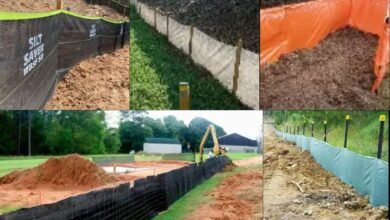
Silt fences are one of the most widely used sediment control measures. Installed along the perimeter of a site, they slow down runoff and allow sediment to settle before water flows away. Proper installation is critical—poorly installed fences often fail.
Sediment Basins and Traps
Sediment basins are temporary ponds designed to collect runoff and allow suspended soil particles to settle. They are particularly effective on larger sites where runoff volumes are significant.
Slope Stabilization Techniques
Steep slopes are highly vulnerable to erosion. Stabilization may involve terracing, retaining structures, erosion blankets, or vegetation. These methods reduce the speed of water flowing downhill.
Drain and Inlet Protection
Storm drains are direct pathways to waterways. Inlet protection devices prevent sediment from entering these systems, reducing downstream pollution.
Construction Phasing and Staging
One of the most effective earth control strategies is limiting disturbance. By staging construction and exposing only small areas at a time, erosion risks are significantly reduced.
Planning an Effective Earth Control Strategy
Successful earth control measures begin long before machinery arrives on site. Planning is a crucial step that determines how well controls perform.
Site Assessment
Planners evaluate soil type, slope, rainfall patterns, and nearby waterways. Sandy soils, steep slopes, and high rainfall all increase erosion risk.
Earth Control or Erosion and Sediment Control Plan
Most projects require a documented plan showing:
-
Locations of control measures
-
Construction sequencing
-
Maintenance responsibilities
-
Inspection schedules
This plan serves as both a design tool and a compliance document.
Integration With Construction Activities
Controls must be installed before earthworks begin and adjusted as construction progresses. A static plan that is not updated often leads to failures.
Maintenance and Monitoring: The Overlooked Factor
Even the best-designed earth control measures can fail if they are not maintained. Sediment builds up, fences collapse, and drains clog if inspections are neglected.
Regular monitoring should include:
-
Inspecting controls after rainfall
-
Removing accumulated sediment
-
Repairing damaged structures
-
Replacing temporary measures when necessary
Maintenance ensures that controls continue to function throughout the project lifecycle.
Long-Term Earth Control and Site Stabilization
Earth control measures do not end when construction finishes. Permanent stabilization is the final goal.
This typically involves:
-
Permanent landscaping and vegetation
-
Paved or sealed surfaces
-
Long-term drainage solutions
Once the site is stabilized, temporary measures such as silt fences can be removed safely.
Challenges and Common Mistakes
Despite widespread knowledge, earth control failures are common. Typical mistakes include:
-
Installing controls too late
-
Using the wrong measure for site conditions
-
Poor installation practices
-
Ignoring maintenance
-
Treating earth control as an afterthought rather than a core requirement
Avoiding these pitfalls requires training, planning, and accountability.
The Bigger Picture: Sustainability and Responsible Development
Earth control measures are not just regulatory obligations; they are part of responsible land stewardship. As development increases, protecting soil and water resources becomes even more critical. Effective earth control supports sustainable construction, protects communities, and preserves ecosystems for future generations.
When implemented correctly, these measures demonstrate that development and environmental responsibility can coexist.
Final Thoughts
Earth control measures are an essential component of any project involving land disturbance. By combining erosion prevention, sediment control, careful planning, and ongoing maintenance, construction sites can significantly reduce their environmental footprint while improving safety and compliance.
Understanding and applying earth control measures properly is not just good practice—it is a necessity in modern development. At Empire Magazines, we believe that informed planning and responsible construction practices are key to building a sustainable future.