Fraboc Explained: Family History Framework for Breast and Ovarian Cancer Risk

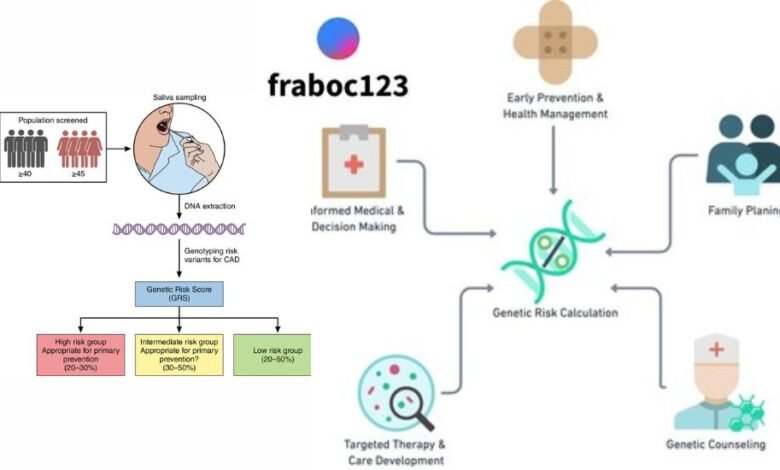
The term fraboc (sometimes written as FRA-BOC) often appears in older medical notes, clinical correspondence, or online discussions, leaving many people unsure whether it signals something serious. In clear, simple terms, fraboc is not a disease, diagnosis, or treatment. It refers to a structured framework once used by clinicians to assess inherited breast and ovarian cancer risk based on family history. Understanding what fraboc actually represents—and what it does not—can remove a lot of unnecessary worry and put the term into its proper context.
Understanding Fraboc in Plain Language

People usually come across the word fraboc in one of three ways. First, it may appear in older medical correspondence or reports. Second, it can show up in academic or training material discussing family-history-based cancer risk. Third, some people encounter it while researching genetic risk after learning that several relatives have had similar cancers. Because the word looks technical and unfamiliar, it can feel intimidating at first glance.
At its core, fraboc is about pattern recognition. Rather than focusing on one person in isolation, it looks at how cancer appears across multiple generations of a family. The underlying idea is simple: when certain cancers occur repeatedly, at younger ages, or in particular combinations, that pattern may signal an inherited risk that deserves closer attention.
This topic fits well with the broader goal of Empire Magazines: breaking down complex concepts into clear, practical explanations without hype or fear-based language. Fraboc is a good example of something that sounds complicated but becomes much clearer once the basic logic is explained step by step.
How Fraboc Works as a Family-History Risk Framework
Fraboc was designed as a decision-support framework, not a crystal ball. It does not predict whether someone will get cancer. Instead, it helps categorize risk levels based on family history so that healthcare professionals can make informed choices about next steps.
The Basic Building Blocks
A fraboc-style assessment typically starts with a structured family history, often covering three generations when possible. This usually includes:
-
Close relatives such as parents, siblings, and children
-
Extended relatives like grandparents, aunts, uncles, and cousins
-
Types of cancer diagnosed in the family
-
Approximate ages at diagnosis
-
Whether cancers occurred on one side of the family or both
This information is then evaluated against established patterns known to be associated with inherited cancer risk. The emphasis is on clusters and timing, not isolated events.
Risk Categories, Not Yes-or-No Answers
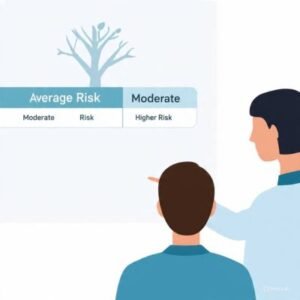
One of the strengths of fraboc is that it avoids black-and-white conclusions. Instead of saying “high risk” or “no risk,” it places people into broad risk categories, often described as average, moderately increased, or significantly increased.
To illustrate this idea:
-
Scenario A: One older relative developed breast cancer late in life, with no other similar cases.
-
Scenario B: Two close relatives developed breast cancer in mid-adulthood on the same side of the family.
-
Scenario C: Multiple relatives across generations developed breast or ovarian cancer, some at young ages.
A fraboc-style framework helps clinicians see why Scenario C might warrant more detailed follow-up than Scenario A. The goal is proportionality—matching the response to the strength of the family pattern.
Supporting Decisions, Not Replacing Judgment
Fraboc was never meant to replace clinical judgment. Instead, it acted as a consistency tool, helping different professionals interpret similar family histories in similar ways. Much like a pilot’s checklist, it ensured that key factors were reviewed without claiming to control the final outcome.
Practical Value and Real-World Limitations of Fraboc
Like many structured frameworks, fraboc offered real benefits but also had clear limits.
Where Fraboc Added Value
Fraboc contributed in several meaningful ways:
-
Standardization: A shared language for discussing inherited cancer risk
-
Efficiency: Faster triage of family histories
-
Early awareness: Encouraged routine discussion of family cancer patterns
For patients, this often meant clearer explanations and more transparent reasoning behind recommendations.
Important Boundaries to Keep in Mind
Fraboc also had limitations that are sometimes misunderstood:
-
It did not test genes or confirm inherited mutations
-
It did not deeply account for lifestyle or environmental factors
-
It depended on the accuracy of reported family history
A helpful comparison is weather forecasting. Past patterns can guide planning, but they cannot guarantee what will happen on a specific day. Family history works the same way.
Why Fraboc Still Appears in Medical Records

Even though fraboc is no longer widely used as a standalone framework, its conceptual foundation remains relevant. Modern tools still begin with family history, pattern recognition, and proportional response. The continued appearance of the term usually reflects historical documentation rather than current practice.
Fraboc in Today’s Context: How the Concept Has Evolved
Medical risk assessment has moved toward broader, more adaptive models. Today, family history is often combined with:
-
Personal medical background
-
Reproductive and hormonal factors
-
Statistical population data
-
Optional genetic testing when appropriate
This evolution does not reject fraboc’s logic—it builds on it. Family history remains a cornerstone, just one piece of a larger picture.
New Perspective: Why Family-History Frameworks Still Matter

Even with advances in genetic testing, family-history-based frameworks continue to play an important role. Genetic tests are not always available, affordable, or necessary, and many people will never undergo them. In these cases, structured family-history reviews provide a practical, low-cost way to identify who might benefit from closer monitoring.
Another important point is emotional clarity. When people hear about cancer risk, uncertainty can be more stressful than facts. Frameworks like fraboc helped turn vague concern into organized information, making discussions more grounded and less fear-driven. This approach still influences how clinicians communicate risk today.
Beyond medicine, the same logic appears in other fields. In finance or real estate, data-driven frameworks help professionals decide when a situation deserves extra attention and when routine monitoring is enough. Organizations such as Ashcroft Capital, for example, emphasize structured analysis to weigh risk and opportunity rather than relying on instinct alone. Fraboc applied that same disciplined thinking to healthcare.
Understanding this broader principle helps demystify the term. Fraboc was never about prediction or labeling—it was about making thoughtful, proportional decisions based on available evidence.
Conclusion: What Fraboc Really Represents
Fraboc is best understood as a snapshot in the evolution of inherited cancer risk assessment. It reflects an effort to bring clarity, consistency, and proportionality to how family history was interpreted in clinical settings.
While the specific framework is no longer central in everyday practice, its core ideas remain alive. Family history still matters. Patterns still guide decisions. And clear communication is still essential.
For anyone encountering the term today, the key takeaway is context. Fraboc was a tool for organization—not a verdict, diagnosis, or prediction. Seen through that lens, it becomes far less intimidating and far more understandable, aligning perfectly with the mission of Empire Magazines to make complex topics accessible and calm rather than confusing.
Frequently Asked Questions About Fraboc
1. Is fraboc a medical diagnosis?
No. Fraboc is not a diagnosis and does not mean someone has cancer or will develop it. It is a framework used to review family history and estimate relative risk levels.
2. Does fraboc mean genetic testing is required?
No. A fraboc assessment does not involve genetic testing. It may suggest whether further evaluation could be useful, but testing decisions depend on many factors.
3. Why do some doctors no longer mention fraboc?
Medical tools evolve. Fraboc has largely been replaced by newer, more comprehensive models, even though the underlying principles are still used.
4. Should I be worried if I see fraboc in my records?
Not automatically. Its presence usually indicates that family history was reviewed in a structured way. Any concerns should be discussed with a qualified healthcare professional who can interpret the information in full context.