Robotics Funding News: Why Investors Are Pouring Billions Into the Future of Intelligent Machines

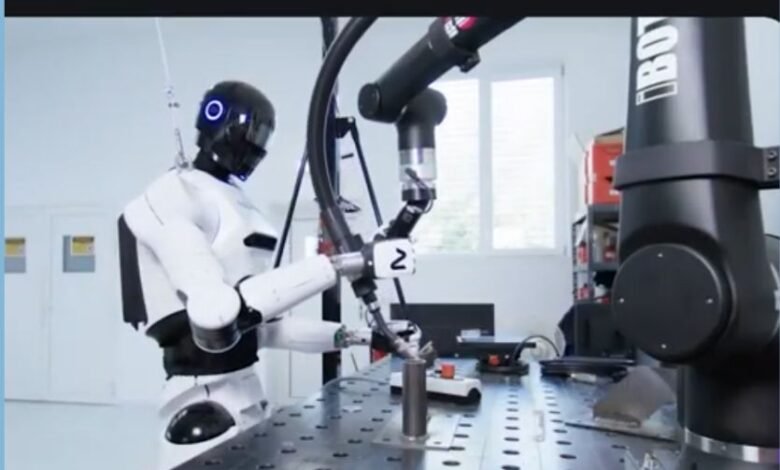
The race to build smarter robots has entered a new era, and the world’s biggest investors do not want to be left behind. Venture capital firms, technology giants, governments, and industrial leaders are collectively investing billions of dollars into robotics startups that promise to reshape manufacturing, healthcare, logistics, agriculture, defense, and even household assistance. What was once considered a niche engineering field has evolved into one of the fastest-growing investment sectors, fueled by rapid advances in artificial intelligence, computer vision, automation, and what many experts now call “physical AI.”
Robotics funding news throughout 2026 paints a clear picture of this transformation. Funding rounds are breaking records, startup valuations are soaring, and new partnerships between AI developers and robotics companies are accelerating innovation at an unprecedented pace. Investors increasingly believe that robots powered by advanced AI models will become as essential to the physical world as cloud computing became to the digital economy. Rather than focusing solely on software applications, venture capital is now flowing toward machines capable of performing real-world tasks with increasing autonomy.
This shift represents far more than another technology trend. It reflects changing global economic conditions, labor shortages, demographic pressures, supply chain challenges, and the growing demand for automation across virtually every industry. As businesses search for greater efficiency and governments seek to strengthen domestic manufacturing capabilities, robotics has become one of the most attractive long-term investment opportunities.
The Evolution of Robotics Investment
For many years, robotics attracted steady but relatively modest investment compared to software startups. Investors often viewed robotics as capital-intensive, technically complex, and slower to generate returns than cloud computing or mobile applications. Building hardware required significant engineering expertise, manufacturing infrastructure, and lengthy testing cycles.
The landscape changed dramatically with the rapid progress of artificial intelligence. Modern AI systems can now recognize objects, understand language, learn new tasks, and make complex decisions in real time. These capabilities transformed robots from specialized machines programmed for repetitive actions into intelligent systems capable of adapting to changing environments.
As AI matured, investors began recognizing that combining intelligent software with advanced robotics could unlock enormous commercial opportunities. This convergence created the concept of physical AI, where machines use sophisticated AI models to interact naturally with the physical world. Recent industry data shows robotics startups have already raised more capital in 2026 than during any previous full year, highlighting investor confidence in the sector’s long-term potential.
Record-Breaking Funding Activity
One of the biggest stories dominating robotics funding news is the unprecedented amount of venture capital entering the industry. Investment firms are participating in increasingly larger funding rounds as competition intensifies to back companies developing next-generation robotic platforms.
According to recent market analyses, robotics startups have collectively raised tens of billions of dollars during 2026, surpassing previous annual records despite the year being only partially complete. Much of this investment has concentrated on companies developing humanoid robots, industrial automation systems, warehouse robotics, autonomous mobile robots, and AI foundation models specifically designed for robotic applications.
Unlike previous technology cycles where investors spread capital across numerous experimental concepts, today’s robotics investments appear increasingly focused on companies demonstrating clear commercial applications and scalable business models.
Why Artificial Intelligence Changed Everything
Artificial intelligence has become the primary catalyst behind the robotics investment boom. Traditional industrial robots required precise programming for every movement, limiting their flexibility. Modern AI-powered robots can observe their surroundings, understand verbal instructions, adapt to unexpected situations, and continuously improve their performance.
Large language models, computer vision systems, reinforcement learning algorithms, and multimodal AI have dramatically expanded what robots can accomplish. Instead of performing one repetitive task, intelligent robots can handle diverse activities across warehouses, factories, hospitals, farms, and retail environments.
The launch of new robotics foundation models specifically designed for industrial environments demonstrates how AI companies are increasingly targeting physical automation rather than digital applications alone.
The Rise of Humanoid Robotics
Among all robotics sectors, humanoid robots have captured the greatest investor attention. Designed to resemble human form and movement, these robots can potentially operate within workplaces already built for people without requiring expensive infrastructure modifications.
Humanoid robotics companies have secured some of the industry’s largest funding rounds. Investors believe these machines could eventually perform manufacturing tasks, warehouse operations, retail assistance, healthcare support, hospitality services, construction work, and elderly care.
Although widespread commercial deployment remains several years away, the rapid pace of investment reflects confidence that humanoid robots will become an important component of future labor markets. Major technology companies and venture capital firms continue backing startups developing increasingly capable robotic platforms.
Manufacturing Remains the Largest Opportunity
Industrial manufacturing continues to represent the largest commercial market for robotics investment. Manufacturers worldwide face rising labor costs, persistent worker shortages, increasing quality expectations, and pressure to improve production efficiency.
Modern industrial robots perform far more than simple assembly tasks. AI-powered systems can inspect products, identify defects, transport materials, coordinate production schedules, and collaborate safely alongside human workers.
Recognizing these opportunities, experienced manufacturing executives and former technology leaders have launched specialized investment funds dedicated to robotics, advanced manufacturing, smart factories, and industrial automation startups. Their goal is accelerating innovation within industries that have traditionally received less venture capital attention than consumer technology.
Warehouse and Logistics Automation
The explosive growth of e-commerce has created enormous demand for warehouse automation. Distribution centers increasingly rely on autonomous mobile robots to transport inventory, fulfill customer orders, optimize storage, and improve operational efficiency.
Rather than replacing every human worker, these robotic systems typically assist employees by handling repetitive transportation and sorting tasks. This allows staff to focus on more complex responsibilities while improving productivity and reducing workplace injuries.
As global supply chains continue evolving, investors view warehouse robotics as one of the most commercially mature segments within the broader robotics industry.
Healthcare Robotics Gains Momentum
Healthcare represents another rapidly expanding investment category. Hospitals, rehabilitation centers, and elderly care facilities increasingly require robotic assistance due to aging populations and healthcare workforce shortages.
Medical robots already assist surgeons during minimally invasive procedures, support rehabilitation programs, transport medical supplies, disinfect hospital environments, and help monitor patients. Future systems are expected to provide even greater assistance in diagnostics, physical therapy, and elderly care.
Because healthcare demands exceptional precision, safety, and reliability, robotics companies serving this market often attract investors seeking stable, long-term growth opportunities.
Government Investment Accelerates Innovation
Private venture capital is no longer the only source of robotics funding. Governments worldwide increasingly view robotics as strategically important for economic competitiveness, industrial resilience, and national security.
Several countries have announced major investment initiatives supporting robotics research, AI development, advanced manufacturing, and automation infrastructure. South Korea recently unveiled industrial investment projects worth approximately $195 billion covering robotics, manufacturing AI, autonomous mobility, and related technologies.
Japan has also introduced ambitious plans to deploy millions of robots across industries over the coming decades to address labor shortages created by its aging population. These national initiatives demonstrate how robotics has become a strategic priority rather than merely a commercial technology.
Physical AI Becomes the Next Frontier
One of the most important themes emerging from robotics funding news is the concept of physical AI. While traditional AI applications primarily operated on computers, smartphones, and cloud platforms, physical AI enables intelligent systems to perceive, understand, and interact with real-world environments.
Physical AI combines computer vision, language understanding, sensor data, motion planning, and machine learning into unified systems capable of controlling physical machines. Investors increasingly believe this technology will define the next stage of artificial intelligence.
Instead of asking AI to generate text or images, companies are teaching machines how to manipulate objects, navigate buildings, collaborate with humans, and perform meaningful physical work.
China’s Expanding Robotics Ecosystem
China continues strengthening its position as one of the world’s leading robotics markets through substantial government support, manufacturing expertise, and private investment. Chinese companies are making rapid progress in developing humanoid robots, dexterous robotic hands, industrial automation systems, and embodied AI technologies.
Advanced manufacturing capabilities allow Chinese robotics companies to prototype, manufacture, and scale products more rapidly than many competitors. Investors closely monitor developments in China’s robotics ecosystem because its supply chains play a central role in global hardware production.
Challenges Facing Robotics Startups
Despite strong funding activity, robotics companies still face significant challenges. Hardware development remains expensive, requiring sophisticated engineering, manufacturing facilities, extensive testing, regulatory compliance, and complex supply chains.
Commercial deployment also takes longer than software development because physical products must operate safely under real-world conditions. Reliability, maintenance, battery technology, sensor accuracy, cybersecurity, and integration with existing industrial systems all present ongoing technical challenges.
Competition has intensified as more startups enter the market, making differentiation increasingly important. Investors now expect companies to demonstrate measurable commercial progress rather than relying solely on ambitious technological promises.
What Investors Are Looking For
Today’s robotics investors evaluate far more than impressive prototypes. They seek companies capable of building scalable businesses supported by recurring revenue, strong engineering teams, defensible intellectual property, and clear commercial demand.
Particular attention focuses on startups developing reusable AI models, advanced robotic software platforms, specialized sensors, actuators, industrial automation systems, warehouse solutions, healthcare technologies, and robotics-as-a-service business models.
Investors also value partnerships with established manufacturers, logistics providers, healthcare organizations, and industrial enterprises because these relationships demonstrate real-world validation.
The Future of Robotics Funding
Current investment trends suggest robotics funding will remain strong for years to come. Advances in generative AI, robotics foundation models, edge computing, semiconductor technology, and cloud infrastructure continue expanding what intelligent machines can accomplish.
Industries facing persistent labor shortages are increasingly adopting automation not to eliminate human workers entirely but to enhance productivity, improve workplace safety, and address demographic challenges. As deployment costs gradually decline and AI capabilities continue improving, robotics adoption is expected to spread across businesses of all sizes.
Rather than representing a temporary investment trend, today’s robotics funding boom appears to reflect the beginning of a long-term technological transformation. Just as previous decades witnessed the rise of personal computing, smartphones, cloud services, and generative AI, the coming years may be remembered as the period when intelligent machines became an integral part of everyday economic activity.
The latest robotics funding news illustrates a remarkable shift in how investors view the future of technology. Capital is no longer flowing only toward software that exists on screens but increasingly toward intelligent systems capable of performing valuable work in the physical world. Record-breaking funding rounds, ambitious government initiatives, advances in physical AI, and growing enterprise adoption all point toward a future in which robotics becomes a foundational technology across global industries. While technical and commercial challenges remain, the unprecedented scale of investment demonstrates widespread confidence that intelligent robots will play a central role in shaping the next generation of economic growth, industrial productivity, and technological innovation.