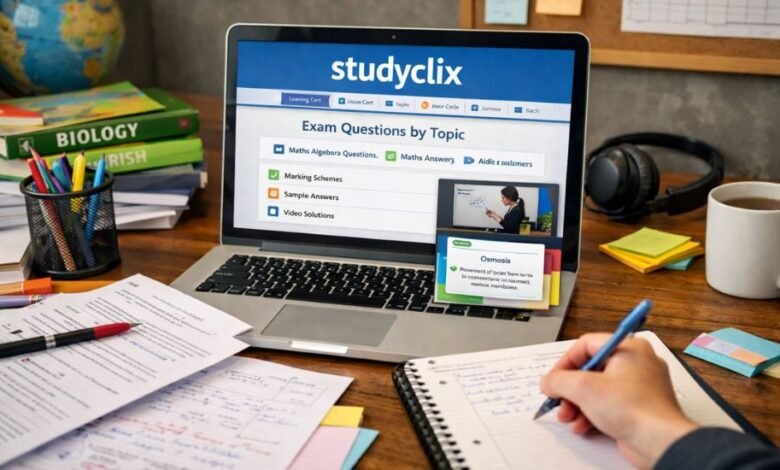
Studyclix has emerged as one of the most influential digital revision platforms within the Irish secondary education system, particularly for students preparing for the Junior Cycle and Leaving Certificate examinations. Built around the principle of structured, topic-based learning, the platform responds directly to a long-standing problem faced by students: the overwhelming volume of past exam papers and the difficulty of revising efficiently. Rather than forcing learners to work chronologically through years of exams, Studyclix reorganises content by syllabus topic, allowing for focused revision and measurable progress. This approach reflects a broader shift in education toward targeted learning outcomes and data-informed study habits. Over time, Studyclix has expanded beyond a simple question bank into a comprehensive digital ecosystem that integrates quizzes, marking schemes, video explanations, study planning tools, and teacher-focused features. Its popularity is rooted not in flashy design or exaggerated claims, but in its consistent alignment with official curricula and examination standards. For students, teachers, and parents alike, Studyclix represents a practical response to exam pressure, offering clarity and structure at a stage of education often defined by stress and uncertainty. As digital education tools continue to reshape how students learn, Studyclix stands as a clear example of how technology can enhance, rather than replace, traditional academic preparation.
The Origins and Development of Studyclix
The development of Studyclix is closely tied to changes in how Irish students and teachers engage with exam preparation. Historically, revision depended heavily on printed past papers, teacher-compiled notes, and private grinds, all of which required significant time and financial investment. Studyclix was created to centralise these resources in a single digital space, reducing friction and making high-quality revision material accessible to a wider audience. Its early iterations focused primarily on providing past exam questions organised by topic, a deceptively simple feature that immediately resonated with students. Over time, feedback from educators and learners informed the platform’s expansion, leading to the inclusion of marking schemes, sample answers, quizzes, and analytics. The platform’s growth was not driven by rapid diversification but by careful refinement of core academic needs. Each new feature was designed to support exam performance rather than distract from it. This disciplined development strategy helped Studyclix earn trust within schools, many of which now provide institutional access to students. By aligning its updates with syllabus changes and examination trends, Studyclix has maintained relevance in a highly regulated education environment, positioning itself as a long-term academic partner rather than a short-lived edtech experiment.
Curriculum Alignment and Subject Coverage
One of Studyclix’s defining strengths lies in its rigorous alignment with official curricula. Every subject available on the platform is structured according to nationally approved syllabi, ensuring that students are not revising irrelevant or outdated material. This alignment is particularly important for high-stakes exams like the Leaving Certificate, where precision and relevance can significantly influence outcomes. Studyclix covers a broad range of subjects across sciences, humanities, languages, and applied fields, reflecting the diversity of student pathways within Irish secondary education. Each subject is broken down into granular topics that mirror how material is taught in classrooms, creating a seamless connection between school learning and independent revision. This structure allows students to identify specific weaknesses and address them systematically, rather than relying on generalised study sessions. Teachers also benefit from this alignment, as it enables them to recommend precise resources that correspond directly to lesson plans. By embedding curriculum fidelity into its core design, Studyclix reduces uncertainty for students and reinforces confidence in their preparation. This focus on alignment distinguishes it from generic international study platforms, which often prioritise breadth over local relevance.
Topic-Based Revision and Learning Efficiency
The topic-based organisation of content is central to Studyclix’s educational philosophy. Instead of presenting exams as monolithic challenges, the platform reframes them as collections of manageable components. Each topic contains a curated set of questions drawn from multiple exam years, allowing students to recognise patterns and recurring themes. This approach supports active learning by encouraging comparison, reflection, and incremental improvement. Students can move from topic to topic with a clear sense of progression, which is particularly valuable for those who struggle with motivation or confidence. By concentrating on one area at a time, learners are less likely to feel overwhelmed and more likely to retain information. This structure also facilitates revision closer to exam dates, when time is limited and efficiency is critical. Topic-based revision reflects established principles in cognitive science, particularly the benefits of spaced practice and focused retrieval. Studyclix effectively translates these principles into a practical digital format, enabling students to study smarter rather than longer. The result is a learning experience that feels purposeful and controlled, even in the high-pressure context of exam preparation.
Marking Schemes and Sample Answers
Understanding how marks are awarded is as important as knowing the content itself, and Studyclix addresses this need through comprehensive marking schemes and sample answers. Each question is accompanied by official or carefully prepared guidance that illustrates how examiners allocate marks. This transparency demystifies the grading process and helps students tailor their responses accordingly. Sample answers provide concrete examples of structure, language, and depth, offering a benchmark against which students can evaluate their own work. Rather than encouraging rote memorisation, these resources highlight the qualities examiners value, such as clarity, relevance, and precision. For subjects that involve extended writing, such as English or history, this insight is particularly valuable. Students learn not only what to say, but how to say it effectively within exam constraints. Teachers often use these materials to support classroom instruction, reinforcing assessment literacy and helping students internalise marking criteria. By integrating marking schemes into the revision process, Studyclix bridges the gap between learning and assessment, fostering a more strategic and informed approach to exams.
Quizzes, Flashcards, and Active Recall
Studyclix extends beyond traditional exam questions by incorporating quizzes and flashcards designed to promote active recall. These tools encourage students to engage with material dynamically, testing knowledge in short, focused bursts. Quizzes often feature instant feedback, allowing learners to correct misunderstandings immediately and reinforce correct responses. Flashcards support memorisation of definitions, formulas, and key concepts, particularly in subjects that require factual recall. The interactive nature of these tools contrasts with passive reading or note review, which research has shown to be less effective for long-term retention. By integrating quizzes and flashcards into the broader revision framework, Studyclix supports varied learning styles and reduces monotony. These features are especially useful for early-stage revision, when students are building foundational knowledge. Over time, they can transition to more complex exam questions with greater confidence. The inclusion of active recall tools reflects Studyclix’s commitment to evidence-based learning strategies, ensuring that its digital resources are grounded in pedagogical effectiveness rather than convenience alone.
Video Explanations and Multimedia Learning
Recognising that not all students learn best through text alone, Studyclix has invested in video explanations and multimedia content. These resources are designed to clarify complex topics, particularly in subjects like mathematics and science, where visual demonstration can enhance understanding. Videos often break down problems step by step, modelling problem-solving processes rather than simply presenting answers. This approach helps students develop transferable skills that can be applied to unfamiliar questions. Multimedia learning also supports accessibility by offering alternative explanations for students who may struggle with traditional instruction. By combining text-based resources with video content, Studyclix creates a layered learning environment that accommodates diverse needs. Importantly, these videos are tightly integrated with the syllabus, ensuring that they remain focused on examinable material. Rather than overwhelming students with extensive lectures, the platform prioritises concise, targeted explanations that complement other revision tools. This balance allows multimedia content to enhance, rather than distract from, exam preparation.
Tools for Teachers and Classroom Integration
Studyclix is not solely a student-facing platform; it also offers significant value to teachers. Educators can use the platform to create custom quizzes and exams aligned with their lesson plans, saving time and ensuring consistency with assessment objectives. These tools allow teachers to monitor student progress, identify common difficulties, and adapt instruction accordingly. By centralising resources, Studyclix reduces the administrative burden associated with exam preparation, freeing teachers to focus on pedagogy. The platform’s design supports integration into classroom practice, whether through homework assignments, revision sessions, or formative assessments. This dual focus on students and teachers strengthens Studyclix’s position within schools, fostering a shared academic language around topics, questions, and marking criteria. Teachers also benefit from the platform’s regular updates, which reflect changes in curricula and examination trends. By aligning digital tools with professional practice, Studyclix reinforces the role of teachers as guides and mentors rather than replacing them with automated instruction.
Accessibility, Pricing, and School Access
Accessibility is a key consideration in the adoption of any educational platform, and Studyclix addresses this through flexible pricing and school-based access models. While individual subscriptions are available, many schools provide access to students as part of their academic support systems. This approach helps reduce inequality by ensuring that revision resources are not limited to those who can afford private tutoring or supplementary materials. The platform’s tiered structure allows users to access different levels of content, from basic question sets to comprehensive premium features. This flexibility enables students to choose options that align with their needs and circumstances. Importantly, the platform’s core value proposition remains consistent across tiers: structured, curriculum-aligned revision. By collaborating with schools, Studyclix embeds itself within the educational ecosystem rather than operating as an external add-on. This integration enhances its credibility and ensures that its resources are used consistently and effectively throughout the academic year.
Student Experience and Learning Outcomes
From a student perspective, the value of Studyclix lies in its ability to reduce uncertainty and build confidence. By providing clear pathways through complex syllabi, the platform transforms revision from a vague obligation into a structured process. Students can track progress topic by topic, gaining a tangible sense of achievement as they complete sections. This visibility is particularly important for maintaining motivation over extended study periods. Feedback mechanisms, such as quiz results and marking scheme comparisons, help students understand their strengths and weaknesses objectively. Over time, this insight supports more strategic study decisions, enabling learners to allocate effort where it is most needed. Many students report that the platform helps them feel more in control of their preparation, which can have a positive impact on exam performance and well-being. By combining structure, feedback, and accessibility, Studyclix creates an environment in which students can engage with revision proactively rather than reactively.
The Role of Studyclix in Exam Culture
Examinations play a central role in the Irish education system, shaping academic trajectories and career opportunities. In this context, Studyclix functions as more than a study tool; it influences how students perceive and approach exams. By emphasising understanding over memorisation and strategy over guesswork, the platform encourages a more reflective approach to assessment. Students learn to analyse questions, recognise patterns, and respond with precision. This shift aligns with broader educational goals that prioritise critical thinking and adaptability. At the same time, Studyclix acknowledges the realities of exam-driven education by providing practical tools tailored to specific assessment formats. This balance between idealism and pragmatism contributes to its widespread adoption. Rather than attempting to redefine exam culture, Studyclix works within existing structures to make them more navigable and transparent for students.
Comparisons with Traditional Revision Methods
When compared with traditional revision methods, Studyclix offers several distinct advantages. Printed past papers, while valuable, require significant effort to organise and interpret. Students often struggle to identify which questions are most relevant to their weaknesses or current syllabus. Studyclix eliminates this friction by curating and categorising content digitally. Unlike generic study guides, the platform provides direct access to authentic exam questions and marking schemes. This authenticity enhances relevance and reduces the risk of misaligned preparation. Additionally, digital tools allow for instant feedback and adaptive study patterns, which are difficult to achieve with static materials. While traditional methods still have a place in education, particularly for note-taking and reflection, Studyclix complements them by streamlining the most time-consuming aspects of revision. This synergy between old and new approaches reflects a pragmatic understanding of how students actually study.
Reliability, Updates, and Trustworthiness
Trust is a critical factor in educational resources, and Studyclix has built credibility through consistent reliability and regular updates. The platform’s content is reviewed and adjusted in response to syllabus changes, ensuring that students are always working with current material. This responsiveness is particularly important in subjects where specifications evolve over time. By maintaining close alignment with examination authorities, Studyclix minimises the risk of outdated or misleading content. User trust is further reinforced through transparent communication about updates and features. Rather than pursuing rapid expansion into unrelated areas, the platform focuses on refining its core offerings. This stability reassures students, parents, and teachers that Studyclix is a dependable partner in exam preparation. In an online environment crowded with unverified resources, this commitment to accuracy and relevance sets Studyclix apart.
Long-Term Impact on Study Habits
Beyond immediate exam results, Studyclix has the potential to influence long-term study habits. By modelling structured revision and encouraging self-assessment, the platform helps students develop skills that extend beyond secondary school. Time management, goal setting, and reflective learning are all embedded in the Studyclix experience. These competencies are transferable to higher education and professional contexts, where independent learning is essential. While the platform is designed for specific exams, its underlying principles align with broader educational objectives. Students who engage deeply with Studyclix may emerge not only better prepared for exams but also more confident in their ability to learn autonomously. This long-term perspective adds depth to the platform’s value proposition, positioning it as a formative influence rather than a short-term fix.
Studyclix in the Wider EdTech Landscape
Within the global edtech landscape, Studyclix represents a locally focused but conceptually sophisticated model. Rather than attempting to serve multiple education systems simultaneously, it prioritises depth over breadth. This focus allows for precise alignment with national curricula and assessment practices. While international platforms often emphasise scalability, Studyclix demonstrates the benefits of contextual expertise. Its success highlights the importance of understanding local educational cultures and constraints. As digital learning tools continue to proliferate, Studyclix offers a case study in how targeted design and sustained engagement can create meaningful impact. Its evolution reflects broader trends in education technology, including personalisation, data-informed learning, and integration with formal schooling. By maintaining a clear sense of purpose, Studyclix avoids the pitfalls of overextension that have challenged many edtech initiatives.
Conclusion: A Structured Path to Academic Confidence
Studyclix has established itself as a central pillar of exam preparation for Irish secondary students by combining structure, relevance, and pedagogical integrity. Its topic-based organisation, comprehensive marking guidance, and interactive tools address the practical realities of exam-driven education while supporting deeper understanding. By aligning closely with curricula and collaborating with schools, the platform integrates seamlessly into existing educational frameworks. For students, it offers clarity and confidence in a period often marked by stress. For teachers, it provides efficient, adaptable resources that support instruction and assessment. As digital learning continues to evolve, Studyclix stands as a reminder that effective education technology is defined not by novelty, but by thoughtful design and sustained relevance. For readers of Empire Magazines, Studyclix represents a compelling example of how focused digital platforms can reshape learning experiences without losing sight of academic rigour or human needs.
FAQs About Studyclix
What is Studyclix used for?
Studyclix is primarily used as an online revision and exam-preparation platform for secondary school students, especially those studying for the Junior Cycle and Leaving Certificate. Its main purpose is to help students revise more efficiently by organising past exam questions by topic, providing marking schemes, sample answers, quizzes, and explanatory resources that align closely with official syllabi. Instead of revising randomly or chronologically through exam papers, students can focus on specific areas of weakness, making their study time more targeted and productive.
Is Studyclix suitable for both students and teachers?
Yes, Studyclix is designed to support both students and teachers. Students use it for independent revision, self-testing, and understanding how marks are awarded in exams, while teachers use it as a classroom support tool. Teachers can build custom quizzes and exams, assign topic-specific practice, and integrate Studyclix resources into lesson plans. This dual functionality allows Studyclix to fit naturally into everyday teaching and learning rather than existing as a separate or disconnected revision aid.
Does Studyclix follow the official curriculum?
Studyclix closely follows official curricula and exam specifications, which is one of its strongest features. Subjects and topics are structured to mirror how material is taught in schools and assessed in state examinations. This ensures that students are revising relevant content and not wasting time on outdated or non-examinable material. Regular updates help the platform stay aligned with syllabus changes, maintaining its reliability as an exam-focused resource.
Can Studyclix replace traditional study methods?
Studyclix is best viewed as a complement rather than a replacement for traditional study methods. While it streamlines access to exam questions, marking schemes, and revision tools, many students still benefit from handwritten notes, textbooks, and classroom discussion. Studyclix enhances these methods by reducing organisational effort and providing clear exam insight, allowing students to spend more time actively learning and less time searching for materials.
Is Studyclix only useful close to exam time?
Although Studyclix is particularly valuable during exam periods, it can be used effectively throughout the academic year. Students can revise topics alongside classroom learning, reinforce understanding after lessons, and identify gaps early rather than cramming at the end. Using Studyclix consistently over time often leads to better retention, improved confidence, and less stress as exams approach.
How does Studyclix help improve exam performance?
Studyclix improves exam performance by helping students understand both content and assessment strategy. Topic-based questions highlight recurring themes, while marking schemes and sample answers clarify what examiners expect. Quizzes and interactive tools promote active recall, and video explanations support deeper understanding. Together, these elements encourage more focused, strategic revision rather than passive study.
Is Studyclix worth using for independent learners?
For independent learners, Studyclix offers a clear structure that is often difficult to achieve alone. Its organised content, instant access to exam materials, and built-in feedback make it easier to study effectively without constant teacher guidance. This makes it particularly useful for motivated students who want to take control of their revision and track progress in a measurable way.