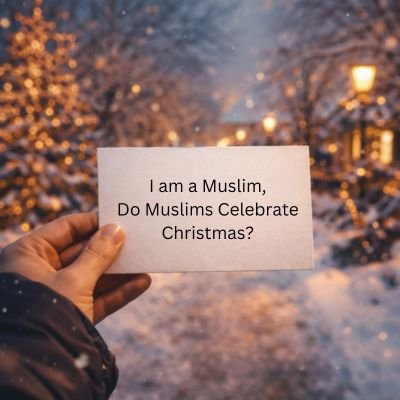
Every December, as lights go up, music fills stores, and conversations turn to holiday plans, one question comes up again and again: do Muslims celebrate Christmas? It’s a simple question on the surface, but the answer is layered, shaped by religion, culture, personal choice, and the reality of living in diverse societies.
Some people expect a straightforward yes or no. In practice, the reality is more nuanced. Muslims around the world share core religious beliefs, but they live in very different cultural settings. What Christmas means to a Muslim family in a Muslim-majority country can be quite different from what it means to a Muslim family living in a multicultural city where Christmas is part of public life.
This topic often comes with misunderstandings. Some assume Muslims reject anything connected to Christmas. Others think Muslims celebrate it just like Christians do. Neither view is fully accurate. To explain this clearly, it helps to look at Islamic beliefs, the religious meaning of Christmas, and how everyday social life influences personal decisions.
In this piece for Empire Magazines, we’ll look at the question in a calm, balanced way, without assumptions or exaggerations. The goal isn’t to tell anyone what they should believe, but to explain what most Muslims believe, why they believe it, and how that belief plays out in real life.
The Religious Foundation: Islam and the Figure of Jesus
To understand why Muslims generally do not celebrate Christmas, it helps to start with a key point many people don’t realize: Islam recognizes Jesus. In Islam, Jesus is known as Isa, and he is considered one of the most important prophets. His birth is described as miraculous, and his mother, Mary, is deeply respected.
Where Islam differs from Christianity is not in respect for Jesus, but in theology. Islam teaches that God is one and indivisible. Jesus is honored as a messenger of God, not as God or the son of God. Christmas, as traditionally observed, is tied closely to beliefs about Jesus’ divine nature and role in salvation. Those beliefs are central to Christian faith but are not part of Islamic belief.
Because of this, Christmas is not an Islamic religious holiday. Islam has its own calendar and its own major religious celebrations, such as Eid al-Fitr and Eid al-Adha. These holidays are connected directly to Islamic practices like fasting, prayer, and charity. Christmas does not appear in Islamic religious texts as a festival to be observed.
This distinction is important. For most Muslims, not celebrating Christmas is not about rejecting Jesus or showing disrespect toward Christians. It is about staying consistent with their own religious framework. Just as Christians generally do not celebrate Islamic religious holidays as acts of worship, Muslims generally do not celebrate Christian religious holidays in a religious sense.
Why Most Muslims Do Not Celebrate Christmas Religiously
When people ask, “do Muslims celebrate Christmas,” they are often really asking whether Muslims take part in Christmas as a religious event. For most Muslims, the answer is no, and there are a few key reasons behind this.
First, Islamic teachings place strong emphasis on maintaining clear boundaries between different forms of worship. Religious celebrations are seen as expressions of belief, not just social customs. Participating in another religion’s religious festival as an act of worship can feel, to many Muslims, like crossing a line they are not comfortable crossing.
Second, Christmas traditions often include religious symbols and messages that conflict with Islamic theology. Nativity scenes, prayers focused on Jesus’ divinity, and church services are all meaningful to Christians, but they do not align with Islamic beliefs. For Muslims who take their religious practice seriously, avoiding participation in these aspects is a way of staying true to their faith.
Third, there is a long tradition within Islam of preserving a distinct religious identity. This doesn’t mean isolating oneself from others, but it does mean being mindful about what religious practices one adopts. Many Muslims see their own holidays as sufficient and meaningful, without needing to add others.
That said, it’s important to avoid the idea that there is a single, rigid Muslim response. Levels of observance vary. Some Muslims follow religious guidelines very strictly, while others interpret them more flexibly. This variation doesn’t change the general principle, but it does affect how individuals respond to Christmas in daily life.
Cultural, Social, and Personal Dimensions of Christmas
While Christmas is a religious holiday at its core, in many parts of the world it also functions as a cultural and social event. Streets are decorated, schools close, and workplaces hold end-of-year gatherings. In these settings, the question of participation becomes more complex.
Many Muslims live in societies where Christmas is part of the public calendar, even if they do not observe it religiously. For them, Christmas can feel less like a religious festival and more like a seasonal atmosphere. This is where you start to see a range of responses.
Some Muslims choose to completely avoid Christmas-related activities, viewing any participation as too closely tied to religious meaning. Others draw a clear distinction between religious worship and social interaction. For example, a Muslim might attend a workplace dinner, exchange neutral season’s greetings, or enjoy a day off without engaging in religious rituals.
Think of it like attending a friend’s celebration that has cultural significance but not personal religious meaning. Someone can show up to be polite, enjoy the company, and still not adopt the beliefs behind the event. This analogy helps explain how some Muslims approach Christmas in multicultural environments.
In families with mixed religious backgrounds, these decisions can become even more personal. A Muslim married into a Christian family might attend gatherings to maintain family bonds, while being clear about their own beliefs. Others may focus on shared values like generosity, kindness, and gratitude, which are emphasized during the season without framing them in religious terms.
These choices are often shaped by upbringing, community norms, and personal comfort levels. There is no universal script that all Muslims follow when December arrives.
Common Misconceptions and Sensitive Questions
Because Christmas is so widely visible, misconceptions about Muslim attitudes toward it are common. Addressing these misunderstandings can help create more respectful conversations.
One common misconception is that Muslims who do not celebrate Christmas are being unfriendly or dismissive of Christians. In reality, Islamic teachings emphasize respect for people of other faiths. Choosing not to celebrate a religious holiday is not the same as rejecting the people who celebrate it.
Another misconception is that Muslims secretly celebrate Christmas but deny it publicly. This idea often comes from seeing Muslims enjoy decorations, food, or time off work. Enjoying a festive atmosphere does not automatically mean participating in religious worship. Many people of different backgrounds enjoy aspects of holidays without adopting their religious meaning.
There is also confusion around greetings. Some Muslims are comfortable saying general seasonal phrases, while others prefer neutral expressions of goodwill that do not reference the religious aspect of Christmas. This difference reflects personal interpretation, not a lack of courtesy.
A useful comparison might be how people approach national holidays in countries they are visiting. Someone might enjoy the parade, appreciate the food, and respect the tradition, while not feeling any personal attachment to the historical meaning behind it. The same logic often applies to Muslims and Christmas.
Understanding these nuances can help avoid awkward assumptions and foster more thoughtful interactions, especially in diverse workplaces and communities.
How Modern Life Shapes Muslim Responses to Christmas
The world today is highly interconnected. Media, travel, and social networks mean that Christmas imagery reaches almost everyone, regardless of religion. This reality influences how Muslims experience the season.
In Muslim-majority countries, Christmas is usually low-key. It may be recognized as a holiday for Christian minorities, but it does not dominate public life. In these contexts, Muslims are less likely to encounter pressure or expectation to participate.
In countries where Christmas is a major public event, Muslims often navigate a balance between integration and religious identity. Schools may host holiday events, businesses may expect participation in end-of-year celebrations, and neighbors may exchange gifts. These situations require personal judgment calls.
Some Muslims see participation in non-religious aspects as a way to build social harmony. Others prefer to keep a clear distance to avoid confusion about their beliefs. Both approaches exist side by side, even within the same community.
Younger generations, in particular, may approach Christmas differently from their parents. Growing up in multicultural environments can normalize certain customs, while still maintaining religious boundaries. This doesn’t necessarily mean beliefs are changing, but that expressions of those beliefs are adapting to modern contexts.
Public discussions about topics like this often become polarized, but everyday reality is usually more subtle. Most Muslims are simply making practical decisions about how to live their values in the world they inhabit.
Conclusion: Respect, Belief, and Shared Space
So, do Muslims celebrate Christmas? In a religious sense, most Muslims do not. Christmas is a Christian holiday rooted in beliefs that differ from Islamic theology. However, this does not mean Muslims reject Jesus, oppose Christians, or avoid all contact with Christmas-related activities.
What it does mean is that Muslims approach Christmas through the lens of their own faith, culture, and personal circumstances. Some keep a strict distance, others engage socially without religious participation, and many fall somewhere in between. These choices are shaped by belief, environment, and individual comfort, not by hostility or indifference.
In diverse societies, understanding these distinctions matters. It helps people interact with one another more thoughtfully, without assuming intent or meaning where there is none. Respecting differences does not require agreement, only awareness.
At Empire Magazines, we believe conversations like this work best when they are grounded in facts and framed with empathy. When people understand why others make the choices they do, everyday interactions become a little easier, and a little kinder.
FAQs: Do Muslims Celebrate Christmas?
Do Muslims celebrate Christmas as a religious holiday?
No, Muslims generally do not celebrate Christmas as a religious holiday. Christmas is rooted in Christian beliefs about Jesus that differ from Islamic teachings, so it is not part of Islamic religious practice.
Do Muslims believe in Jesus?
Yes. Muslims believe in Jesus (known as Isa in Islam) as an important prophet. However, Islam does not view Jesus as divine or the son of God, which is why Christmas is not observed religiously.
Can Muslims attend Christmas gatherings?
Some Muslims choose to attend non-religious Christmas gatherings, such as workplace dinners or family meals, especially in multicultural societies. This is usually seen as social interaction, not religious participation.
Do Muslims exchange Christmas gifts?
It depends on the individual. Some Muslims avoid gift-giving tied specifically to Christmas, while others may exchange gifts in a general, seasonal way without religious meaning.
Is it acceptable for Muslims to say “Merry Christmas”?
Muslim opinions vary. Some avoid saying it because of its religious meaning, while others are comfortable offering polite seasonal greetings as a gesture of goodwill, without religious intent.
Do Muslims decorate Christmas trees?
Most Muslims do not decorate Christmas trees, as these are closely associated with the religious celebration of Christmas. However, cultural influence and personal choice can lead to different practices.
How do Muslims show respect during Christmas season?
Many Muslims show respect by being kind, courteous, and considerate toward those who celebrate Christmas, while still maintaining their own religious boundaries.
Do Muslims have holidays similar to Christmas?
Islam has its own major religious celebrations, such as Eid al-Fitr and Eid al-Adha. These holidays focus on prayer, charity, family, and gratitude, similar in spirit but different in religious meaning.
Why do some Muslims seem to celebrate Christmas?
In many cases, what appears to be celebration is actually participation in cultural or social aspects, not religious observance. Enjoying decorations, time off, or social events does not necessarily mean celebrating Christmas religiously.
Is it offensive if Muslims do not celebrate Christmas?
No. Not celebrating Christmas is a religious choice, not a rejection of others. Respecting differences in belief is part of living in diverse societies.