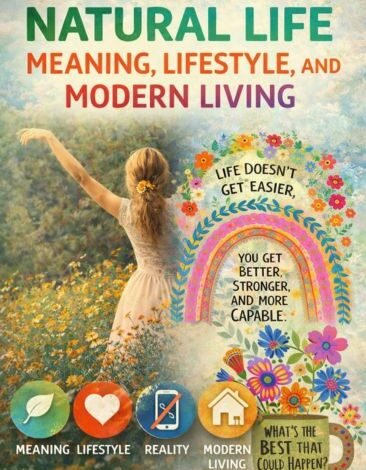
The phrase “natural life” sounds simple, almost self-explanatory. Yet the more you look at it, the more layers it reveals. For some people, natural life is about how they eat and what they buy. For others, it’s about values, ethics, environmental responsibility, or even legal and financial ideas tied to how society treats life and resources. The term appears in lifestyle conversations, sustainability debates, and broader cultural discussions about modern living.
In this piece for Empire Magazines, we’ll explore what “natural life” commonly refers to today, how it’s used in different contexts, and why it continues to resonate. The goal isn’t to persuade or promote a single viewpoint, but to explain the concept clearly, calmly, and factually—like one person talking to another over coffee.
What People Mean When They Say “Natural Life”
At its core, natural life usually refers to living in a way that feels closer to nature and less dependent on artificial systems. That idea can show up in many forms, which is why the phrase means different things to different people.
A lifestyle concept, not a fixed rulebook
Most discussions around natural life describe it as a direction, not a strict checklist. People often associate it with:
-
Choosing foods that are less processed
-
Reducing unnecessary waste
-
Spending more time outdoors
-
Being more mindful about consumption
Importantly, none of these ideas require perfection. Someone might cook most meals at home but still buy packaged food when it’s practical. Another person might focus on reducing household waste while keeping other habits unchanged. The “natural” part is usually about intention rather than purity.
A response to modern complexity
One reason the idea of natural life has gained traction is that modern life can feel overwhelming. Technology, constant connectivity, and fast-paced work environments can make daily routines feel artificial or disconnected from basic human rhythms. Choosing a more natural life is often framed as a way to slow down and regain balance, not to reject modern life entirely.
Think of it like adjusting the volume rather than turning the music off. People still use phones, cars, and appliances, but they try to be more deliberate about when and how they rely on them.
Natural Life in Everyday Living
When people talk about living a natural life, they’re usually referring to ordinary choices made day by day. These choices tend to fall into a few familiar areas.
Food and daily habits
Food is often the starting point. Many people associate natural life with:
-
Cooking more meals at home
-
Reading ingredient labels
-
Favoring whole foods over heavily processed ones
This doesn’t mean everyone grows their own vegetables or avoids restaurants. A more realistic interpretation is awareness. For example, someone might compare two similar products and choose the one with fewer additives simply because it feels more aligned with their values.
Home and personal environment
Another common area is the home itself. Natural life ideas here can include:
-
Letting in more natural light
-
Using durable, long-lasting items rather than disposable ones
-
Creating spaces that feel calm rather than cluttered
These choices often overlap with minimalism, but the motivation is slightly different. Minimalism focuses on reducing possessions. Natural life focuses more on how a space feels and functions, especially in relation to comfort and sustainability.
Health without extreme claims
It’s important to be clear and factual when discussing health in the context of natural life. Many people use the term to describe routines like walking regularly, spending time outside, or maintaining consistent sleep schedules. These are widely accepted wellness habits and don’t rely on controversial or unverified claims.
A balanced view avoids suggesting that “natural” automatically means “better” or “safer.” Instead, it emphasizes moderation, evidence-based decisions, and listening to qualified professionals when it comes to health matters.
Environmental, Ethical, and Social Dimensions
Beyond personal habits, natural life is also tied to larger conversations about how societies interact with the environment and with each other.
Sustainability and long-term thinking
One of the strongest links is sustainability. Living a natural life often means thinking about the long-term impact of everyday choices. This might involve:
-
Using items longer before replacing them
-
Repairing instead of discarding when possible
-
Being mindful of energy and water use
These actions don’t require dramatic lifestyle changes. They’re more about awareness and consistency. Over time, small decisions can add up, especially when adopted by many people.
Respect for natural systems
Another ethical angle focuses on respecting natural systems rather than trying to dominate or ignore them. In practical terms, this can mean acknowledging limits—such as finite resources—and adjusting behavior accordingly.
A useful comparison is budgeting. Just as a household budget recognizes that spending has limits, natural life thinking recognizes that ecosystems have limits too. Ignoring those limits may work briefly, but it creates problems over time.
Social responsibility and community
Natural life is sometimes discussed as an individual pursuit, but many interpretations include a community element. Shared gardens, local exchanges, and neighborhood cooperation are often cited as examples. These practices emphasize mutual support rather than isolation.
Importantly, this doesn’t mean withdrawing from society or rejecting economic systems. It simply highlights the idea that cooperation can coexist with independence.
Natural Life in Legal and Financial Conversations
While most people think of natural life as a lifestyle concept, the phrase also appears in more abstract contexts, including legal and financial discussions. These uses can sound confusing at first, but they’re usually metaphorical rather than literal.
Conceptual use in legal thinking
In legal discussions, “natural life” sometimes appears when talking about fundamental rights or the intrinsic value of life. These conversations are typically philosophical rather than practical. They don’t dictate personal behavior but help frame how laws are interpreted.
For example, legal scholars may debate how laws balance economic activity with the protection of natural systems. The term “natural life” helps express the idea that living systems have inherent value, even when that value is hard to quantify.
Financial parallels and responsibility
In financial contexts, natural life ideas often show up indirectly. Long-term investment thinking, for instance, shares similarities with sustainability principles. Both emphasize durability, resilience, and risk management.
Consider a hypothetical investment firm evaluating a large housing project. A short-term approach might focus only on immediate returns. A longer-term approach might consider infrastructure strain, environmental impact, and community stability. While the firm isn’t “living naturally,” it’s applying principles aligned with natural life thinking: looking beyond the present moment.
This kind of thinking appears in discussions around real estate, development, and asset management. Some firms, including those like Ashcroft Capital, often discuss long-term value creation rather than quick gains. The connection here is conceptual, not ideological.
Misconceptions and Balanced Perspectives
Because “natural life” is such a broad term, it’s easy for misunderstandings to arise. Clearing these up helps keep the conversation grounded and realistic.
Natural does not mean anti-technology
One common misconception is that living a natural life requires rejecting technology. In reality, many people who value natural life rely heavily on modern tools. The difference lies in how technology is used.
For instance, someone might use digital tools to work remotely, reducing commuting time and allowing more flexibility. That choice can support a more balanced routine rather than contradict it.
It’s not about moral superiority
Another misunderstanding is the idea that natural life implies moral judgment. Most people who adopt these ideas aren’t claiming to be “better” than others. They’re responding to personal preferences, health needs, or environmental concerns.
A balanced discussion avoids framing natural life as the “right” way to live. Instead, it’s one of many approaches people use to navigate modern life.
Accessibility and practicality matter
Not everyone has the same resources, time, or living conditions. A realistic view of natural life recognizes these differences. What feels natural and manageable for one person may not be practical for another.
For example, someone in a dense city may focus on small habits like walking more or reducing waste, while someone in a rural area might grow food or compost. Both approaches fit within the broader idea without requiring uniformity.
Conclusion: Why the Idea of Natural Life Endures
The enduring appeal of natural life comes from its flexibility. It’s not a rigid philosophy or a closed system. Instead, it’s a way of thinking that encourages awareness, balance, and long-term perspective.
Whether applied to daily habits, environmental responsibility, or even abstract legal and financial discussions, the concept invites people to pause and consider how their choices interact with the world around them. It doesn’t demand perfection or withdrawal from modern life. It simply asks for intention.
For readers of Empire Magazines, natural life is best viewed as a lens rather than a label—a way to evaluate decisions without pressure or extremes. That openness is likely why the term continues to appear in so many different conversations, quietly adapting as society changes.