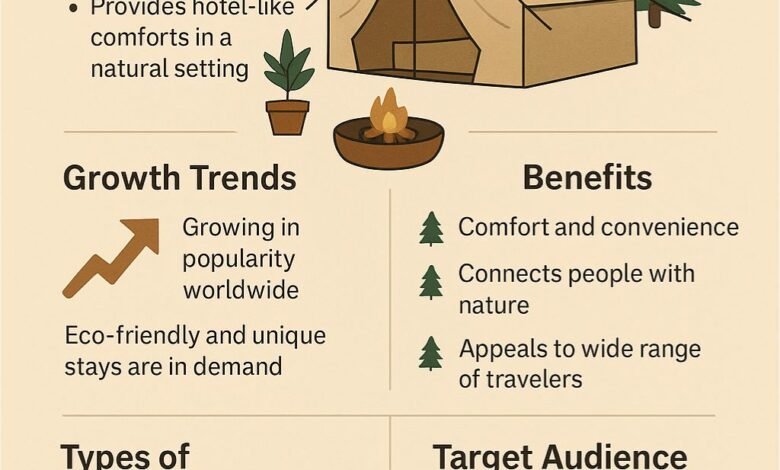
For decades, travelers have been divided into two types: those who love the raw adventure of camping and those who prefer the comforts of a well-furnished hotel. But in recent years, a new trend has emerged—one that blends the best of both worlds. This trend is glamping, short for glamorous camping, and it has taken the global travel industry by storm. No longer do travelers need to choose between comfort and nature. With glamping, they can sleep under the stars while enjoying warm beds, stylish interiors, private bathrooms, artisanal food, and often breathtaking landscapes right outside their doors.
Glamping represents a shift in how people experience the outdoors. It reflects modern desires for convenience, comfort, aesthetic beauty, and meaningful experiences without the traditional hardships of camping. Its growing popularity signals more than a temporary trend—it marks the evolution of travel into something more immersive, personalized, and eco-conscious. Whether nestled in a forest, perched on a mountaintop, set in a desert, or situated by a peaceful lake, glamping opens the door to a new way of connecting with nature.
What Exactly Is Glamping?
Glamping merges luxury amenities with nature-based accommodations, offering travelers a serene outdoor experience without sacrificing comfort. Unlike traditional camping—which requires tents, sleeping bags, outdoor cooking gear, and a willingness to deal with unpredictable weather—glamping provides ready-made, structured accommodations that range from:
- Luxury tents with king-sized beds
- Yurts decorated with traditional textiles
- Treehouses built high among forest canopies
- Geodesic domes with skylights
- Safari-style tents with ensuite bathrooms
- Eco-lodges powered by renewable energy
- Cabin pods featuring modern architecture
Each structure is crafted not just for function, but for design, comfort, and experience. Glamping accommodations are often styled with rustic-chic décor, warm lighting, and outdoor spaces like decks, fire pits, or hot tubs. This combination of nature and luxury appeals to a broad demographic—from families to honeymooners, digital nomads, and even retirees seeking unique experiences.
The word “glamping” originated in the UK in the mid-2000s but became globally recognized after entering the Oxford English Dictionary in 2016. Today, the glamping market spans continents and climates, from the deserts of Dubai to the forests of Canada, the mountains of Europe, the beaches of Bali, and the savannahs of Africa.
The Allure of Glamping: Why People Love It
Glamping has gained immense popularity because it solves a modern traveler’s dilemma: wanting both adventure and comfort. Here are the primary reasons behind its growing appeal:
1. Comfort Without Compromise
The biggest barrier to traditional camping is discomfort—hard ground, cold temperatures, shared bathrooms, bugs, and lack of amenities. Glamping eliminates these pain points by providing:
- Real beds with plush mattresses
- Climate control (heaters or air conditioners)
- Running water
- Private bathrooms
- Electric lighting
- Kitchenettes or full-service meals
This makes outdoor stays far more accessible, especially for people who enjoy nature but not the challenges of rugged living.
2. Immersive Nature Experience
Despite the comfort, glamping keeps guests deeply connected to nature. Imagine waking up to birdsong instead of an alarm clock, stepping onto a wooden deck surrounded by trees, or watching the stars through a skylight dome. These experiences foster peace, reflection, and rejuvenation.
3. Aesthetic and Social Media Appeal
The architecture and interior design of glamping sites often emphasize rustic elegance and natural beauty. With their fairy lights, panoramic views, unique structures, and cozy décor, glamping stays are highly photogenic—ideal for social media sharing. This visibility has amplified the trend among younger travelers and influencers.
4. Eco-Friendly Alternative
Many glamping operators use sustainable materials and renewable energy systems. Structures such as tents, domes, or cabins require less environmental disruption than traditional hotels or resorts. As eco-tourism grows, glamping offers a middle ground: comfort paired with minimal ecological impact.
5. Wide Accessibility
Because glamping does not require physical labor or advanced preparation, it appeals to:
- Families with young children
- Couples seeking romantic getaways
- Those who dislike rough camping
- Elderly travelers
- Travelers with limited mobility
- First-time campers
Its convenience means that anyone can enjoy a getaway surrounded by nature.
Glamping vs. Traditional Camping: The Key Differences
While both glamping and camping provide access to the outdoors, they differ significantly:
| Feature | Camping | Glamping |
|---|---|---|
| Comfort Levels | Basic; minimal amenities | High-end; hotel-like amenities |
| Preparation Needed | High—you bring everything | Low—just pack your clothes |
| Accommodation | Tents / sleeping bags | Furnished tents, domes, cabins, etc. |
| Cost | Budget-friendly | Mid- to high-budget |
| Experience | Rough, adventurous | Relaxed, comfortable |
| Audience | Outdoor enthusiasts | Broad demographic |
Glamping isn’t meant to replace camping; instead, it offers a new category of outdoor travel that attracts people who otherwise might never consider staying in the wilderness.
Types of Glamping Accommodations Around the World
Glamping is known for its variety. Each type offers a unique atmosphere and experience:
1. Safari Tents
Inspired by African safari culture, these tents are spacious and often include wooden floors, full-sized beds, furniture, lighting, and private decks.
2. Yurts
Circular, tent-like structures with wooden frames. They are warm, sturdy, and often beautifully decorated with traditional textiles.
3. Treehouses
Elevated structures built into or among trees, providing a magical “childhood dream” experience with stunning canopy views.
4. Geodesic Domes
Futuristic dome-shaped structures with panoramic windows—many come equipped with skylights ideal for stargazing.
5. Glamping Pods
Compact wooden structures designed with modern minimalism—perfect for eco-friendly stays.
6. Tipis and Bell Tents
Classic tent shapes with elegant interiors, ideal for festival vibes or romantic settings.
7. Eco-Lodges and Tiny Houses
Sustainable, often solar-powered units that combine modern architecture with nature.
Is Glamping Sustainable?
As sustainability becomes central to travel, glamping is often seen as a greener alternative to traditional resorts. Many glamping sites prioritize:
- Recycled or renewable building materials
- Solar panels and eco-friendly energy usage
- Minimal land disturbance
- Composting or low-impact toilets
- Locally sourced food
- Water-saving technologies
However, sustainability depends on the operator. Some glamping sites are deeply eco-conscious, while others simply use “glamping” as a luxury label. Travelers seeking responsible tourism should research before booking.
Why Glamping Became a Global Trend
Several cultural and social factors have contributed to glamping’s rise:
1. Post-Pandemic Travel Behavior
The COVID-19 pandemic pushed people toward isolated, nature-based travel. Glamping offered privacy, increased safety, and open-air environments—all without sacrificing comfort.
2. Experience-Driven Tourism
Modern travelers value experiences over possessions. Glamping provides immersive, memorable stays that feel special.
3. Digital Detox Movement
As people search for ways to disconnect, glamping offers a peaceful escape from technology, enabling mindfulness and mental health benefits.
4. Inflation & Travel Costs
Glamping is sometimes more affordable than all-inclusive resorts or international travel while still offering a premium experience.
The Benefits of Glamping for Mental and Physical Well-Being
Glamping is not just a travel choice—it promotes wellness. Being surrounded by nature has proven benefits:
- Reduced stress and anxiety
- Improved sleep quality
- Enhanced mood
- Stronger connection to natural environments
- Increased vitamin D exposure
- Encouragement of physical activities like hiking, kayaking, or biking
Adding comfort into the equation means travelers can fully relax and restore their energy.
Is Glamping for Everyone?
Glamping is incredibly versatile, but it may not be ideal for:
- Travelers on very tight budgets
- People seeking raw wilderness survival experiences
- Those who dislike structured or curated environments
However, for the majority of travelers seeking a balance between exploration and comfort, glamping is a nearly perfect match.
Glamping as the Future of Outdoor Travel
The global glamping industry has grown rapidly and is projected to increase even further. People today crave unique experiences—treehouses in rainforests, domes in deserts, tents on cliff edges, or cabins by waterfalls. As technology evolves and sustainability improves, glamping will likely become an even more immersive and innovative experience.
Some future trends in glamping may include:
- Smart eco-pods with automated temperature control
- Off-grid luxury clusters using renewable energy
- Floating glamping units on lakes or oceans
- Themed accommodations (fantasy, futuristic, cultural, historical)
- Multi-sensory nature experiences
Glamping is more than a trend—it’s a movement reshaping how the world travels.
Final Thoughts
Glamping stands at the crossroads of comfort, nature, sustainability, and adventure. It caters to the modern traveler who wants to escape the noise of everyday life without sacrificing warmth, convenience, or style. From luxurious safari tents to eco-friendly domes and romantic treehouses, glamping provides endless possibilities for meaningful travel experiences.
Whether you’re planning a romantic escape, a family vacation, a solo retreat, or a digital detox, glamping offers the perfect balance of beauty, peace, and comfort. It’s an innovative way to rediscover the outdoors—one that makes nature accessible to everyone while still preserving its magic.
Read more lifestyle, travel, and modern-living insights on Empire Magazines.
FAQs About Glamping
1. What is glamping?
Glamping is a blend of “glamorous” and “camping.” It offers a nature-based experience with hotel-style comforts such as real beds, electricity, private bathrooms, and stylish accommodations like tents, treehouses, domes, and cabins.
2. How is glamping different from camping?
Traditional camping requires you to bring gear, set up your tent, cook outdoors, and manage with minimal comforts. Glamping eliminates the hassle—accommodations are pre-built, furnished, and equipped with modern amenities.
3. What types of glamping accommodations exist?
Popular glamping structures include:
- Safari tents
- Yurts
- Treehouses
- Geodesic domes
- Cabins or pods
- Bell tents
- Eco-lodges
Each type offers a unique atmosphere and level of luxury.
4. Is glamping suitable for families?
Yes! Glamping is ideal for families because it offers safety, comfort, and convenience, without needing extensive camping experience. Many sites include family activities like hiking, fishing, and outdoor games.
5. Is glamping expensive?
Glamping can range from affordable to luxury-level depending on location, accommodation type, and included amenities. It typically costs more than traditional camping but less than high-end resort stays.
6. Do glamping tents have bathrooms and electricity?
Many glamping sites provide private bathrooms, running water, electricity, and even heating or air conditioning. However, features vary by location—some offer off-grid eco setups.
7. Is glamping safe?
Yes, glamping is generally very safe. Accommodations are sturdy, elevated, and well-maintained. However, it’s always wise to check reviews, location details, and site safety policies before booking.
8. What should I bring for a glamping trip?
You typically only need personal items such as clothing, toiletries, comfortable shoes, and perhaps snacks. Many sites provide bedding, cookware, and essentials.
9. Is glamping environmentally friendly?
Many glamping sites prioritize sustainability by using eco-friendly materials, solar power, composting toilets, and minimal-impact construction. However, sustainability varies—research the property if eco-travel matters to you.
10. Can I go glamping in winter?
Yes! Many glamping structures are insulated and equipped with heaters or wood stoves, making them cozy winter retreats. Geodesic domes, cabins, and heated tents are especially popular for winter glamping.
11. Is glamping good for couples or romantic getaways?
Absolutely. Many couples choose glamping for anniversary trips, honeymoons, or weekend escapes due to its peaceful atmosphere, privacy, unique accommodations, and scenic surroundings.
12. Do glamping sites allow pets?
Some do, some don’t. Many glamping properties are pet-friendly, but always check the site’s policy before booking.
13. Where can I go glamping?
Glamping sites exist worldwide—in forests, deserts, mountains, beaches, farms, and even urban outskirts. You can find them on booking platforms like GlampingHub, Airbnb, and independent eco-lodges.
14. Is glamping beginner-friendly?
Yes! Glamping is perfect for beginners because it removes the complexity of traditional camping and provides a comfortable, worry-free introduction to outdoor stays.
15. Why is glamping so popular?
Modern travelers want unique experiences, nature escapes, Instagram-worthy stays, and wellness-friendly travel options. Glamping meets all these desires while keeping comfort at the core.