Alaskan seiti is a name that often appears in seafood markets, frozen food sections, and ingredient labels, yet many people are unsure what it actually refers to. While the term may sound like a distinct species, it is commonly used in certain regions to describe Alaska pollock, one of the most widely harvested whitefish in the world. Known for its mild flavor, versatility, and large-scale availability, Alaskan seiti plays a significant role in global seafood consumption, food manufacturing, and commercial fisheries.
This article takes a detailed look at Alaskan seiti, explaining what it is, where it comes from, how it is harvested, how it is used in food products, and why it matters economically and environmentally. By the end, readers will have a clear, factual understanding of this fish and its place in modern diets.
What Is Alaskan Seiti?
Alaskan seiti is a market name commonly associated with Alaska pollock, a cold-water fish found in the North Pacific Ocean. In some European and Nordic markets, the word “seiti” or “sej” can refer to different species, which often leads to confusion. However, when paired with “Alaskan,” the term almost always points to Alaska pollock rather than Atlantic saithe or other similar fish.
Alaska pollock belongs to the cod family and is scientifically known as Gadus chalcogrammus. It is a semi-pelagic fish, meaning it swims in midwater layers but can also be found closer to the sea floor. The fish typically forms large schools, which makes it suitable for commercial harvesting using modern fishing methods.
One reason Alaskan seiti is so widely used is its neutral taste and flaky white flesh. It does not have a strong “fishy” flavor, making it appealing to a broad audience. This mild profile allows it to be seasoned, breaded, or processed in many ways without overpowering other ingredients.
Natural Habitat and Distribution
Alaskan seiti is native to the North Pacific Ocean, with its largest populations found in the eastern Bering Sea and the Gulf of Alaska. It is also present in waters near Russia, Japan, and parts of the western Pacific. These cold, nutrient-rich waters provide ideal conditions for the species to thrive.
The fish prefers temperatures that are significantly cooler than those found in tropical or temperate seas. Seasonal migration is common, with pollock moving to different depths depending on water temperature, breeding cycles, and food availability. Spawning typically occurs in winter and early spring, particularly in the Bering Sea region.
Because of its wide range and strong reproductive capacity, Alaska pollock has become one of the most abundant commercial fish species. This abundance is a major reason it is often marketed under names like Alaskan seiti in international seafood trade.
Commercial Fishing and Industry Importance
Alaskan seiti is central to one of the largest fisheries in the world by volume. Commercial fishing operations target Alaska pollock using advanced vessels equipped with sonar, nets, and onboard processing systems. Most harvesting takes place in carefully managed zones to prevent overfishing and protect marine ecosystems.
The fish is usually processed shortly after being caught. Onboard or shore-based facilities may clean, fillet, freeze, or convert the fish into blocks for further processing. This efficiency helps maintain quality and reduces waste.
Economically, Alaskan seiti supports thousands of jobs across fishing, processing, logistics, and retail sectors. It is a key export product for the seafood industry and a staple ingredient for many global food brands. Its relatively affordable price compared to other whitefish makes it especially important for mass-market food products.
How Alaskan Seiti Is Used in Food Products
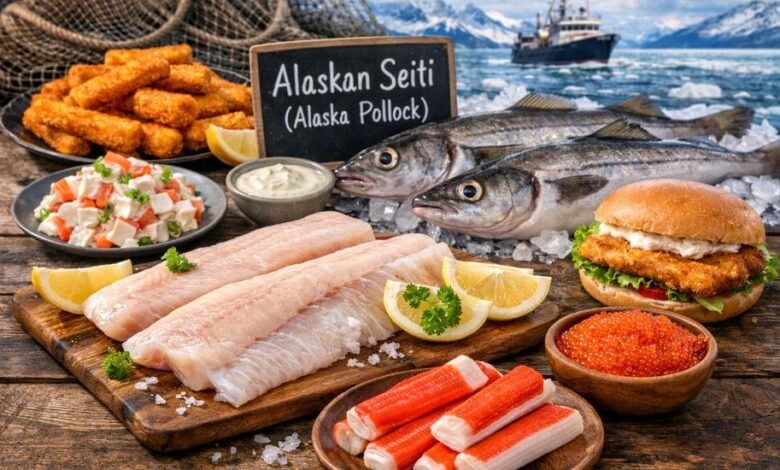
One of the defining characteristics of Alaskan seiti is its versatility. The fish can be found in a wide range of products, both fresh and processed. Common uses include:
-
Frozen fillets for home cooking
-
Breaded fish portions and fish sticks
-
Surimi-based products such as imitation crab meat
-
Fish sandwiches and fast-food items
-
Ready-to-cook or ready-to-eat meals
Because the flesh is low in fat and has a uniform texture, it works well in processed foods where consistency is important. Surimi production, in particular, relies heavily on Alaska pollock. The fish is minced, washed, and restructured into products that mimic the texture of shellfish.
In home kitchens, Alaskan seiti can be baked, fried, grilled, or steamed. Its mild taste allows it to absorb marinades and spices easily, making it suitable for a wide variety of cuisines.
Nutritional Profile and Dietary Role
Alaskan seiti is often chosen for its nutritional value as well as its affordability. It is generally low in calories and fat while providing a good source of protein. The fish also contains essential nutrients such as vitamin B12, selenium, and phosphorus.
Compared to fattier fish, Alaska pollock has lower levels of omega-3 fatty acids, but it still contributes to a balanced diet when consumed regularly. Its low fat content makes it appealing to people seeking lighter meal options or following calorie-conscious diets.
Because of its neutral flavor and soft texture, Alaskan seiti is commonly used in school meals, hospitals, and institutional catering. It is easy to prepare in large quantities and is generally well accepted by people of all ages.
Sustainability and Fishery Management
Sustainability is an important topic when discussing Alaskan seiti. Due to its massive scale, the Alaska pollock fishery is closely monitored and managed through scientific assessments, catch limits, and seasonal controls. These measures are designed to maintain healthy fish populations and reduce environmental impact.
Modern fisheries management focuses on balancing economic benefits with long-term ecosystem health. By tracking stock levels and adjusting quotas accordingly, authorities aim to prevent depletion while allowing continued harvesting.
While sustainability ratings can vary depending on fishing methods and regions, Alaska pollock is often cited as an example of a well-managed commercial fishery. This reputation has contributed to the widespread acceptance of Alaskan seiti in global markets.
Naming Confusion and Market Terminology
One of the challenges surrounding Alaskan seiti is confusion over naming. In different countries, similar-sounding terms may refer to entirely different species. For example, “seiti” in some European languages can describe saithe, which is an Atlantic fish distinct from Alaska pollock.
The addition of “Alaskan” helps clarify the origin and species, but consumers may still encounter inconsistent labeling. Understanding that Alaskan seiti is essentially Alaska pollock can help buyers make informed choices.
Clear labeling and standardized naming practices are important for transparency in the seafood industry. They allow consumers to understand what they are purchasing and how it fits into their dietary preferences.
Cultural and Global Significance
Beyond its role as a food source, Alaskan seiti has cultural and economic significance in coastal communities. Fishing towns in Alaska and surrounding regions rely heavily on pollock fisheries for income and employment. The industry supports infrastructure, research, and local development.
Globally, Alaskan seiti has become a foundational ingredient in modern food systems. Its presence in affordable, widely available products makes seafood accessible to people who might not otherwise consume fish regularly.
As demand for protein continues to grow worldwide, species like Alaska pollock are likely to remain important due to their scalability and adaptability.
Final Thoughts
Alaskan seiti may seem like a simple name on a package, but it represents a complex and highly significant part of the global seafood industry. From its origins in the cold waters of the North Pacific to its role in everyday meals around the world, this fish connects ecosystems, economies, and diets.
Understanding what Alaskan seiti truly is helps consumers make informed decisions and appreciate the systems that bring food from ocean to table. As discussed throughout this article, it is not just a product, but a carefully managed resource with wide-reaching impact. Articles like this on Empire Magazines, aim to provide clear, balanced insights into topics that often go unexplained.