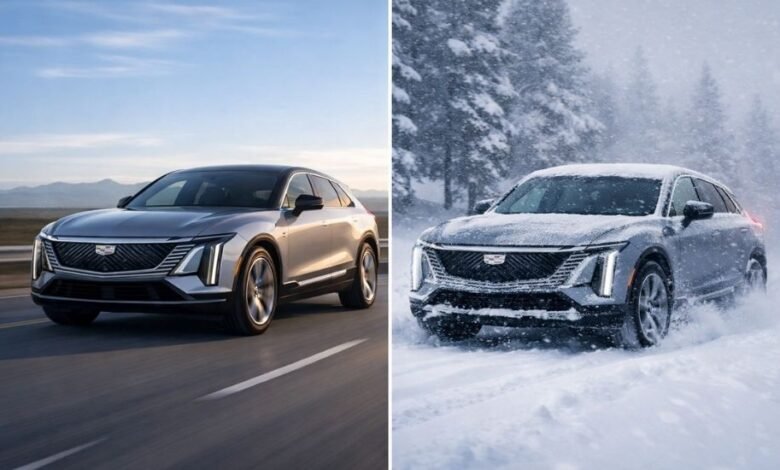
Cadillac Lyriq’s Electric Architecture and Driving Philosophy
The Cadillac Lyriq represents a decisive shift in how luxury electric vehicles are engineered and experienced, and understanding whether its driving modes affect range or battery usage requires first understanding the philosophy behind its electric architecture. Built on General Motors’ Ultium platform, the Lyriq is designed to balance performance, comfort, and efficiency rather than prioritize one at the expense of the others. Unlike internal combustion vehicles, where driving modes often feel cosmetic, electric vehicles rely heavily on software-controlled power delivery, regenerative braking, torque management, and auxiliary system behavior. In the Lyriq, driving modes are not simply preset “feels,” but integrated control profiles that influence how energy flows from the battery to the motors and back through regeneration. The vehicle’s large battery pack remains physically unchanged across all modes, but the rate at which energy is consumed, recovered, or conserved varies based on how the system interprets driver inputs. Cadillac engineered these modes to suit different driving scenarios, from relaxed highway cruising to spirited acceleration and adverse weather conditions. As a result, while the EPA-rated range remains a single number on paper, real-world driving range is fluid and context-dependent. The key distinction is that driving modes do not alter the battery’s capacity, but they do alter how efficiently that capacity is used. This distinction forms the foundation for understanding why drivers experience different ranges when switching modes, even on the same route and under similar conditions.
Tour Mode and Its Impact on Real-World Driving Range
Tour Mode is widely regarded as the most range-efficient driving mode in the Cadillac Lyriq, and this reputation is grounded in how the vehicle moderates energy usage when this mode is active. In Tour Mode, throttle mapping is softened to prevent sudden surges of power that can quickly drain the battery, especially in stop-and-go traffic or during highway merging. The system encourages gradual acceleration, which allows the electric motors to operate closer to their optimal efficiency range. Regenerative braking is also tuned to recover energy more smoothly, converting deceleration into stored electrical energy without creating abrupt braking sensations. Steering and suspension settings are calibrated for comfort rather than aggression, indirectly supporting efficiency by discouraging high-speed cornering or sharp maneuvers that demand additional power. Climate control and auxiliary systems are managed more conservatively as well, subtly reducing their impact on total energy draw. Over long distances, especially on highways where consistent speeds dominate, Tour Mode helps stabilize consumption rates and minimizes unnecessary energy spikes. While the difference may not be dramatic on a short commute, over hundreds of miles the cumulative effect becomes noticeable. Drivers seeking to maximize range on a single charge consistently report more predictable and extended driving distances when Tour Mode is used exclusively. This mode essentially reflects Cadillac’s default vision for how the Lyriq is meant to be driven day to day, balancing luxury and efficiency without sacrificing the refined driving experience expected from the brand.
Sport Mode and the Trade-Off Between Performance and Efficiency
Sport Mode in the Cadillac Lyriq fundamentally changes how the vehicle responds to driver input, and with those changes comes a measurable impact on battery usage and effective range. When Sport Mode is engaged, throttle response becomes sharper, allowing the motors to deliver torque more quickly and aggressively. This immediate power delivery enhances acceleration and makes the vehicle feel more dynamic, particularly during passing maneuvers or spirited driving on open roads. However, this responsiveness requires higher instantaneous energy draw from the battery, which accelerates consumption even if overall driving distance remains the same. Regenerative braking in Sport Mode is often calibrated to feel less intrusive, prioritizing driver engagement over maximum energy recovery. Steering and suspension settings become firmer, encouraging higher speeds and more assertive handling, both of which contribute to increased aerodynamic drag and rolling resistance. While Sport Mode does not inherently force inefficient driving, it enables and invites behavior that naturally consumes more energy. As a result, drivers may see a noticeable reduction in real-world range when Sport Mode is used consistently, especially in urban environments where frequent acceleration compounds energy loss. The reduction is not due to inefficiency in the system itself, but rather the deliberate prioritization of performance over conservation. For drivers who value responsiveness and driving excitement, this trade-off is intentional and expected, but it clearly demonstrates how driving modes influence battery usage even when the underlying hardware remains unchanged.
Snow and Ice Mode and Its Influence on Energy Consumption
Snow and Ice Mode in the Cadillac Lyriq is designed with safety and stability as its primary objectives, and its impact on battery usage is shaped by those priorities. In this mode, throttle response is deliberately restrained to prevent wheel spin on low-traction surfaces, reducing the likelihood of sudden torque delivery that could compromise control. Power distribution is managed more cautiously, and traction control systems intervene more frequently to maintain stability. While this careful modulation enhances safety in adverse conditions, it can lead to slightly higher energy consumption in normal driving environments. Increased intervention from stability systems requires additional computational and mechanical activity, and the restrained throttle mapping may result in less efficient acceleration patterns when road conditions do not actually demand them. Additionally, Snow and Ice Mode often coincides with cold weather, which independently reduces battery efficiency due to increased internal resistance and higher energy demands from cabin heating. These factors combine to create the perception of reduced range when this mode is used, even though the mode itself is not inherently inefficient. Instead, it is optimized for control rather than conservation. When used appropriately in winter conditions, the energy trade-off is justified by the safety benefits. However, using Snow and Ice Mode on dry roads can result in unnecessary energy expenditure, reinforcing the idea that driving modes should be matched carefully to conditions to achieve optimal range outcomes.
My Mode and the Role of Customization in Battery Usage
My Mode offers Cadillac Lyriq drivers a personalized approach to driving dynamics, and its impact on range and battery usage depends entirely on how it is configured. This mode allows drivers to tailor throttle response, steering feel, and other dynamic characteristics to suit personal preferences, effectively creating a hybrid profile that can lean toward either efficiency or performance. When My Mode is configured with gentle throttle mapping and comfort-oriented settings, its energy consumption can closely resemble that of Tour Mode, delivering similarly favorable range results. Conversely, when drivers choose more aggressive throttle responses and firmer handling characteristics, My Mode can mirror or even exceed the energy demands of Sport Mode. This flexibility highlights an important principle in electric vehicle efficiency: software-defined behavior has a direct and meaningful impact on energy consumption. My Mode empowers drivers but also places responsibility on them to understand the consequences of their choices. The same route driven with different My Mode configurations can yield noticeably different range outcomes, even under identical conditions. This adaptability is one of the Lyriq’s strengths, but it also underscores the importance of informed configuration. Rather than being a neutral or fixed option, My Mode acts as a reflection of the driver’s priorities, making it one of the most variable influences on real-world battery usage in the vehicle.
Regenerative Braking Behavior Across Driving Modes
Regenerative braking plays a critical role in determining how driving modes influence battery usage in the Cadillac Lyriq, as it directly affects how much energy is recovered during deceleration. In more efficiency-focused modes such as Tour, regenerative braking is calibrated to maximize energy recovery without compromising ride comfort. This means that slowing down, whether through coasting or light braking, contributes meaningfully to extending range over time. In contrast, performance-oriented modes prioritize a more traditional driving feel, which can reduce the intensity or frequency of regenerative braking events. While this enhances driver engagement, it also allows more kinetic energy to be lost as heat rather than recaptured as stored electricity. The difference may seem subtle on a single stop, but over the course of a full drive cycle, especially in urban conditions, it accumulates significantly. Snow and Ice Mode often uses regenerative braking conservatively to avoid unsettling the vehicle on slippery surfaces, further limiting energy recovery in exchange for stability. These variations demonstrate that regenerative braking is not a fixed feature but a dynamic system tuned differently across modes. Understanding how each mode manages regeneration helps explain why two drives of equal distance can result in different remaining battery percentages, even when speed and traffic appear similar.
Driving Style as the Amplifier of Mode-Based Differences
While driving modes establish the framework for energy usage, driving style ultimately amplifies or mitigates their impact on range in the Cadillac Lyriq. A restrained driver using Sport Mode may achieve better efficiency than an aggressive driver in Tour Mode, illustrating that modes influence potential rather than dictate outcomes. However, modes shape behavior by encouraging certain inputs, and over time these tendencies influence consumption patterns. Sport Mode encourages brisk acceleration and higher speeds, which naturally increase energy use, while Tour Mode subtly discourages these behaviors through softer responses. My Mode magnifies this relationship by directly reflecting the driver’s preferences. The interaction between mode selection and driving style explains why range estimates vary widely among owners. It also reinforces the importance of understanding that driving modes are tools, not guarantees. Used thoughtfully, they allow drivers to align the vehicle’s behavior with their immediate priorities, whether that is maximizing range, enhancing performance, or navigating challenging conditions. Used carelessly, they can lead to unnecessary energy loss regardless of their intended purpose. This dynamic interplay is central to understanding real-world battery usage in the Lyriq.
Environmental and Auxiliary Factors Linked to Driving Modes
Environmental conditions and auxiliary systems further complicate the relationship between driving modes and battery usage in the Cadillac Lyriq. Temperature extremes, road conditions, and traffic density all interact with mode-specific behaviors to influence efficiency. Cold weather reduces battery performance and increases energy demands for heating, while hot weather increases cooling requirements. Driving modes may adjust climate control behavior subtly, but external conditions often dominate consumption patterns. Additionally, features such as all-wheel drive engagement, traction control activity, and electronic stability systems vary by mode and environment. Snow and Ice Mode, for example, is often used when these systems are most active, compounding energy usage beyond what the mode alone would dictate. Understanding these interactions helps explain why range differences cannot be attributed solely to driving modes in isolation. Instead, modes act as part of a broader ecosystem of variables that together determine real-world efficiency. Recognizing this complexity allows drivers to make more informed decisions and set realistic expectations about range under varying conditions.
Long-Term Ownership Perspective on Mode-Based Efficiency
From a long-term ownership perspective, the influence of driving modes on battery usage in the Cadillac Lyriq becomes clearer as patterns emerge over months and years. Drivers who consistently use Tour Mode for daily commuting often report stable efficiency and predictable charging routines, while those who favor Sport Mode may charge more frequently but enjoy a more engaging driving experience. Importantly, occasional use of performance-oriented modes does not significantly degrade the battery or compromise long-term efficiency, as modern battery management systems are designed to handle variable loads. The real impact lies in cumulative energy consumption rather than battery health. Understanding how driving modes affect range allows owners to adapt their habits without sacrificing enjoyment or convenience. Over time, most drivers naturally develop a rhythm, using efficiency-focused modes for routine travel and switching to performance or safety-oriented modes when conditions demand. This adaptability is one of the Lyriq’s defining characteristics and a key reason why its driving modes are more than superficial features.
Final Analysis and Ownership Takeaway
So, do the driving modes in the Cadillac Lyriq offer different ranges or battery usages? The answer is clearly yes, but not because they change the battery itself. Instead, they influence how energy is delivered, recovered, and conserved through software-driven adjustments that shape driving behavior and system response. Tour Mode consistently offers the best real-world efficiency, Sport Mode prioritizes performance at the cost of increased consumption, Snow and Ice Mode sacrifices efficiency for stability, and My Mode reflects the driver’s personal balance between these extremes. These differences are meaningful over time and explain why range varies even on familiar routes. For prospective buyers and current owners alike, understanding these distinctions transforms driving modes from abstract settings into practical tools. When used intentionally, they enhance both the driving experience and energy management. This nuanced understanding is essential for anyone seeking to get the most out of the Lyriq’s electric platform, and it is the kind of insight readers expect from a trusted automotive publication like Empire Magazines.