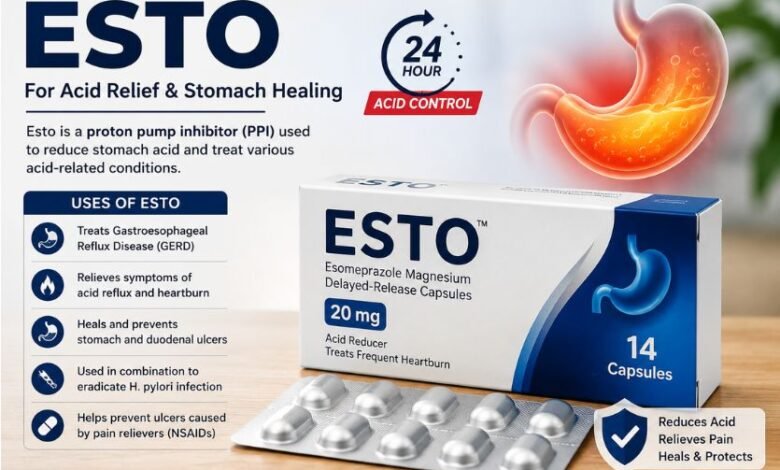
Persistent heartburn, acid reflux, and stomach ulcers can make everyday life uncomfortable, affecting everything from meals to sleep. Fortunately, modern medications have made it easier to manage these digestive conditions. One such medicine is Esto, which is commonly prescribed to reduce stomach acid and help the digestive system heal. Whether you have been prescribed Esto by your doctor or simply want to understand how it works, learning about its uses, benefits, dosage, precautions, and possible side effects is essential for safe and effective treatment.
What Is Esto?
Esto is a prescription medicine that belongs to a class of drugs known as proton pump inhibitors (PPIs). These medications work by reducing the amount of acid produced in the stomach. Excess stomach acid is a major cause of conditions such as acid reflux, gastroesophageal reflux disease (GERD), peptic ulcers, and irritation of the esophagus.
By lowering stomach acid production, Esto helps relieve painful symptoms while allowing damaged tissues in the stomach and esophagus to heal naturally. It is widely prescribed by healthcare professionals for both short-term treatment and, in some cases, long-term management of acid-related disorders.
The active ingredient in Esto may vary depending on the country and manufacturer. In many markets, the brand name “Esto” contains esomeprazole, although you should always check the product label or consult your healthcare provider to confirm the active ingredient in your specific medication.
How Does Esto Work?
The stomach naturally produces hydrochloric acid to digest food. While this acid plays an important role in digestion, excessive production can damage the lining of the stomach and esophagus.
Esto works by blocking the proton pumps located in the stomach lining. These microscopic pumps are responsible for releasing acid into the stomach. When they are inhibited, acid production decreases significantly.
As stomach acid levels fall, irritation is reduced, ulcers begin to heal, and symptoms such as burning pain, sour taste in the mouth, chest discomfort, and regurgitation gradually improve. Many people begin noticing symptom relief within a few days, although complete healing may require several weeks depending on the condition being treated.
Common Uses of Esto
Doctors prescribe Esto for several digestive disorders associated with excessive stomach acid production.
One of its primary uses is the treatment of gastroesophageal reflux disease (GERD). GERD occurs when stomach acid repeatedly flows back into the esophagus, causing heartburn, chest discomfort, chronic cough, and difficulty swallowing. Esto reduces acid exposure, helping relieve these symptoms while preventing further damage.
Another important use is the treatment of acid reflux. Occasional acid reflux may respond to lifestyle changes, but frequent episodes often require medications like Esto to control acid production effectively.
Esto is also commonly prescribed for heartburn. Persistent heartburn occurring more than twice a week may indicate an underlying acid-related disorder that benefits from proton pump inhibitor therapy.
Patients suffering from stomach ulcers or duodenal ulcers may also receive Esto as part of their treatment plan. Lower acid levels allow ulcers to heal more efficiently while reducing pain and minimizing the risk of bleeding.
Healthcare providers may prescribe Esto to help heal erosive esophagitis, a condition where stomach acid damages the lining of the esophagus. Continued treatment can also help prevent recurrence after healing.
In combination with antibiotics, Esto may be used as part of Helicobacter pylori (H. pylori) eradication therapy. Eliminating this bacterium significantly reduces the risk of recurring ulcers.
Some patients who regularly take nonsteroidal anti-inflammatory drugs (NSAIDs) such as ibuprofen or naproxen receive Esto to lower the risk of developing stomach ulcers associated with long-term pain medication use.
In rare cases, doctors prescribe Esto for Zollinger-Ellison syndrome, a condition characterized by excessive stomach acid production caused by tumors that stimulate acid secretion.
Benefits of Esto
One of the greatest benefits of Esto is its ability to provide long-lasting acid suppression. Unlike traditional antacids that neutralize acid already present in the stomach, Esto prevents excessive acid production before it occurs.
Patients often experience fewer episodes of heartburn, improved sleep, reduced chest discomfort, and better quality of life after starting treatment.
The medication also promotes healing of inflamed or damaged digestive tissues, reducing the likelihood of complications such as bleeding ulcers, strictures, or chronic esophageal injury.
For individuals requiring long-term NSAID therapy, Esto offers important protection against ulcer formation, making it a valuable preventive medication.
Recommended Dosage
The correct dosage depends on the medical condition, patient age, response to treatment, and doctor’s recommendation.
Adults with GERD commonly receive 20 mg or 40 mg once daily, usually for four to eight weeks.
Patients with erosive esophagitis may require treatment for a longer duration depending on healing progress.
For H. pylori eradication, Esto is typically combined with two antibiotics according to a specific treatment schedule.
Patients with Zollinger-Ellison syndrome often require higher doses under specialist supervision.
Children may receive adjusted doses based on body weight and medical necessity.
Never increase, decrease, or stop taking Esto without consulting your healthcare provider.
How to Take Esto
Esto works best when taken exactly as directed.
It is generally recommended to take the medicine approximately 30 to 60 minutes before a meal, preferably before breakfast. Taking it before food allows the medication to block active acid pumps more effectively.
Swallow tablets or capsules whole with water. They should not be crushed, broken, or chewed unless specifically instructed by your healthcare provider or pharmacist.
If you miss a dose, take it as soon as you remember unless it is almost time for your next scheduled dose. Never double the dose to compensate for a missed one.
How Long Does It Take to Work?
Some patients begin noticing improvement within the first day or two, especially regarding heartburn symptoms.
However, maximum benefit often develops after several consecutive days of treatment because proton pump inhibitors gradually suppress stomach acid production.
Healing of ulcers or severe esophageal inflammation usually requires four to eight weeks or longer depending on the severity of the condition.
Possible Side Effects
Like all medications, Esto may cause side effects, although many people tolerate it well.
The most commonly reported side effects include headache, nausea, abdominal pain, constipation, diarrhea, gas, dizziness, and dry mouth.
These reactions are generally mild and often improve as the body adjusts to treatment.
Less common but more serious side effects require immediate medical attention. These include severe allergic reactions, difficulty breathing, swelling of the face or throat, persistent vomiting, severe stomach pain, black stools, unexplained weight loss, or signs of gastrointestinal bleeding.
Long-term use of proton pump inhibitors has been associated with an increased risk of vitamin B12 deficiency, magnesium deficiency, certain bone fractures, kidney problems, and intestinal infections in some patients. Healthcare providers may monitor long-term users periodically to reduce these risks.
Who Should Avoid Esto?
Esto may not be suitable for everyone.
Patients with known allergies to esomeprazole or other proton pump inhibitors should avoid using the medication.
Individuals with severe liver disease may require dosage adjustments.
Pregnant or breastfeeding women should only use Esto if their healthcare provider determines that the potential benefits outweigh any possible risks.
Patients taking multiple medications should inform their doctor before starting Esto because certain drug interactions may occur.
Drug Interactions
Esto may interact with several prescription and over-the-counter medicines.
Certain blood thinners, antifungal medications, HIV medications, iron supplements, methotrexate, digoxin, and drugs that depend on stomach acidity for proper absorption may be affected.
Always provide your doctor with a complete list of medications, vitamins, herbal supplements, and nutritional products you use before beginning treatment.
Lifestyle Changes That Improve Results
Medication alone may not completely control acid reflux if lifestyle factors continue to trigger symptoms.
Maintaining a healthy body weight can significantly reduce pressure on the stomach.
Eating smaller meals instead of large portions may decrease reflux episodes.
Avoid lying down immediately after eating, and wait at least two to three hours before bedtime.
Limiting spicy foods, fatty meals, chocolate, caffeine, alcohol, and carbonated beverages may reduce symptom frequency in susceptible individuals.
Stopping smoking also improves digestive health and reduces reflux.
Sleeping with the head of the bed slightly elevated may help prevent nighttime reflux.
These habits often complement medication and provide better long-term symptom control.
Frequently Asked Questions
Is Esto an antibiotic?
No. Esto is not an antibiotic. It is a proton pump inhibitor that reduces stomach acid production.
Can I take Esto every day?
Yes, but only if prescribed by your healthcare provider. Some conditions require daily treatment, while others need only short-term therapy.
Can Esto cure GERD permanently?
Esto controls symptoms and allows healing but does not permanently cure GERD. Lifestyle changes remain important for long-term management.
Is Esto safe for long-term use?
Many patients use proton pump inhibitors safely under medical supervision. However, prolonged treatment should be regularly reviewed by a healthcare provider because long-term use may increase certain health risks.
Can I stop taking Esto once I feel better?
You should complete the prescribed course unless your doctor advises otherwise. Stopping treatment too early may allow symptoms to return.
Conclusion
Esto is an effective medication for reducing stomach acid and treating a wide range of acid-related digestive disorders, including GERD, acid reflux, heartburn, stomach ulcers, and erosive esophagitis. By suppressing acid production, it relieves discomfort while giving the digestive tract time to heal. Most patients experience significant improvement when the medicine is taken correctly and combined with healthy lifestyle habits. Although Esto is generally well tolerated, it should always be used according to medical advice, particularly for long-term treatment. Understanding its proper use, potential side effects, and necessary precautions helps ensure safe and successful management of acid-related conditions while improving overall digestive health.