Far beneath the ocean’s surface, where sunlight never reaches and crushing pressure dominates the environment, lives one of nature’s most fascinating crustaceans. The isopod is an ancient survivor that has adapted to nearly every type of habitat imaginable, from deep-sea trenches and freshwater streams to damp forests and backyard gardens. Although many people recognize small land-dwelling pill bugs that roll into a ball, few realize these tiny creatures are closely related to the enormous giant isopods that roam the ocean floor.
The growing popularity of marine biology, bioactive terrariums, and exotic pets has brought isopods into the spotlight. Hobbyists collect colorful terrestrial species, scientists study their remarkable adaptations, and deep-sea enthusiasts remain fascinated by the giant isopod’s unusual appearance. Whether you’re curious about giant isopods, wondering about isopod size, exploring isopod sea habitats, or searching for information on water isopods, this guide covers everything you need to know about these extraordinary animals.
What Is an Isopod?
An isopod is a crustacean belonging to the order Isopoda, a diverse group containing more than 10,000 known species distributed across marine, freshwater, and terrestrial environments. Unlike insects, isopods are more closely related to shrimp, lobsters, and crabs. Their bodies consist of a hard exoskeleton divided into multiple segments, allowing them to remain well protected while maintaining flexibility for movement.
The name “isopod” comes from the Greek words meaning “equal foot,” referring to the similar appearance of their walking legs. Most species possess seven pairs of legs, giving them excellent stability as they move across rocks, sand, leaves, or the ocean floor.
One reason isopods have survived for hundreds of millions of years is their incredible adaptability. Some species spend their entire lives in deep oceans where temperatures remain near freezing, while others thrive in freshwater rivers, caves, wetlands, and even household gardens. Their ability to exploit such a wide variety of habitats makes them one of the most successful crustacean groups on Earth.
Understanding Isopod Classification
Scientists classify isopods within the phylum Arthropoda, placing them alongside insects, spiders, and crustaceans. However, their closest relatives include marine crustaceans such as shrimp and lobsters rather than insects.
Thousands of species have been identified, and researchers continue discovering new ones every year. These species can generally be divided into three major habitat groups: marine isopods, freshwater isopods, and terrestrial isopods. Marine species represent the largest group and include the famous giant isopods that inhabit deep ocean ecosystems. Freshwater species typically live in ponds, streams, and lakes, feeding on decaying organic material. Terrestrial isopods, commonly called woodlice, pill bugs, or roly-polies, have successfully adapted to life on land while still requiring moist environments to survive.
Each habitat has shaped unique physical and behavioral adaptations, allowing different isopod species to flourish under conditions that many other animals could never tolerate.
Isopod Size: From Tiny Garden Helpers to Deep-Sea Giants
One of the most remarkable characteristics of isopods is the enormous variation in their size. Depending on the species, an isopod may be so small that it fits comfortably on a fingernail or so large that it resembles an armored football lying on the ocean floor.
The smallest terrestrial species measure only two to five millimeters in length and often remain hidden beneath damp leaves or decaying wood. Common garden pill bugs generally grow between one and two centimeters long and are frequently seen after rainfall when moisture levels are high.
Freshwater isopods usually range from five to twenty millimeters, making them relatively small but highly effective decomposers within aquatic ecosystems. These species play an important ecological role by breaking down fallen leaves, algae, and organic debris that accumulate in rivers and streams.
At the opposite end of the spectrum are giant isopods. These extraordinary crustaceans can grow between nineteen and fifty centimeters long, making them among the largest members of the isopod family. Their impressive size is a result of a phenomenon known as deep-sea gigantism, where animals living in cold, high-pressure environments often evolve much larger bodies than their shallow-water relatives.
The dramatic range in size highlights the incredible diversity within the Isopoda order and explains why scientists remain fascinated by these adaptable creatures.
Giant Isopod: The Deep-Sea Giant That Captivates the World
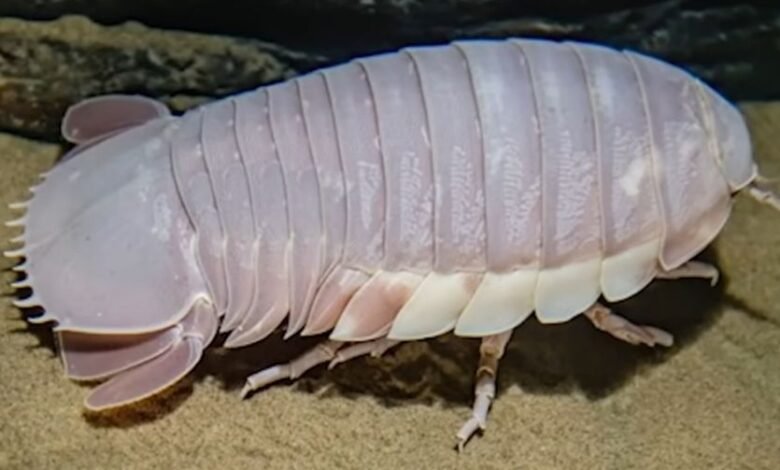
Among all isopod species, none has captured public imagination quite like the giant isopod. Scientifically known as Bathynomus giganteus, this remarkable crustacean inhabits the deep Atlantic Ocean and has become one of the ocean’s most recognizable deep-sea animals.
The giant isopod possesses a flattened armored body covered by thick protective plates that shield it from predators and harsh environmental conditions. Its large compound eyes help detect limited light in the darkness of the deep sea, while fourteen powerful walking legs allow it to crawl slowly across the seabed in search of food.
Unlike fast-swimming predators, giant isopods are patient scavengers. They spend much of their lives moving slowly across the ocean floor, searching for dead fish, squid, whales, and other organic material that sinks from upper ocean layers. Since food is extremely scarce at such depths, they have evolved exceptionally slow metabolisms, allowing them to survive for months or even years without eating.
Researchers have documented captive giant isopods refusing food for extended periods while remaining healthy, demonstrating just how efficient their energy conservation strategies have become. This remarkable adaptation enables them to thrive in one of Earth’s most food-limited environments.
Their unusual appearance often leads people to describe them as “alien-like,” yet every feature serves a practical purpose. The thick shell protects against predators, their segmented bodies provide flexibility, and their powerful claws help tear apart carcasses discovered on the seafloor.
Isopod Sea Habitat: Life in One of Earth’s Harshest Environments
Marine isopods occupy an astonishing variety of ocean habitats, ranging from shallow coastal waters to some of the deepest regions of the world’s oceans. Different species have evolved to exploit coral reefs, rocky shorelines, sandy seabeds, mangrove ecosystems, and abyssal plains.
The giant isopod lives primarily between approximately 170 and 2,100 meters below the ocean’s surface, where sunlight disappears entirely. Temperatures often remain close to 4°C (39°F), and water pressure becomes hundreds of times greater than atmospheric pressure at sea level.
Despite these extreme conditions, giant isopods have evolved to flourish. Their sturdy exoskeleton withstands immense pressure, while their slow metabolism minimizes energy requirements. They rely heavily on their sense of smell to detect food, often traveling considerable distances toward the scent of decaying marine animals.
Other marine isopod species inhabit shallower waters where they feed on algae, small invertebrates, or organic debris. Some species even form temporary relationships with fish, while a few specialized parasitic isopods attach themselves to marine animals to obtain nourishment. These parasitic species represent only a tiny fraction of the overall isopod population and differ significantly from the harmless scavengers commonly associated with the group.
The ecological role of marine isopods cannot be overstated. By consuming dead organic matter, they help recycle nutrients throughout ocean ecosystems and prevent the buildup of decaying material on the seafloor.
Water Isopods: Freshwater Species That Keep Ecosystems Healthy
Not all isopods inhabit saltwater oceans. Many species live exclusively in freshwater environments, including rivers, lakes, streams, ponds, wetlands, and underground cave systems. These freshwater isopods are generally much smaller than their deep-sea relatives, yet they perform equally important ecological functions.
Freshwater isopods spend most of their time hiding beneath rocks, submerged logs, aquatic plants, and leaf litter, where moisture levels remain consistently high. Their diet consists primarily of decomposing vegetation, algae, bacteria, and other organic material that accumulates naturally within aquatic ecosystems.
As these organisms feed, they break down dead plant matter into smaller particles, making nutrients available to microorganisms and other aquatic life. This continuous recycling process supports healthy freshwater habitats and contributes to overall ecosystem stability.
Unlike giant marine species, freshwater isopods rarely attract public attention because of their small size and hidden lifestyle. Nevertheless, scientists consider them valuable indicators of water quality, as many species are sensitive to pollution and environmental changes. Their presence often signals a healthy aquatic ecosystem capable of supporting diverse forms of life.
Are Isopods Dangerous?
One of the most common questions people ask is whether isopods pose any danger to humans or other animals. The simple answer is no. The overwhelming majority of isopod species are completely harmless and prefer avoiding confrontation whenever possible. They are not venomous, they do not actively attack people, and they play beneficial roles in their natural habitats.
Terrestrial isopods, commonly found beneath rocks, logs, and garden debris, are among the safest invertebrates to encounter. They spend their lives feeding on decaying organic matter and have no interest in biting humans. If disturbed, many species simply curl into a protective ball or attempt to crawl away.
Freshwater isopods behave similarly. They remain hidden among submerged vegetation or beneath stones, feeding quietly on decomposing plant material. Because of their small size and peaceful behavior, they rarely come into contact with people.
Even giant isopods, despite their intimidating appearance, are gentle scavengers rather than dangerous predators. They move slowly across the ocean floor searching for dead animals rather than hunting large prey. While they possess strong claws capable of tearing apart carcasses, these adaptations are designed for feeding, not aggression. Divers almost never encounter giant isopods because of the extreme depths at which they live.
Some marine isopods are parasitic and attach themselves to fish, feeding on blood or tissue. Certain species are famous for replacing the tongues of fish hosts, a behavior that has fascinated scientists for decades. However, these specialized parasites target fish rather than humans and rarely interact with people. Their existence should not create the impression that all isopods are dangerous, as parasitic species represent only a small portion of the entire Isopoda order.
Diet and Feeding Habits
Isopods have earned a reputation as nature’s cleanup crew because most species are scavengers or decomposers. Instead of hunting healthy animals, they consume dead plants, decaying wood, fallen leaves, algae, fungi, and animal remains. This feeding strategy helps recycle nutrients and keeps ecosystems clean.
Terrestrial species constantly search forest floors and gardens for organic debris. As they feed, they break down plant material into smaller particles that microorganisms can further decompose. This process enriches the soil and improves nutrient availability for plants.
Freshwater isopods perform a similar task in streams and ponds. They feed on algae, leaf litter, aquatic plants, and decaying organic matter that settles on the bottom. Their continuous feeding contributes to cleaner waterways and healthier aquatic ecosystems.
Marine species display the greatest diversity in feeding behavior. Many feed on dead fish, mollusks, crustaceans, and organic material drifting down from the upper ocean. Giant isopods are especially well adapted to environments where food is scarce. Since large carcasses rarely reach the deep ocean floor, they have evolved the ability to consume enormous meals whenever food becomes available.
Scientists have observed giant isopods feeding on whale carcasses, squid, fish, crabs, sea cucumbers, and other marine animals. After consuming a large meal, they may survive for many months without eating again. Their slow metabolism allows them to conserve energy during extended periods of food scarcity, making them perfectly suited for life in the deep sea.
Unique Adaptations for Survival
The extraordinary environments inhabited by isopods have driven the evolution of remarkable survival strategies. Every part of their anatomy contributes to their ability to thrive under conditions that would challenge most other animals.
Their hard exoskeleton acts as protective armor against predators while also reducing water loss in terrestrial species. Flexible body segments allow movement while maintaining structural strength, and fourteen walking legs provide stability across uneven surfaces ranging from forest floors to rocky seabeds.
Deep-sea giant isopods possess large compound eyes capable of detecting extremely low levels of light. Although complete darkness dominates much of their habitat, these sensitive eyes help them locate food and navigate the ocean floor.
Their antennae function as sophisticated sensory organs that detect chemical signals in the surrounding environment. This highly developed sense of smell enables giant isopods to locate carcasses from considerable distances, an essential adaptation in habitats where meals are rare.
Perhaps their most impressive adaptation is their remarkably slow metabolism. Because food is unpredictable in the deep ocean, giant isopods have evolved the ability to conserve energy at extraordinary levels. This allows them to survive prolonged fasting periods that would be impossible for many other crustaceans.
Terrestrial species have developed their own unique adaptations. Although they live on land, they still breathe using gill-like structures that require moisture. As a result, they seek humid environments beneath logs, stones, bark, and leaf litter, emerging primarily during damp conditions or at night.
Reproduction and Life Cycle
The reproductive biology of isopods is another fascinating aspect of their evolution. Unlike many aquatic invertebrates that release eggs into the water, female isopods provide direct protection for developing offspring.
After mating, females carry fertilized eggs inside a specialized brood pouch known as a marsupium. This chamber protects the eggs from predators and environmental hazards while supplying moisture and oxygen during development.
Giant isopods are known for producing some of the largest eggs among marine invertebrates. The eggs remain safely inside the marsupium until they hatch into young known as mancae. These juveniles closely resemble miniature adults but lack the final pair of walking legs found in mature individuals.
One remarkable feature of isopod development is the absence of a free-swimming larval stage. Instead, young isopods emerge already adapted to crawling and feeding within their environment. This direct development increases survival rates by reducing exposure to predators during early life.
Growth occurs through molting, a process in which the old exoskeleton is shed and replaced with a larger one. Interestingly, many isopods molt in two stages, first shedding the rear half of the exoskeleton before later replacing the front half. This unusual method allows them to maintain mobility and protection during the molting process.
Isopod Fossil History
The evolutionary history of isopods stretches back more than 300 million years, making them one of the oldest surviving groups of crustaceans on Earth. Their ancestors appeared long before dinosaurs evolved, surviving multiple mass extinction events that eliminated countless other species.
Fossil evidence reveals that ancient isopods already possessed many of the body characteristics seen in modern species. Their segmented exoskeleton, numerous walking legs, and flattened body shape have remained remarkably consistent throughout evolutionary history.
This long-term stability has led many scientists to describe isopods as examples of evolutionary success rather than rapid change. Instead of requiring dramatic anatomical modifications, their basic body design proved effective across diverse habitats and changing climates.
Marine fossil deposits contain evidence of ancient isopods that inhabited prehistoric seas hundreds of millions of years ago. Although giant modern species such as Bathynomus giganteus are not living fossils in the strict scientific sense, they do preserve many characteristics that resemble those of their distant ancestors.
Studying isopod fossils helps researchers understand the evolution of crustaceans, ancient marine ecosystems, and the environmental changes that shaped life on Earth over geological time.
Ecological Importance
Despite their modest appearance, isopods perform essential ecological functions that benefit virtually every ecosystem they inhabit. Without these hardworking decomposers, dead organic material would accumulate much more rapidly, slowing nutrient cycling and reducing ecosystem productivity.
In forests, terrestrial isopods help break down fallen leaves, dead wood, fungi, and animal remains. As they consume and digest this material, nutrients are returned to the soil, supporting plant growth and maintaining healthy ecosystems.
Freshwater species perform similar recycling functions within rivers, ponds, and wetlands. By feeding on decomposing vegetation and organic debris, they improve water quality and contribute to balanced aquatic food webs.
Marine isopods play an equally important role on the ocean floor. Carcasses that sink into deep water become valuable food resources for scavengers such as giant isopods. Their feeding activities accelerate decomposition and recycle nutrients throughout deep-sea ecosystems where biological productivity is naturally low.
Because many fish, amphibians, reptiles, birds, and mammals feed on isopods, they also occupy an important position within food chains. Their abundance makes them a valuable source of nutrition for numerous predators while simultaneously contributing to decomposition and nutrient recycling.
As a result, isopods represent one of nature’s most efficient cleanup crews, quietly maintaining ecological balance across terrestrial, freshwater, and marine environments.
Isopod Price
As interest in bioactive terrariums and exotic invertebrates has grown, isopods have become highly sought-after pets among reptile keepers, amphibian enthusiasts, and collectors. Their popularity is driven not only by their practical role as decomposers but also by the incredible variety of colors, patterns, and body shapes available through selective breeding.
The price of an isopod depends on several factors, including its rarity, species, color morph, breeding difficulty, and overall demand within the hobby. Common species that reproduce quickly and are widely available are generally inexpensive, making them ideal for beginners. A starter colony of common species often costs between $10 and $25, allowing new hobbyists to establish thriving populations without a significant investment.
More unusual species command considerably higher prices. Designer morphs with distinctive markings or limited availability may sell for $100 or more per colony, while some exceptionally rare species have reached several hundred dollars due to limited breeding stock and strong collector demand. Species such as Rubber Ducky, Panda King, and certain Cubaris varieties have become especially desirable because of their unique appearance and slower reproductive rates.
Prices can also vary depending on the number of individuals included in a colony. Some sellers offer starter groups of ten to twenty isopods, while established breeding colonies containing dozens of individuals naturally cost more. Healthy, captive-bred colonies generally provide the best value because they adapt more easily to home environments than recently imported specimens.
Before purchasing expensive isopods, buyers should research the care requirements of each species. Some tropical varieties require carefully controlled humidity and temperature levels, while others are much more forgiving and suitable for beginners.
Isopod for Sale: Where to Buy Isopods
Today, finding isopods for sale is easier than ever thanks to the rapid growth of the exotic pet industry. Numerous breeders specialize in captive-bred colonies that are healthier and more environmentally sustainable than wild-caught specimens.
Specialized reptile stores frequently stock popular isopod species because they complement bioactive terrarium setups used for snakes, geckos, frogs, and other reptiles. Online breeders also offer a wide selection, often providing detailed care information, photographs, and breeding advice to help customers choose the right species.
Exotic pet expos have become another popular place to purchase isopods. These events allow hobbyists to compare species, learn directly from experienced breeders, and discover rare morphs that may not be available through conventional retailers.
When purchasing isopods, it is important to choose reputable sellers who prioritize healthy breeding practices. Captive-bred colonies typically arrive free from harmful parasites and adapt more successfully to new enclosures. Responsible breeders also provide accurate identification, ensuring buyers receive the exact species they expect.
Potential owners should avoid purchasing animals solely because they appear rare or expensive. Instead, selecting species that match one’s experience level and available care conditions leads to greater long-term success.
Keeping Isopods as Pets
The popularity of pet isopods has expanded rapidly over the past decade, transforming what were once overlooked decomposers into fascinating display animals. Their relatively simple care requirements make them suitable for beginners, while the diversity of available species continues to attract experienced collectors.
Most pet isopods thrive in plastic or glass enclosures containing moist substrate, pieces of bark, leaf litter, moss, and decaying wood. These materials provide both shelter and a continuous source of food as microorganisms begin breaking them down.
Humidity plays a critical role in isopod health because they breathe through modified gill structures that require moisture. Most species benefit from a humidity gradient within the enclosure, allowing individuals to choose conditions that suit their needs. Providing both damp and slightly drier areas helps maintain a healthy colony.
Their diet is remarkably varied. In addition to naturally decomposing leaves and wood, many keepers supplement with vegetables, fish flakes, calcium sources, dried shrimp, mushrooms, and specialized invertebrate foods. Calcium is particularly important because it supports healthy exoskeleton development during molting.
Unlike many exotic pets, isopods produce very little odor when their habitat is properly maintained. Their quiet behavior, minimal space requirements, and fascinating social interactions make them enjoyable pets for people interested in observing natural ecosystems on a small scale.
Many reptile keepers introduce isopods into bioactive enclosures, where they consume waste, mold, shed skin, and decaying organic material. This natural cleaning service reduces maintenance while creating a healthier environment for the primary animals living in the habitat.
Choosing the Right Isopod Species
The growing diversity of captive-bred isopods means there is a suitable species for nearly every hobbyist. Beginners often succeed with hardy species that reproduce quickly and tolerate a wide range of environmental conditions. These colonies establish themselves rapidly and provide an excellent introduction to isopod care.
Intermediate keepers may enjoy species with distinctive coloration or unusual body patterns that require slightly more specialized humidity and temperature management. Their slower reproduction often makes them more valuable, but also encourages careful observation of breeding behavior.
Advanced collectors frequently pursue rare tropical species known for their striking appearance and limited availability. These isopods often demand stable environmental conditions and greater attention to detail, rewarding experienced keepers with beautiful colonies that become the centerpiece of their collections.
Regardless of the species chosen, responsible ownership begins with understanding each animal’s natural habitat. Replicating those conditions as closely as possible greatly improves long-term health and breeding success.
Fascinating Facts About Isopods
Few invertebrates possess a history as remarkable as that of the isopod. Scientists have identified more than 10,000 species worldwide, and new discoveries continue to expand our understanding of this diverse group.
Giant isopods are among the best-known examples of deep-sea gigantism, a biological phenomenon in which animals living in cold, high-pressure environments grow much larger than their shallow-water relatives. Their enormous size remains one of the defining characteristics of deep-sea biology.
Some giant isopods have demonstrated the extraordinary ability to survive for several years without food. This remarkable endurance results from their extremely slow metabolism and efficient energy storage, adaptations that allow survival in nutrient-poor environments.
Terrestrial isopods are among the few crustaceans that have successfully adapted to life on land. Although they no longer live in water, they still depend on moist conditions because their respiratory structures require humidity to function properly.
Several species are capable of rolling into a tight protective ball when threatened, shielding their vulnerable legs and softer underside from predators. This defensive behavior has made pill bugs familiar to children and gardeners around the world.
Isopods also contribute significantly to scientific research. Their sensitivity to environmental conditions makes certain species useful indicators of pollution, habitat quality, and ecosystem health. Researchers studying decomposition, nutrient cycling, and evolutionary biology frequently rely on isopods as valuable model organisms.
Frequently Asked Questions
Many people encountering isopods for the first time have similar questions about their biology and behavior. Understanding these answers helps dispel common misconceptions.
One frequent question concerns whether giant isopods can attack humans. Despite their intimidating appearance, they are peaceful scavengers that spend their lives searching for dead animals on the ocean floor. Human encounters are exceptionally rare because of the great depths at which they live.
Another common question involves lifespan. While longevity varies considerably among species, many terrestrial isopods live for two to five years under favorable conditions. Some larger marine species may survive considerably longer, although studying their complete life cycles remains difficult because of their inaccessible habitats.
People also wonder whether isopods make suitable pets for children. Hardy beginner species can be excellent educational animals when cared for responsibly, offering opportunities to observe molting, reproduction, and decomposition within miniature ecosystems.
Finally, many gardeners ask whether terrestrial isopods damage healthy plants. In most cases they feed primarily on decaying organic matter rather than living vegetation. Healthy gardens generally benefit from their presence because they accelerate nutrient recycling and improve soil quality.
Conclusion
The isopod is far more than a curious-looking crustacean hiding beneath rocks or crawling across the deep ocean floor. It represents one of the most successful and adaptable animal groups on Earth, thriving in environments that range from backyard gardens and freshwater streams to some of the deepest regions of the world’s oceans. Whether examining the enormous giant isopod, exploring the incredible diversity of isopod size, understanding life in the isopod sea environment, learning whether are isopods dangerous, discovering the role of water isopods, researching isopod fossils, comparing isopod prices, or searching for isopods for sale, these remarkable crustaceans continue to captivate scientists, hobbyists, and nature enthusiasts alike.
Their evolutionary history, dating back more than 300 million years, demonstrates the power of adaptation and resilience. By serving as decomposers, scavengers, and important members of countless food webs, isopods quietly maintain the health of ecosystems around the globe. At the same time, their growing popularity within the exotic pet community highlights their beauty, diversity, and educational value.
As scientific exploration of deep-sea environments continues and new species are discovered, our understanding of isopods will undoubtedly expand even further. These ancient crustaceans remind us that some of the planet’s most extraordinary creatures are not always the largest or most famous but are often those performing essential roles behind the scenes, ensuring that nature’s cycles continue uninterrupted.