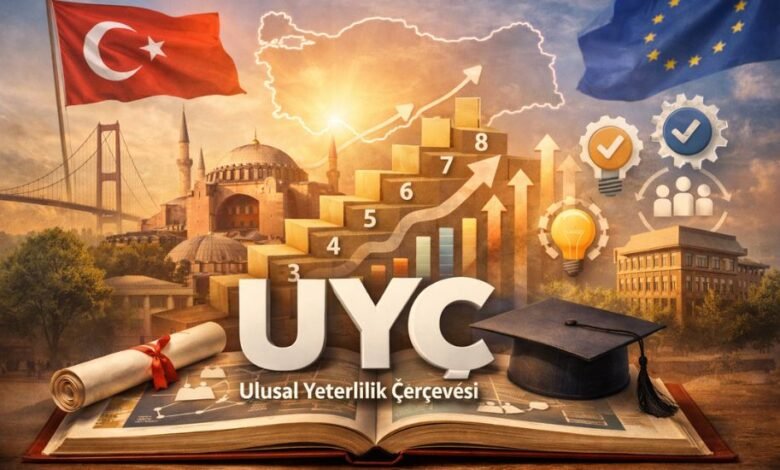
The term uyç, formally written as UYÇ, refers to Ulusal Yeterlilik Çerçevesi, which translates into English as the National Qualifications Framework of Turkey, and it represents a structured, state-recognized system designed to define, classify, and relate all officially recognized qualifications within the country. At its core, UYÇ exists to bring clarity and coherence to education and training by establishing nationally agreed levels that describe what a learner knows, understands, and is able to do upon completing a qualification. Rather than focusing on institutions alone, the framework emphasizes learning outcomes, allowing qualifications from different educational paths to be compared on a common scale. This approach reflects a global shift in education policy away from purely time-based or institution-based credentials and toward competency-oriented systems. In Turkey, the UYÇ functions as a bridge between general education, vocational training, and higher education, ensuring that learning achieved in one pathway can be recognized and valued in another. The concept also serves an important social role, as it increases transparency for students, employers, and international partners by making qualifications easier to understand and trust. By anchoring educational achievements to clearly defined levels, UYÇ contributes to lifelong learning, workforce mobility, and national competitiveness. It is not merely an administrative tool but a foundational policy instrument that shapes how education, skills, and professional competence are understood and validated across Turkish society.
Historical Background and Development of UYÇ
The development of UYÇ emerged from Turkey’s broader efforts to modernize its education and training systems in line with international standards, particularly those of Europe, during the early twenty-first century. As economic globalization intensified and labor mobility increased, the need for a transparent and comparable qualifications system became more urgent. Turkey recognized that without a unified framework, qualifications issued by different institutions could be difficult to interpret, both domestically and abroad. This realization led to policy initiatives aimed at creating a national structure that could encompass all types of learning, from compulsory education to advanced professional qualifications. The formulation of UYÇ involved extensive consultation among government bodies, educational institutions, sector representatives, and social partners, reflecting an understanding that qualifications must meet both academic and labor market needs. Over time, the framework was aligned with the European Qualifications Framework, enabling Turkish qualifications to be referenced internationally without losing their national specificity. This alignment did not mean copying an external model wholesale, but rather adapting shared principles to local educational, economic, and cultural contexts. As a result, UYÇ evolved as a uniquely Turkish system with international compatibility, grounded in national priorities while remaining open to cross-border recognition. Its gradual implementation marked a significant shift toward systematic quality assurance and comparability in Turkish education.
Structural Design and Qualification Levels within UYÇ
The structural design of UYÇ is based on a series of clearly defined levels that describe increasing degrees of complexity, autonomy, and responsibility in learning outcomes. Each level within the framework articulates what a learner is expected to know, understand, and demonstrate in terms of knowledge, skills, and competence. This structure allows qualifications from different sectors, such as general education, vocational training, and higher education, to be positioned within the same reference system without diminishing their distinctive purposes. The emphasis on learning outcomes ensures that qualifications are judged not by the duration of study or the prestige of the institution, but by the actual capabilities acquired by the learner. This design supports transparency, as employers and learners can readily interpret what a qualification signifies in practical terms. It also enhances flexibility, enabling individuals to progress vertically to higher levels or move horizontally across sectors by building on recognized competencies. Importantly, the framework accommodates formal, non-formal, and informal learning, acknowledging that valuable skills are often acquired outside traditional classrooms. By structuring qualifications in this way, UYÇ creates a shared language that connects education providers, learners, and the labor market, fostering trust and mutual understanding. The framework’s level-based architecture thus serves as the backbone of a coherent national qualifications system.
Role of UYÇ in the Turkish Education System
Within the Turkish education system, UYÇ plays a central role in harmonizing diverse educational pathways and ensuring that learning achievements are consistently recognized. Turkey’s educational landscape includes general academic schooling, vocational and technical education, higher education, and a wide range of professional training programs, each historically governed by different standards and authorities. UYÇ provides a unifying reference point that links these pathways without erasing their individual identities. For students, this means greater clarity about how qualifications relate to one another and what opportunities they open up for further study or employment. For institutions, the framework offers guidance on designing curricula that meet nationally defined outcome standards, supporting quality assurance and accountability. UYÇ also facilitates credit transfer and progression by making it easier to identify equivalencies between programs. In policy terms, the framework supports evidence-based planning by enabling authorities to map qualifications against labor market needs and national development goals. By embedding learning outcomes into the heart of educational design, UYÇ encourages a more learner-centered approach that values competence and applicability alongside academic knowledge. This systemic role makes UYÇ a cornerstone of educational reform and coordination in Turkey.
Connection Between UYÇ and the Labor Market
One of the most significant contributions of UYÇ lies in its relationship with the labor market, where clarity and trust in qualifications are essential. Employers often face challenges in interpreting the value of different certificates and degrees, particularly in sectors with rapidly evolving skill requirements. UYÇ addresses this challenge by providing standardized descriptions of what holders of specific qualifications can do, thereby reducing uncertainty in recruitment and workforce planning. By aligning qualifications with clearly articulated competencies, the framework helps ensure that education and training respond more effectively to labor market demands. Sector representatives are involved in defining occupational standards, which are then reflected in qualifications referenced to UYÇ levels. This collaboration strengthens the relevance of training programs and supports employability. For individuals, the framework enhances career mobility by making skills more visible and portable across sectors and regions. It also supports lifelong learning, as workers can upskill or reskill by accumulating recognized competencies over time rather than starting anew. In this way, UYÇ functions as a dynamic interface between education and employment, contributing to economic resilience and social inclusion.
International Recognition and Alignment of UYÇ
International recognition is a key dimension of UYÇ, particularly in a globalized world where education and employment increasingly cross national borders. By aligning with the European Qualifications Framework, UYÇ enables Turkish qualifications to be understood and compared internationally without compromising national educational sovereignty. This alignment supports academic mobility by making it easier for Turkish students to pursue further education abroad and for international students and professionals to understand Turkish credentials. It also facilitates labor mobility, as employers in other countries can interpret UYÇ-referenced qualifications with greater confidence. The framework thus enhances Turkey’s integration into international education and labor markets while maintaining a clear national identity. Alignment does not imply uniformity, but rather shared reference points that allow for meaningful comparison. Through this approach, UYÇ contributes to mutual trust among education systems and supports cross-border cooperation in education, training, and professional recognition. Its international dimension underscores the strategic importance of qualifications frameworks in an interconnected world.
Quality Assurance and Governance within UYÇ
Effective quality assurance and governance are essential to the credibility of any national qualifications framework, and UYÇ is no exception. The framework operates within a regulated institutional environment that defines responsibilities for qualification design, approval, implementation, and review. Clear governance structures ensure that qualifications referenced to UYÇ meet agreed standards and remain relevant over time. Quality assurance mechanisms focus on learning outcomes, assessment practices, and alignment with occupational or academic standards. Regular review processes allow qualifications to be updated in response to technological change, economic shifts, and evolving societal needs. Transparency is a guiding principle, as publicly accessible information about qualifications builds trust among learners, employers, and international partners. By embedding quality assurance into the lifecycle of qualifications, UYÇ safeguards the integrity of the system and prevents fragmentation. This governance framework ensures that UYÇ is not a static document but a living system capable of adapting while maintaining consistency and reliability.
Contemporary Misuse and Digital Ambiguity of the Keyword “uyç”
In recent years, the keyword “uyç” has appeared in digital spaces in ways that diverge from its established educational meaning, leading to some confusion. In certain blogs and online platforms, the term is used as a brand name, a stylized digital identity, or an abstract concept disconnected from its origins in education policy. This phenomenon reflects broader trends in online content creation, where short, distinctive strings of characters are repurposed for visibility or novelty. However, such usage lacks the institutional grounding and definitional clarity associated with UYÇ as a national qualifications framework. While creative reinterpretations are a natural feature of digital culture, they risk obscuring the original and authoritative meaning of the term, particularly for readers seeking reliable information. For academic, professional, and policy-oriented contexts, it is therefore essential to situate “uyç” within its correct framework-related meaning and to distinguish it from informal or promotional uses. Maintaining this clarity is crucial for preserving the integrity of the concept and for ensuring that discussions about education and qualifications remain accurate and meaningful.
Conclusion and Editorial Perspective
Understanding uyç as Ulusal Yeterlilik Çerçevesi requires recognizing its role as a foundational instrument of educational coherence, quality, and transparency in Turkey. It is a system designed not for branding or abstraction, but for the practical and strategic task of defining what learning achievements mean in real terms. By connecting education pathways, supporting labor market relevance, and enabling international recognition, UYÇ contributes to individual opportunity and national development alike. For readers and researchers, approaching the keyword with this context ensures accuracy and depth, particularly in an era when digital reinterpretations can dilute established meanings. As an editorial platform committed to clarity and informed analysis, Empire Magazines recognizes the importance of presenting UYÇ in its proper educational and policy framework, ensuring that readers gain a reliable understanding of its purpose and significance. This perspective reinforces the value of well-researched, context-aware writing in navigating complex topics and preserving the integrity of important national concepts.