When people hear the phrase “smallest country in the world,” the image that usually comes to mind is a place so tiny you could walk across it in minutes. That image isn’t wrong—but it also doesn’t tell the full story. The idea of a country being “small” can mean different things depending on what you measure. Is it land size? Population? Political influence? Economic reach?
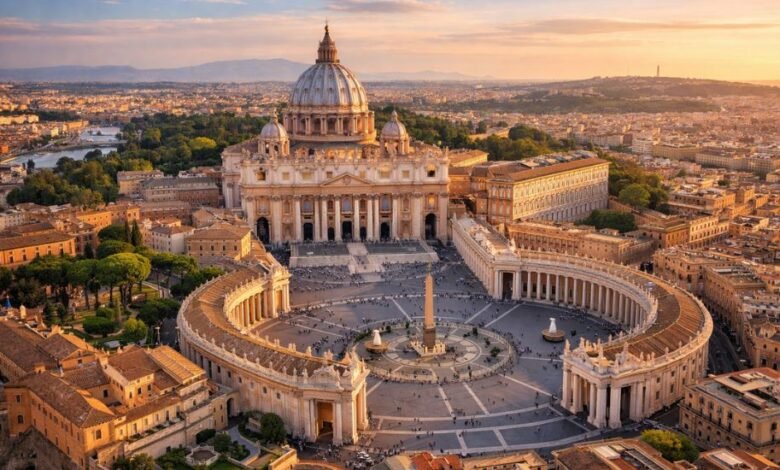
In everyday conversation, most people mean land area. From that perspective, the answer is clear and widely accepted. The smallest country in the world by land size is Vatican City, an independent city-state entirely surrounded by Rome. Yet its significance stretches far beyond its physical boundaries.
This topic fascinates readers because it challenges assumptions. We tend to associate countries with large borders, natural resources, and millions of citizens. But some nations function successfully on a scale smaller than a neighborhood. Exploring how that works offers insight into sovereignty, governance, history, and how size does—or does not—define importance.
At Empire Magazines, we often look at global topics through a grounded, practical lens. The smallest country in the world is a perfect example of how facts can be simple on the surface but surprisingly rich underneath.
Vatican City: The Smallest Country by Land Area
By land area, Vatican City is the smallest country in the world, covering roughly 0.44 square kilometers (about 0.17 square miles). To put that into perspective, it is smaller than many urban parks and far smaller than most university campuses. You could walk from one end to the other in less time than it takes to finish a cup of coffee.
Despite its size, Vatican City is a fully sovereign state. It has defined borders, its own governance system, and international recognition. Sovereignty here is not symbolic—it is legal and practical. The country controls its internal affairs, maintains diplomatic relationships, and operates independently from Italy, even though it sits entirely within Italian territory.
Population is another area where Vatican City stands apart. The number of residents is typically under one thousand, and citizenship is not based on being born there. Instead, citizenship is usually tied to service or employment within the state. When that service ends, citizenship often ends as well. This creates a population that is small, specialized, and constantly changing.
From an economic standpoint, Vatican City operates differently from most nations. It does not rely on income taxes or industrial output. Instead, revenue comes from sources such as donations, museum admissions, publications, and commemorative items. Think of it less like a conventional national economy and more like a tightly managed institutional system designed to support a specific mission.
What makes Vatican City especially unique is that its influence is global rather than territorial. Its religious and cultural role reaches millions of people worldwide, demonstrating that land size alone does not determine a country’s reach or relevance.
You May Also Read About: Biggest Ciuntry in the World
What Defines a Country as “Small”?
Before going further, it helps to clarify what “smallest country in the world” actually means. There is no single definition of “small” that fits every context, so rankings depend on the criteria used.
Land Area vs. Population
Land area is the most common measure, and it’s the one that places Vatican City at the top of the list. However, population-based rankings can look different. Some island nations, for example, have larger land areas than Vatican City but only a few thousand residents.
Imagine two places: one is a dense city-state with centuries-old buildings packed into a tiny space, and the other is a chain of small islands spread across the ocean. The island nation may cover more land overall but house fewer people. Which one is smaller? The answer depends on what you’re measuring.
Sovereignty and Recognition
Another critical factor is sovereignty. To be counted as a country, a place must govern itself and be recognized as independent. This distinction matters because many very small territories exist around the world, but they are dependencies or regions of larger countries. These do not qualify as independent states, even if they are geographically tiny.
Vatican City meets this standard clearly. Its status as an independent state was formally established through international agreements, and it maintains diplomatic relations with numerous countries.
Functional Independence
Beyond legal definitions, there is the practical question of whether a country can function on its own. Does it have systems for governance, security, and administration? Does it manage its own laws and internal operations?
Small countries often rely on neighboring states for certain services, such as defense or transportation infrastructure. That reliance does not negate sovereignty. Instead, it reflects cooperation. In the modern world, even large countries depend on international partnerships.
Other Small Countries and How They Compare
While Vatican City holds the title for smallest country by land area, it is not alone in the category of extremely small nations. Several others are often mentioned in discussions about size, each with its own characteristics.
Monaco, for example, is larger than Vatican City but still remarkably compact. It is densely populated and economically active, known for finance, tourism, and high property values. Its small size has not limited its economic profile; in fact, compactness has shaped its development strategy.
San Marino is another microstate, entirely surrounded by a larger country. Unlike Vatican City, it has a larger resident population and a more traditional citizenship system. Its history as an independent republic stretches back many centuries, showing that small size and long-term sovereignty can coexist.
Island nations in the Pacific present a different model. Countries such as Nauru or Tuvalu have more land area than Vatican City but face challenges tied to geographic isolation, limited resources, and environmental vulnerability. Their small size affects not only governance but also climate resilience and economic diversification.
These comparisons highlight an important point: being small does not mean being simple. Each of these countries has developed structures tailored to its geography, history, and social needs. The smallest country in the world is just one example within a broader group of microstates that operate successfully despite constraints.
Why the Smallest Country Still Matters Globally
It’s easy to assume that size determines significance, but global affairs consistently prove otherwise. Vatican City offers a clear illustration of how influence can be cultural, moral, or symbolic rather than territorial.
Cultural and Historical Impact
The cultural footprint of Vatican City is enormous. Its architecture, art, and historical archives are studied worldwide. Scholars, historians, and visitors engage with its legacy regardless of national borders. In this sense, the country functions as a custodian of global heritage.
Diplomatic Presence
Even with its tiny population, Vatican City maintains diplomatic relationships across the globe. These relationships are not built on economic power or military strength but on dialogue, mediation, and moral authority. In international settings, influence often comes from credibility and continuity rather than scale.
A Different Model of Governance
The governance structure of Vatican City is unique. It is not designed to manage a large, diverse population or vast territory. Instead, it focuses on administration, preservation, and communication. This specialized structure shows that governance models can vary widely depending on purpose.
To use a conceptual comparison, think of two organizations: one is a multinational corporation with thousands of employees and global logistics, while the other is a small foundation focused on a specific mission. Both can be effective, but their success depends on alignment between size and goals.
How Size Shapes Daily Life and Policy
Living in the smallest country in the world is very different from living in a typical nation. Daily life is shaped by proximity, tradition, and a strong sense of institutional continuity.
There is no sprawling infrastructure, no long commutes, and no regional divisions. Everything operates within walking distance. This closeness simplifies some aspects of administration while intensifying the importance of coordination and planning.
Policy decisions in such a small state are highly focused. There is little room for inefficiency, and long-term planning often emphasizes preservation over expansion. This mindset contrasts with larger countries, where growth and development dominate policy discussions.
Economically, small states often prioritize stability. Without vast natural resources or manufacturing sectors, they rely on reputation, heritage, or specialized services. This approach can be surprisingly resilient when managed carefully.
Common Misconceptions About the Smallest Country
Because of its size, Vatican City is often misunderstood. Some people assume it is merely a religious site or a tourist attraction rather than a real country. Others think it lacks independence because it is surrounded by another nation.
In reality, its status is well defined and internationally recognized. Its small footprint does not diminish its legal standing or historical continuity. Another misconception is that a tiny country cannot manage complex affairs. On the contrary, complexity often increases when resources are limited, requiring precise governance and clear priorities.
There is also a tendency to view small countries as fragile. While some face unique challenges, size alone does not determine resilience. Adaptability, cooperation, and clear institutional purpose play a much larger role.
Why the Topic Continues to Attract Interest
The smallest country in the world captures attention because it flips expectations. In a world often focused on scale—bigger economies, larger populations, wider borders—Vatican City represents a different idea of success.
It invites readers to think about what truly defines a nation. Is it land? People? Power? Or is it identity, history, and function?
For readers of Empire Magazines, this topic also connects to broader discussions about efficiency, governance, and how institutions can thrive within constraints. Whether applied to countries, organizations, or even businesses, the lesson is consistent: clarity of purpose matters more than size.
Conclusion: Small in Size, Large in Meaning
The smallest country in the world may occupy less than half a square kilometer, but its significance extends far beyond its borders. Vatican City stands as a reminder that sovereignty is not measured in kilometers alone. History, culture, governance, and influence all play a role.
By examining what makes a country “small,” and why that label does not limit importance, we gain a clearer view of how nations function at every scale. Size shapes challenges and opportunities, but it does not define value.
In the end, the fascination with the smallest country in the world is not about how little space it takes up on a map. It’s about how much meaning, continuity, and global connection can exist within that space.