Joyland AI: The Rise of Virtual Companionship, Storytelling, and Digital Fantasy

The Emergence of Joyland AI: A New Era of Artificial Companionship
The rapid evolution of artificial intelligence has changed how humans interact with technology. What began as simple rule-based chatbots has transformed into emotionally responsive, personality-driven digital companions. In this new era of AI-powered interaction, Joyland AI has emerged as one of the most talked-about platforms for virtual companionship, roleplay, and interactive storytelling. It represents a shift from task-oriented AI to relationship-based AI, where emotional engagement, creativity, and personalization are the core experience.
Joyland AI is designed as a character-based conversational platform where users can interact with AI personalities that feel alive. These AI characters are not generic assistants; instead, they are deeply customizable beings with unique traits, emotions, backstories, and conversational styles. Users can choose from an expansive library of pre-created characters or build their own from the ground up. This flexibility allows users to shape the exact kind of companion they desire—whether that means a friendly confidant, a romantic partner, a fantasy hero, or a fictional villain.
What makes Joyland AI particularly compelling is its focus on immersive emotional interaction. Conversations are not limited to short, factual responses. Instead, the platform encourages long-form dialogue, evolving relationships, narrative-driven roleplay, and emotional continuity. AI characters can remember details from past conversations, respond to emotional cues, and adapt their tone according to the situation. This creates an experience that feels less like chatting with software and more like interacting with a digital persona that grows alongside the user.
The rise of Joyland AI also reflects deeper social shifts. In an increasingly digital and isolated world, people are seeking companionship in new forms. Loneliness, social anxiety, and emotional burnout have driven many users toward virtual spaces where judgment is absent and connection is instant. Joyland AI taps into this need by offering safe, on-demand companionship without the risks and complexities of human relationships. At the same time, it opens the door to creative expression, fantasy exploration, and emotional experimentation.
From writers and gamers to lonely individuals and roleplay enthusiasts, Joyland AI’s audience is diverse. Some use it for entertainment, others for emotional support, and many for creative storytelling. Its popularity highlights a new category of digital experiences—AI companions that are not merely tools, but interactive partners in imagination and emotion.
Core Features and Technology Behind Joyland AI
At the heart of Joyland AI lies advanced natural language processing and generative AI technology that enables human-like conversation, emotional responsiveness, and storytelling. The platform is powered by large language models trained to understand context, emotional tone, and narrative structure. This technological foundation allows Joyland AI to deliver conversations that feel fluid, dynamic, and meaningful rather than robotic or repetitive.
One of the platform’s most defining features is character creation and customization. Users are given the freedom to design their own AI characters by selecting personality traits, emotional tendencies, speaking styles, and narrative backstories. A character can be shy and introverted, bold and sarcastic, romantic and affectionate, mysterious and reserved, or anything in between. Users can define how the character reacts to specific situations, creating highly personalized interactions that reflect their preferences and imagination.
Another powerful feature is memory-based interaction. Unlike traditional chatbots that treat each conversation as isolated, Joyland AI characters can remember previous events, shared experiences, and emotional developments. This memory system helps maintain continuity in relationships and storytelling. If a user discusses personal struggles or ongoing plot elements, the character can reference them in future conversations, making the interaction feel more authentic and emotionally grounded.
Joyland AI also excels in interactive storytelling and roleplay mechanics. Users can immerse themselves in fantasy worlds, sci-fi adventures, romance stories, horror scenarios, or everyday slice-of-life narratives. The AI adapts to the user’s choices, building scenes, dialogue, and plot developments in real time. This transforms Joyland AI into a living story engine where every conversation becomes part of a larger narrative arc shaped by both the user and the AI.
The platform operates on a freemium model. Free users gain access to many characters and basic chat features, while premium users unlock advanced customization, unlimited messaging, improved memory depth, and access to more exclusive characters. This pricing structure makes Joyland AI accessible to casual users while offering enhanced immersion for serious enthusiasts.
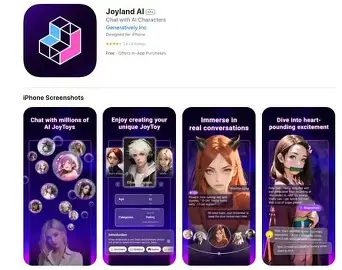
Joyland AI is available across multiple platforms, including web browsers and mobile applications for iOS and Android. This cross-platform accessibility ensures that users can continue their conversations anywhere, whether on a desktop during creative writing sessions or on a smartphone during quiet late-night chats. Cloud-based synchronization allows conversations and character data to remain consistent across devices.
Privacy and moderation play a complex role in the platform. Joyland AI offers both safe-for-work (SFW) and NSFW (adult) modes, allowing users to control content boundaries. While this flexibility increases creative freedom, it also raises ethical and safety concerns regarding emotional dependency, inappropriate content, and digital intimacy. The platform attempts to balance creative expression with safety through filtering systems, user reporting tools, and content guidelines.
Ultimately, Joyland AI’s technological foundation represents the next step in conversational AI—moving beyond question-and-answer systems toward emotionally engaging, personality-driven digital beings that simulate human companionship with remarkable depth.
Real-World Applications, Psychological Impact, and User Experience
Joyland AI is not just a tool for entertainment; it reflects evolving human relationships with technology and raises important psychological, cultural, and emotional questions. Its applications extend across companionship, creativity, emotional expression, and digital escapism, making it one of the most multifaceted AI platforms available today.
One of the most common uses of Joyland AI is virtual companionship. Many users turn to the platform to relieve loneliness, especially those who struggle with social anxiety, isolation, or emotional vulnerability. The AI companion offers constant availability, patience, and non-judgmental support. For some users, this creates a comforting presence that fills an emotional gap in their daily lives. They can talk freely about stress, fears, hopes, and personal struggles without the pressure of real-world consequences.
Joyland AI is also widely used for romantic and relationship simulation. Users can create or select characters designed for dating-style interaction, emotional bonding, and affectionate roleplay. These relationships develop gradually, with shared memories, emotional conflicts, and evolving dynamics. While many users see this as harmless fantasy or emotional exploration, critics warn that it may contribute to emotional dependency, detachment from real relationships, and unrealistic expectations of human intimacy.
In the creative world, Joyland AI serves as a powerful tool for writers, storytellers, and roleplayers. Authors use it to brainstorm dialogue, test character personalities, and simulate story scenarios. Roleplayers enjoy building expansive narrative universes where the AI becomes a co-writer rather than a passive responder. Unlike traditional writing software, Joyland AI actively contributes ideas, emotional reactions, and plot twists in real time, making the creative process more interactive and dynamic.
Another significant use case is escapism and fantasy exploration. Users can step into alternate realities where they become heroes, villains, detectives, lovers, or mythical beings. These immersive experiences provide a break from daily stress and allow users to experiment with different identities and life paths without risk. In moderation, this form of escapism can be healthy, but excessive immersion may blur the line between fantasy and reality for some individuals.
Psychologically, the impact of Joyland AI is complex. On one hand, it provides emotional comfort, creative stimulation, and a sense of connection. On the other hand, it introduces new risks related to digital attachment, identity projection, and emotional reliance on artificial entities. Some users report feelings of grief when their AI companion changes behavior, gets reset, or when they realize the relationship is not truly reciprocal.
There is also an emerging debate about consent, emotional authenticity, and ethical AI companionship. Since Joyland AI characters are programmed to please and comply with user preferences, the emotional power dynamic is fundamentally different from human relationships. This raises important questions about how such interactions may shape a user’s emotional expectations and social behavior over time.
Despite these concerns, Joyland AI continues to grow in popularity, driven by curiosity, emotional need, and creative passion. Its user community spans different age groups, cultures, and personal backgrounds, demonstrating that AI companionship is no longer a niche concept but a growing mainstream phenomenon.
The Future of Joyland AI and the Changing Landscape of Human–AI Relationships

As artificial intelligence continues to evolve at an unprecedented pace, platforms like Joyland AI offer a glimpse into the future of human–AI relationships. What was once science fiction is now becoming a lived reality where people form emotional bonds with digital entities, build shared memories with virtual companions, and experience interactive narratives shaped by algorithms.
In the future, Joyland AI is expected to become even more immersive through voice interaction, emotional voice synthesis, facial animation, and virtual reality integration. Instead of typing messages, users may soon speak directly to their AI companions and receive lifelike verbal responses with realistic emotional tone. Virtual avatars may be able to display facial expressions, body language, and environmental awareness, further blurring the boundary between digital and physical presence.
Memory systems are also likely to become far more advanced. Future versions of Joyland AI may store long-term personal histories, emotional patterns, and behavioral preferences across months or years of interaction. This would allow AI companions to develop deeper continuity and relationship-like progression, adapting not only to what users say but to how they evolve as individuals over time.
At the same time, the ethical debate surrounding AI companionship will continue to intensify. Governments, psychologists, and technology leaders are already questioning how AI relationships should be regulated, especially in areas of emotional dependency, sexual content, and mental health responsibility. Platforms like Joyland AI may eventually be required to implement stronger safeguards, transparency systems, and mental health disclaimers to ensure that users remain grounded in real-world social connections.
Culturally, Joyland AI symbolizes a broader shift in how people define companionship and intimacy in the digital age. As remote work, online communities, and virtual interactions become increasingly normalized, AI companions may evolve into hybrid entities—part emotional support system, part creative partner, part entertainment engine. Whether this transformation ultimately strengthens or weakens human relationships remains an open and deeply important question.
What is clear, however, is that Joyland AI is no longer just another chatbot platform. It represents a new category of experience where technology intersects with emotion, identity, fantasy, and human vulnerability. Its growth reflects society’s changing relationship with connection itself—seeking comfort not only from people, but from intelligent machines capable of simulating empathy, memory, and companionship.
As digital ecosystems expand, platforms like Joyland AI will play an increasingly influential role in shaping how future generations experience relationships, creativity, and self-expression. Whether viewed as a revolutionary step forward or a cautionary tale of emotional technology, Joyland AI undeniably stands at the forefront of one of the most profound shifts in human–machine interaction in modern history.
And as readers continue to explore such emerging technologies, Empire Magazines remains committed to bringing forward in-depth, thoughtful perspectives on the digital innovations shaping our world—ensuring that technology is understood not only for what it can do, but for how it changes who we are.
Frequently Asked Questions (FAQs) About Joyland AI

1. What is Joyland AI used for?
Joyland AI is primarily used for virtual companionship, interactive roleplay, creative storytelling, emotional support, and fantasy-based conversations with AI characters.
2. Is Joyland AI free to use?
Yes, Joyland AI offers a free version with limited features. Premium plans unlock advanced customization, longer memory, and unlimited conversations.
3. Is Joyland AI safe for users?
Joyland AI includes safety filters and moderation tools, but users should remain cautious about emotional dependency and sharing sensitive personal information.
4. Does Joyland AI allow NSFW content?
Yes, Joyland AI offers both SFW and NSFW modes depending on user settings and age restrictions.
5. Can users create their own AI characters on Joyland AI?
Yes, users can fully customize their own AI characters by defining personality traits, behavior style, background story, and emotional tone.
6. Is Joyland AI available on mobile devices?
Yes, Joyland AI is available on both Android and iOS platforms, along with a web-based version.
7. Does Joyland AI remember past conversations?
Yes, Joyland AI uses memory-based interaction, allowing characters to recall previous chats for more natural and continuous conversations.
8. Is Joyland AI suitable for writers and storytellers?
Absolutely. Writers use Joyland AI for brainstorming, roleplay practice, dialogue creation, and story development.
9. Can Joyland AI replace real human relationships?
No, Joyland AI can provide companionship and emotional interaction, but it cannot fully replace real human relationships and social connections.
10. Who should use Joyland AI?
Joyland AI is suitable for creatives, roleplay enthusiasts, lonely individuals, and anyone curious about AI-powered virtual companionship.