Assimilasjon: A Comprehensive Exploration of Integration Across Culture, Mind, Language, and Life

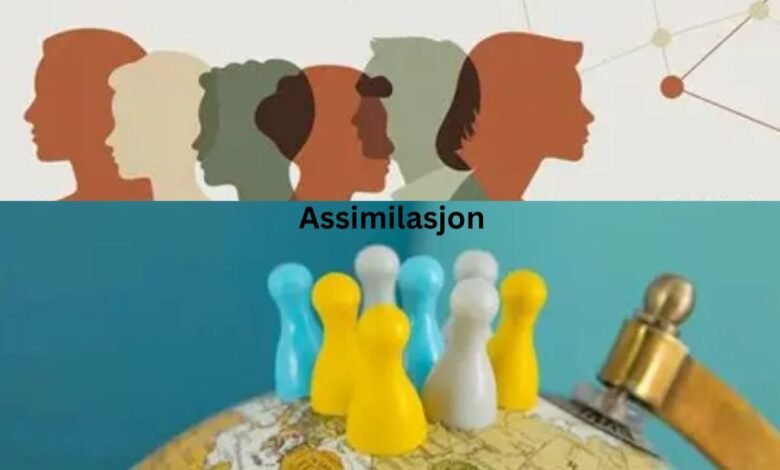
Assimilasjon is a concept that carries profound meaning across multiple disciplines, from sociology and psychology to linguistics and biology. Although the term originates from the Norwegian language, its significance extends globally, representing a universal process of adaptation, integration, and transformation. At its core, assimilasjon describes how individuals, groups, or systems absorb and adopt new elements, often becoming part of a larger, dominant structure.
In an increasingly interconnected world shaped by migration, globalization, and technological change, understanding assimilasjon has never been more important. It is not merely a theoretical concept; it is a lived experience that influences identity, communication, learning, and survival.
The Sociological Dimension of Assimilasjon
In sociology, assimilasjon most commonly refers to the process by which individuals or groups—particularly immigrants and minority communities—gradually adopt the cultural norms, values, behaviors, and language of a dominant society. This transformation can occur over generations or within a single lifetime, depending on social conditions and individual choices.
Historically, assimilasjon has been closely tied to migration patterns. When people move to a new country, they are often exposed to unfamiliar customs, social structures, and expectations. Over time, many begin to adopt aspects of the host culture in order to navigate daily life, access opportunities, and gain social acceptance.
However, the process is not always voluntary or equal. In some cases, assimilasjon has been enforced through policies designed to suppress cultural diversity. Governments and institutions have, at times, imposed language restrictions, banned traditional practices, or restructured education systems to promote a singular national identity. These forms of forced assimilasjon have left lasting impacts on communities, often resulting in cultural loss and intergenerational trauma.
In modern discourse, assimilasjon is frequently debated. While some view it as a pathway to social cohesion and unity, others argue that it can erode cultural heritage and diminish the richness of multicultural societies. As a result, many countries are now shifting toward models that emphasize inclusion and diversity rather than complete cultural absorption.
Cultural Identity and the Tension of Belonging
One of the most complex aspects of assimilasjon lies in its relationship with identity. For individuals navigating between cultures, assimilasjon can be both empowering and challenging. On one hand, adopting the norms of a dominant culture can open doors to education, employment, and social mobility. On the other, it may create a sense of disconnection from one’s roots.
This tension is particularly evident among second-generation immigrants, who often grow up balancing the expectations of their family’s heritage with the demands of the society in which they live. The result is not always full assimilasjon but rather a hybrid identity that blends multiple cultural influences.
Such experiences highlight that assimilasjon is not always a linear or complete process. Instead, it can involve negotiation, adaptation, and selective acceptance, where individuals choose which aspects of a culture to embrace and which to preserve.
Linguistic Assimilasjon: The Subtle Art of Sound Change
In linguistics, assimilasjon takes on a more technical meaning. It refers to the process by which one sound becomes more similar to a neighboring sound within a word or phrase. This phenomenon occurs naturally in spoken language and is driven by the human tendency to simplify and streamline communication.
For example, certain consonant sounds may change slightly depending on the sounds that surround them, making speech faster and more fluid. These changes often go unnoticed by speakers but play a crucial role in shaping how languages evolve over time.
Linguistic assimilasjon demonstrates that adaptation is not limited to social or cultural systems; it is embedded in the very mechanics of communication. It reflects the brain’s efficiency in optimizing speech patterns for ease and clarity.
Cognitive Assimilasjon in Human Development
The concept of assimilasjon is central to developmental psychology, particularly in the work of Jean Piaget. According to Piaget, assimilasjon is one of the key processes through which humans learn and make sense of the world.
In this context, assimilasjon refers to the incorporation of new information into existing mental frameworks, or schemas. Rather than constantly creating entirely new ways of understanding, the mind tends to interpret new experiences through the lens of what it already knows.
For instance, a young child who recognizes a particular type of animal may initially categorize all similar animals under the same label. This reflects the brain’s attempt to organize information efficiently, even if the categorization is not entirely accurate.
Assimilasjon works in tandem with accommodation, another cognitive process in which existing schemas are adjusted to accommodate new information. Together, these processes drive intellectual development, enabling individuals to refine their understanding over time.
Biological Assimilasjon: The Foundation of Life
Beyond the social and cognitive realms, assimilasjon also plays a vital role in biology. In this context, it refers to the process by which organisms absorb nutrients and convert them into energy, growth, and cellular structure.
This form of assimilasjon is essential for survival. In humans, it involves the digestion of food and the transformation of nutrients into usable forms that support bodily functions. In plants, assimilasjon includes the conversion of inorganic substances into organic compounds through processes like photosynthesis.
Biological assimilasjon underscores the universality of the concept. Whether at the level of cells or societies, the ability to absorb and integrate external elements is fundamental to growth and sustainability.
Historical Context and Political Implications
Throughout history, assimilasjon has been closely linked to power dynamics. Empires and nation-states have often pursued assimilation policies as a means of consolidating control and creating a unified identity among diverse populations.
These policies have taken various forms, including language standardization, educational reform, and the suppression of indigenous traditions. In many cases, they were justified as efforts to promote progress or civilization, but their consequences were often deeply disruptive.
In recent decades, there has been a growing recognition of the harm caused by such approaches. This has led to increased advocacy for cultural preservation, indigenous rights, and policies that respect diversity rather than enforce uniformity.
Assimilasjon vs. Integration and Acculturation
To fully understand assimilasjon, it is important to distinguish it from related concepts. While they are often used interchangeably, they represent different approaches to cultural interaction.
Assimilasjon implies a process in which individuals or groups adopt the dominant culture to the extent that their original identity is diminished or absorbed. Integration, by contrast, allows for participation in the broader society while maintaining distinct cultural traditions. Acculturation refers to the exchange of cultural features between groups without necessarily resulting in complete assimilation.
These distinctions are particularly relevant in discussions about immigration and social policy. Many contemporary societies are moving away from assimilationist models in favor of approaches that encourage diversity and mutual respect.
The Modern Relevance of Assimilasjon
In today’s globalized world, assimilasjon continues to shape everyday experiences. Migration, digital communication, and cross-cultural interactions are creating new contexts in which people encounter and adapt to different ways of life.
At the same time, there is a growing emphasis on preserving cultural identity and promoting inclusivity. This has led to more nuanced understandings of assimilasjon, recognizing that it is not always about complete absorption but can involve selective adaptation and coexistence.
The concept also extends to professional environments, education systems, and even technology, where individuals and organizations must constantly adapt to changing conditions. In this sense, assimilasjon is not just a social process but a broader principle of adaptation that applies across all areas of life.
Conclusion
Assimilasjon is a deeply layered concept that bridges disciplines and experiences. From the integration of cultures and the evolution of language to the development of human cognition and the functioning of biological systems, it represents a fundamental process of adaptation and transformation.
While its implications can be both positive and challenging, assimilasjon remains a key framework for understanding how individuals and societies evolve. As the world continues to change, the ability to navigate and interpret this process will be essential for fostering both unity and diversity in a complex, interconnected global landscape.